
一村一品

Search documents
多元业态焕发活力 基础设施仍待完善
Xin Lang Cai Jing· 2026-02-25 22:06
Core Viewpoint - The rural tourism in Shanghai's Pudong New District is undergoing a transformation towards quality enhancement and diversification, although it faces challenges in regional collaboration, service quality, and infrastructure improvement [1]. Group 1: Development and Trends - The rural tourism in Pudong has evolved from a single agritourism model to a diversified and thematic structure, with products transitioning from mere sightseeing to immersive experiences [2]. - Various rural tourism products now offer multi-sensory experiences, including DIY activities, cultural events, and educational programs, creating a comprehensive experience that is visually appealing, engaging, and educational [2]. - The inclusion of pet-friendly environments is emerging, with specific locations catering to pet owners, indicating a trend towards more inclusive tourism experiences [3]. Group 2: Challenges and Limitations - The layout of rural tourism points is uneven, with many relying on self-driving access and lacking shuttle services, compounded by inadequate road signage and parking facilities [4]. - Essential amenities such as restrooms, dining services, and accessibility features are often insufficient, limiting the potential customer base and overall experience [4]. - There is a lack of timely updates on tourism routes and inadequate online promotion, leading to difficulties for visitors in accessing accurate information about attractions [4]. Group 3: Visitor Experience and Recommendations - A significant portion of visitors (57.64%) finds cultural interactive experiences most memorable, highlighting the demand for unique local cultural offerings [5]. - There is a strong call from visitors for improved service quality and the establishment of distinctive local identities for each village, emphasizing the need for a focused development strategy [5]. - Recommendations include enhancing overall planning, improving infrastructure, and ensuring that facilities cater to diverse needs, including those of special groups and pet owners [6].
(新春走基层)延续百年古法制作 福建柘荣乡村粉扣变“金疙瘩”
Zhong Guo Xin Wen Wang· 2026-02-21 07:28
Core Viewpoint - The article highlights the transformation of Wupu Village's sweet potato noodle production from a traditional craft to a modern industry, emphasizing the integration of ancient techniques with contemporary practices to drive rural revitalization and economic growth [1][2][3] Group 1: Traditional Craft and Modernization - Wupu Village has a century-old tradition of making sweet potato noodles, which has been preserved through meticulous craftsmanship, ensuring a unique texture and quality that machines cannot replicate [1] - The village's commitment to traditional methods has garnered a strong reputation, attracting customers from surrounding areas [1] Group 2: Agricultural Innovation and Management - Under the guidance of technology specialists, over 600 acres of sweet potato fields in Wupu Village have implemented refined management practices, enhancing the quality of raw materials for noodle production [2] - The village has adopted a cooperative model that integrates local farmers, ensuring standardized production and collective marketing efforts, which addresses the challenges of fragmented operations [2] Group 3: Economic Impact and Future Prospects - Wupu Village has established a complete industrial chain from planting to processing and sales, maximizing the value of sweet potatoes and creating diverse income streams for local farmers [3] - In 2025, the village is projected to produce 180,000 pounds of sweet potato products, generating an annual output value of 2.96 million yuan, with each household expected to increase their income by 20,000 to 30,000 yuan [3]
“小李书记”的一天
Xin Lang Cai Jing· 2026-02-15 21:13
Core Viewpoint - The article highlights the efforts of a young village leader, Li Hao, in revitalizing his hometown, Huaiyin District's Matou Town, through local product promotion and community engagement, ultimately aiming to retain the youth and improve the local economy [1][3]. Group 1: Community Engagement and Leadership - Li Hao, a 90s "internet celebrity" with a significant following, has become a key figure in promoting local culture and products at the Matou market, attracting visitors and boosting local morale [1][2]. - His return to the village was motivated by a desire to improve local living conditions and retain the youth, who often migrate for work [1][3]. Group 2: Economic Development Initiatives - Li Hao initiated the development of a local bean skin industry, transforming a small workshop into a collective factory with four production lines, ensuring a sustainable income for villagers [2][3]. - The village has seen direct income increases exceeding 3 million yuan through agricultural product sales, with several young people starting their own e-commerce ventures [3]. Group 3: Future Plans and Vision - The village has recently merged with a neighboring village, expanding from 500 to 1,700 households, which presents new opportunities for development [3]. - Li Hao plans to further explore the village's cultural resources to develop tourism, aiming for a model that integrates agriculture, culture, and tourism [3].
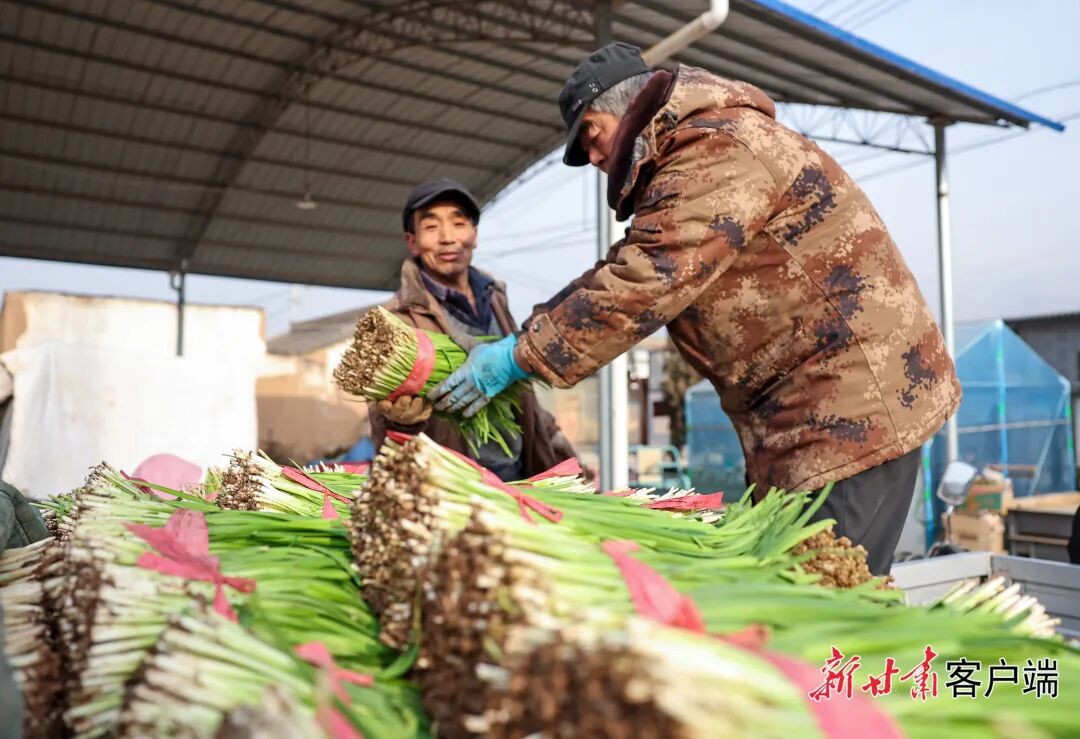
武山县:蔬菜大棚春意浓
Xin Lang Cai Jing· 2026-01-25 03:48
Group 1 - The core viewpoint of the article highlights the successful development of the agricultural industry in Wushan County, particularly focusing on the cultivation and commercialization of leeks and water radishes [4][5]. - Wushan County has established a total leek planting area of 60,000 acres, creating a comprehensive industrial chain that integrates production, branding, and sales, with leeks being distributed to over 20 provinces and regions including Xinjiang, Qinghai, Shaanxi, and Sichuan [4]. - The local government is promoting the "one village, one product" initiative to develop water radishes as a distinctive agricultural product brand, which is expected to enhance the income and prosperity of local villagers [5][7].

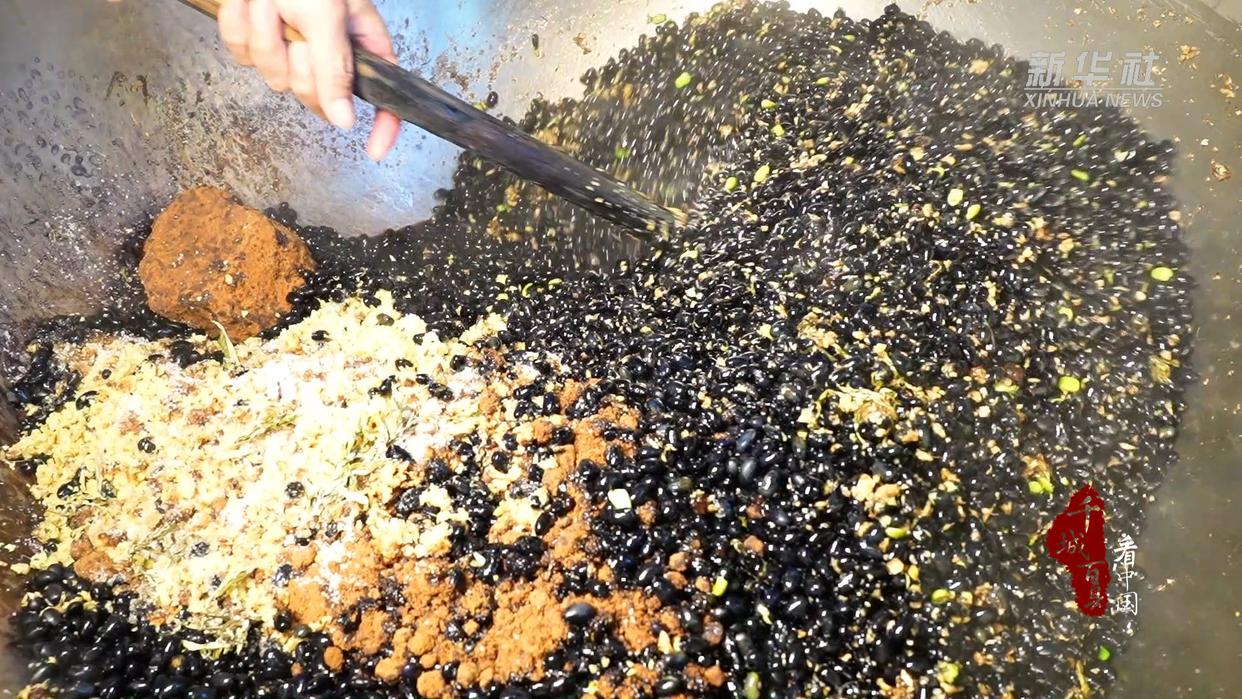
千城百县看中国|福建永定:炒豆飘香年味浓
Xin Lang Cai Jing· 2026-01-23 14:47
Core Viewpoint - The article highlights the traditional craft of roasting black beans in Longyan City, Fujian Province, emphasizing its cultural significance and the recent efforts to modernize and market this local specialty through various channels. Group 1: Traditional Craft and Cultural Significance - Local villagers have adhered to ancient methods of making this specialty snack since the last century, using high-quality local black beans and traditional techniques [3] - The process involves soaking the beans for 6 to 8 hours, followed by slow roasting with sea salt until they are fragrant and crispy, representing a nostalgic connection for generations of Hakka people [3] Group 2: Modernization and Market Expansion - The local government has leveraged the "one village, one product" policy to enhance the production and compliance of roasted black beans, aiming for quality improvement and stable income growth [4] - In addition to traditional methods, new flavors have been developed, such as those incorporating angelica, and products are being marketed through e-commerce platforms and local exhibition centers, establishing a distinctive gift brand for Longyan [4]
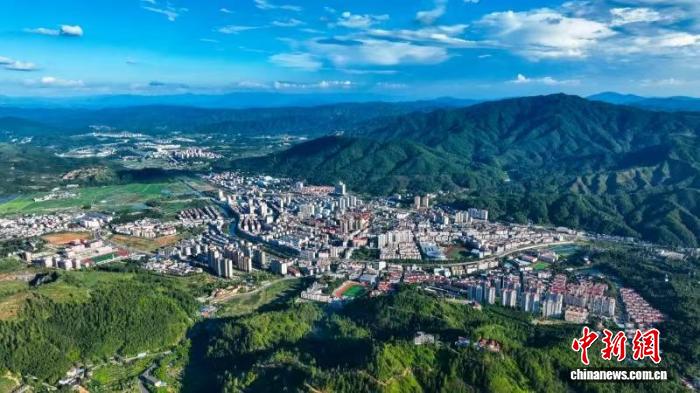
福建明溪:一根淮山“链”出富民产业
Zhong Guo Xin Wen Wang· 2026-01-19 05:59
Core Viewpoint - The article highlights the development of the yam industry in Mingxi County, Fujian, as a key driver for rural revitalization, emphasizing the successful cultivation and marketing of high-quality yams. Group 1: Industry Development - Mingxi County is recognized as "the hometown of Chinese yams," with local authorities promoting yam cultivation as a distinctive leading product for rural revitalization [2]. - The main production area for yams is in Chengguan Township, where yams are considered the "golden product" for the "one village, one product" agricultural initiative [2]. - The yam planting area has reached over 1,000 acres, generating an annual output value of 20 million yuan [2]. Group 2: Community Engagement - The establishment of the Green Source Fruit and Vegetable Cooperative has facilitated the promotion of quality seedlings and provided technical support to local farmers [2]. - A "cross-village joint construction" model has been implemented, involving over 200 households from four villages, fostering collaborative development in yam cultivation [2]. Group 3: Economic Impact - Farmers in Chengguan Township, such as Chen Fugeng, anticipate significant income from yam cultivation, with projections of 70,000 yuan from six acres by 2025 [2]. - Local partnerships with companies like Mingxi Shengming Food Factory and Sanqing Agricultural Tourism Company have been established, leading to the procurement of approximately 4,000 pounds of yams annually, contributing over 100,000 yuan to villagers' income [3]. Group 4: Marketing and Sales - The township is actively engaging in online and offline sales channels, including e-commerce platforms and live streaming, to market "Lion Rock Yams" and their processed products to regions like Xiamen and Quanzhou [3]. - The processing of yams into products such as yam noodles, yam pastries, and yam rolls has effectively increased the added value of the products [3].
(乡村行·看振兴)福建明溪:一根淮山“链”出富民产业
Zhong Guo Xin Wen Wang· 2026-01-19 05:56
Core Viewpoint - The article highlights the development of the yam industry in Mingxi County, Fujian Province, emphasizing its role in rural revitalization and economic growth through cooperative farming and value-added processing [2][3]. Group 1: Industry Development - Mingxi County is recognized as the "Hometown of Chinese Yam," with local authorities promoting yam cultivation as a key industry for rural revitalization [2]. - The yam planting area in the region has reached over 1,000 acres, generating an annual output value of 20 million yuan [2]. - The establishment of the "Green Source Fruit and Vegetable Professional Cooperative" has facilitated the promotion of quality seedlings and technical support for farmers [2]. Group 2: Economic Impact - Farmers in the region, such as Chen Fugeng, anticipate significant income from yam cultivation, with projections of 70,000 yuan from 6 acres by 2025 [2]. - The cooperative model has transformed individual farming efforts into collective development, benefiting over 200 households in the area [2][3]. - Collaborations with local food processing companies have led to the production of yam-based products, enhancing the economic benefits for farmers [3]. Group 3: Marketing and Sales - The village has established long-term partnerships with local companies to purchase approximately 4,000 pounds of yam annually, contributing over 100,000 yuan to villagers' income [3]. - Efforts to expand sales channels include leveraging e-commerce platforms and live streaming to market "Lion Rock Yam" and its processed products to broader regions [3].
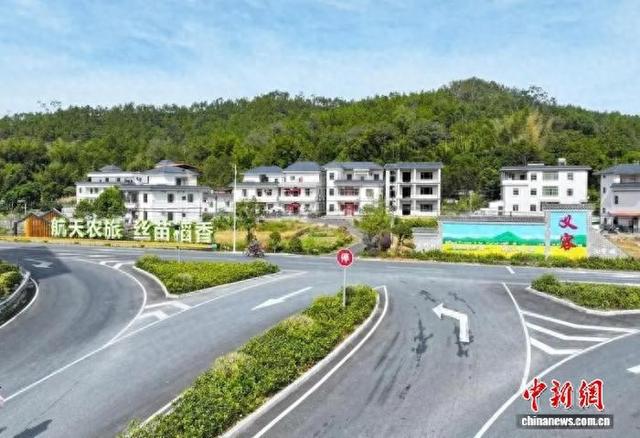
(乡村行·看振兴)广东义容镇:农业强镇促蝶变
Xin Lang Cai Jing· 2026-01-15 14:19
Group 1 - The core viewpoint of the article highlights the development of various industries in Yirong Town, including the establishment of a company to promote local entrepreneurship and the integration of agriculture with processing and sales [1][3] - Yirong Town has implemented the "Hundred Thousand Project" to cultivate specific industries, focusing on the full-chain development of leading industries such as silk rice planting and livestock breeding [3][4] - The town has introduced seven quality projects with a total investment exceeding 3.2 billion, including the China (Heyuan) Aerospace Agricultural Demonstration Park and the Seed Industry Expo Park, which are currently under construction [3][4] Group 2 - The agricultural initiatives include the goal of planting 43,490 acres of rice by 2025, with a total grain output expected to reach 17,509 tons [3] - The establishment of the "Rich Town Strong Village" company aims to foster local entrepreneurial teams and support the development of aquaculture and smart agricultural machinery [3] - Yirong Town is enhancing its infrastructure and aesthetics, with improved roads and vibrant murals depicting local agricultural elements, contributing to a more appealing living and working environment [4]
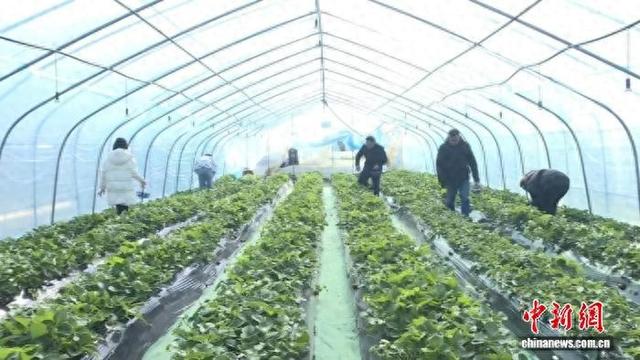
闽北草莓产业铺就乡村增收路
Xin Lang Cai Jing· 2026-01-07 12:04
Core Insights - The strawberry cultivation in Fengling Village, Shunchang County, Fujian Province, is thriving due to the selection of superior varieties and technological innovations, particularly the introduction of the "Yuewang" strawberry variety [1] - The cultivation model adopted by the base is "company + farmers," which has successfully engaged nine local farmers and expanded the cultivation area significantly [2] - The base employs mechanization and smart technology for efficient farming, including real-time monitoring systems for temperature and irrigation, enhancing management precision [2] - The base has established a unified procurement, packaging, and sales system, ensuring product traceability and quality standards, with a registered brand "Yunlu Zhengnong" [2] - The projected annual output value for the village's strawberry cultivation is nearly 3 million yuan, with 60 villagers benefiting from employment opportunities [2] Summary by Sections - **Strawberry Variety and Cultivation**: The introduction of the "Yuewang" strawberry variety has led to increased cultivation area and consumer popularity, with plans for further expansion [1] - **Farming Model and Technology**: The "company + farmers" model has improved efficiency through mechanization, allowing one person to cultivate 10 acres in a day, significantly reducing labor time [2] - **Quality Control and Sales**: The base has implemented strict quality standards and a traceable sales system, successfully distributing strawberries to major markets [2] - **Future Plans and Economic Impact**: The village aims to secure additional funding to enhance infrastructure and support farmers, with a goal of increasing collective income and employment [3]
梅州兴宁沙田柚热销北京路|文明集市县域行⑭
Nan Fang Nong Cun Bao· 2025-12-28 12:32
Core Viewpoint - The article highlights the successful promotion and sales of Meizhou Xingning's Shatian pomelo during a consumer event in Beijing, showcasing the region's agricultural strengths and commitment to ecological development [2][5][8]. Group 1: Sales and Promotion - From December 19 to December 28, a consumer promotion event organized over 100 enterprises from 33 counties (cities, districts) in the province [4]. - Meizhou Xingning showcased its high-quality Shatian pomelo, attracting many citizens and tourists to purchase [5]. - Sales figures indicate that 200 to 300 pomelos were sold in a single day, reflecting positive consumer reception [2]. Group 2: Agricultural Development - Xingning has historically been known as the "Granary of Eastern Guangdong" and has focused on "ecological priority and green development" [7][8]. - The region boasts the largest Ningjiang basin in Eastern Guangdong, with approximately 420,000 acres of arable land and 2.0326 million acres of forest land, 80% of which is rich in selenium [8]. - The average selenium content in the soil is 0.7 mg/kg, exceeding the national selenium-rich standard by 75%, providing a unique ecological resource for agricultural development [9][10]. Group 3: Industry Growth and Employment - Xingning is leveraging its mountainous resources to enhance pomelo cultivation as part of its "one village, one product; one town, one industry" strategy [11]. - The region has developed brands such as "Qinhuai Pomelo" and "San Ning Brand," fostering a complete industry chain and establishing five provincial-level agricultural leading enterprises related to pomelo cultivation [12][13]. - This initiative has created employment for 18,000 people, with an average annual income increase of over 20,000 yuan per person [14]. Group 4: Future Development - The agricultural department of Xingning has allocated development tasks for pomelo planting areas based on the resource endowments of each town [15]. - The main varieties for future cultivation will include Shatian pomelo, Sanhong honey pomelo, Wogan, and Guiyou No. 1 pomelo, along with navel oranges [16][17].
