
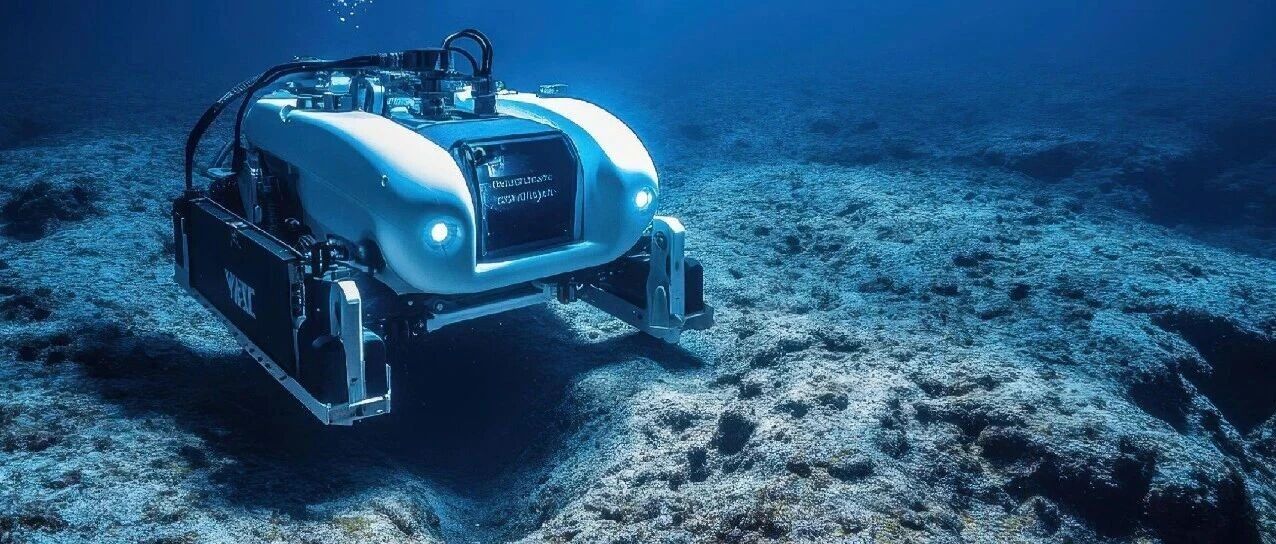
深海采矿车

Search documents
专访中国海洋大学教授陈旭光:深海采矿要来了吗?
Jing Ji Guan Cha Bao· 2025-11-20 07:11
Core Viewpoint - Deep-sea mining is transitioning from exploration to development, driven by technological advancements and increasing demand for deep-sea metals, although it still faces significant economic, environmental, and legal challenges [1][2]. Industry Overview - The deep sea contains over 60 types of metals, including copper, cobalt, nickel, and gold, with an estimated resource volume of approximately 30 billion tons and a recoverable potential of about 7.5 billion tons [2]. - The price surge of various metals, particularly copper and cobalt, has made deep-sea mining economically viable [2]. - Historical attempts at deep-sea mining date back to the late 19th century, with significant efforts in the 1970s, but commercial viability remains elusive [2]. Environmental Concerns - There are ongoing debates regarding the environmental impact of deep-sea mining, with 37 countries advocating for a pause or ban until comprehensive environmental assessments are conducted [3][4]. - Key environmental concerns include sediment plumes, heavy metal pollution, and noise pollution affecting marine life [5][6]. Legal Framework - The current legal framework for deep-sea mining is primarily governed by the United Nations Convention on the Law of the Sea, which outlines the management and regulation of international seabed activities [7]. Commercialization Challenges - Despite technological advancements in mining equipment, such as mining vehicles and ships, profitability models remain unproven, with significant operational challenges including equipment malfunction and low extraction efficiency [9]. - The extraction process from depths of 4,000 to 6,000 meters presents logistical challenges, with no existing pipelines capable of such depths [9]. - The complexity of deep-sea equipment development and the high costs associated with testing further complicate commercialization efforts [9][10]. Alternative Applications - The technology developed for deep-sea mining vehicles may find alternative applications in offshore wind turbine maintenance, leveraging expertise in marine soil mechanics [11].
专访中国海洋大学教授陈旭光:深海采矿要来了吗?
经济观察报· 2025-11-20 06:48
Core Viewpoint - Deep-sea mining is transitioning from exploration to development, driven by technological advancements and increasing demand for deep-sea metals, but it still faces significant cost, environmental, and legal challenges before commercialization can be achieved [2][4]. Group 1: Industry Overview - The deep sea contains rich metal resources, including over 60 types such as copper, cobalt, nickel, and gold, with an estimated total resource volume of approximately 30 trillion tons and a recoverable potential of about 750 billion tons [4]. - The prices of various metals have surged in recent years, making deep-sea mining economically viable, particularly for metals like copper and cobalt [4]. - Historical attempts at deep-sea mining date back to the late 19th century, with significant efforts in the 1960s and 1970s, but these were largely abandoned due to a lack of understanding of the minerals' uses [4]. Group 2: Environmental and Legal Concerns - There is ongoing controversy regarding the environmental impact of deep-sea mining, with 37 countries advocating for a pause or ban until the effects are fully understood and regulations are established [5][6]. - Key environmental concerns include sediment plumes (referred to as "feather flow"), heavy metal pollution, and noise pollution affecting marine life [7][8]. - Legal issues arise from the international nature of deep-sea resources, governed by frameworks such as the United Nations Convention on the Law of the Sea, which outlines resource management and distribution [8]. Group 3: Commercialization Challenges - Despite technological advancements in deep-sea mining equipment, such as mining vehicles and ships, a viable revenue model has not yet been established [11]. - Current mining vehicles face significant operational challenges, including slippage, sinking, and low extraction efficiency, with the best-performing vehicle extracting only about 100 tons of polymetallic nodules per hour [11][12]. - The complexity of deep-sea equipment development and the high costs associated with testing limit the pace of commercialization [12][13]. Group 4: Alternative Applications and Collaborations - While deep-sea mining vehicles have not yet been commercialized, they have potential applications in offshore wind turbine maintenance, leveraging research in marine geotechnics [14]. - Collaboration between heavy equipment manufacturers and deep-sea mining researchers is encouraged to combine manufacturing strengths with marine expertise, positioning companies advantageously in the deep-sea technology sector [14].

行业深度报告:深海科技,“蓝色增长极”
Guoyuan Securities· 2025-10-31 05:10
Investment Rating - The report provides a "First Recommendation" for the deep-sea technology industry [7] Core Insights - The deep-sea technology sector is increasingly recognized as a key area for national development, with significant policy support and strategic importance under the "Marine Power" initiative [2][25] - The industry is experiencing a surge in market activity, with leading companies enhancing their technological capabilities and market presence, evidenced by a substantial IPO financing scale of 11.4 billion yuan in 2024 [3][35] - Key technological breakthroughs are being achieved, moving the industry towards a more autonomous and self-sufficient development model [4] Summary by Sections 1. Development Window for Deep-Sea Technology - Deep-sea technology is crucial for the development of the marine economy, focusing on resource exploration and sustainable development in deep-sea areas [13] - The central government has shifted its focus to deep-sea technology as a strategic pillar of the "Marine Power" initiative, with various supportive policies being implemented [20][25] - Local governments are actively creating plans and measures to foster deep-sea technology, enhancing regional competitiveness [27][28] 2. Insights into China's Marine Economy - The marine economy's total output surpassed 10 trillion yuan in 2024, with a growth rate of 5.9%, outpacing the national GDP growth [35][39] - The marine economy is characterized by a diversified structure, with the tertiary sector contributing the most to the marine GDP [39] 3. Deep-Sea Technology Industry Chain and Key Enterprises - The deep-sea technology industry comprises a complete chain from upstream raw materials and components to midstream equipment manufacturing and downstream applications [45] - Key upstream companies include Baotai Co., West Materials, and Guangwei Composite, which are pivotal in providing essential materials for deep-sea equipment [47][49][50] - Midstream equipment manufacturers are focusing on deep-sea detection and sensing equipment, with significant advancements in manned submersibles and unmanned underwater vehicles [56][61] 4. Investment Recommendations - The report suggests focusing on upstream material and component companies such as Baotai Co., West Materials, and Guangwei Composite; midstream equipment manufacturers like China CNR, Zhenhua Heavy Industries, and China Shipbuilding; and downstream application companies like China National Offshore Oil Corporation [5]




镇江船舶海工产学研精准对接
Xin Hua Ri Bao· 2025-10-21 20:09
Core Insights - The event held on October 17 aimed to promote collaboration between academia and industry in the shipbuilding and marine engineering sector in Zhenjiang, focusing on green, high-end, and intelligent transformation [1][2] - The conference served as a platform for universities to showcase cutting-edge research and for companies to express their technical needs, fostering a "problem-solving" approach to innovation [2] Group 1: Academic Contributions - Shanghai Jiao Tong University presented advanced technologies including unmanned submersibles, deep-sea mining vehicles, and marine nuclear power system development platforms [1] - Jiangsu University of Science and Technology showcased its "typhoon-resistant floating breakwater technology," which fills a gap in international breakwater design and wave dissipation mechanisms [1] Group 2: Industry Demand - Companies like China Shipbuilding Power Zhenjiang Co., Ltd. and Dajin Heavy Industry Co., Ltd. articulated specific technical needs, indicating a strong demand for innovative solutions [2] - The "enterprise poses questions, universities provide answers" model aims to bridge the gap between laboratory research and production line implementation [2] Group 3: Industry Growth - From January to September, the shipbuilding and marine engineering equipment industry in Zhenjiang saw a 26% year-on-year increase in industrial sales, indicating rapid growth [2] - Zhenjiang has established a robust industrial ecosystem with 12 ship manufacturing companies and 69 marine equipment and supporting enterprises, supported by over 3,000 specialized graduates annually from local universities [2]
船舶海工产业产学研合作交流会举行 高校科研成果与企业技术供需精准对接
Zhen Jiang Ri Bao· 2025-10-19 23:34
Core Insights - The shipbuilding and marine engineering industry in the city is experiencing rapid growth, with a 26% year-on-year increase in industrial sales from January to August this year [2] - The industry is supported by a strong educational pipeline, with over 3,000 graduates in shipbuilding-related fields produced annually by local universities and vocational colleges [2] Group 1: Industry Development - The shipbuilding and marine engineering industry is undergoing a transformation towards precision and high-end development [2] - The city currently has 12 ship manufacturing companies and 69 marine equipment and supporting enterprises [2] Group 2: Research and Innovation - The recent exchange meeting showcased technological achievements from Shanghai Jiao Tong University and Jiangsu University of Science and Technology, highlighting advancements in deep-sea equipment and anti-typhoon floating breakwater technology [1][2] - The meeting aimed to facilitate the alignment of university research outputs with industry technical needs, promoting deeper integration between scientific research and technological development in the marine engineering sector [2] Group 3: Corporate Engagement - Key representatives from major companies like China Shipbuilding Power (Zhenjiang) Co., Ltd. and Dajin Heavy Industry Co., Ltd. discussed their development plans, technical requirements, and challenges faced in the industry [1]