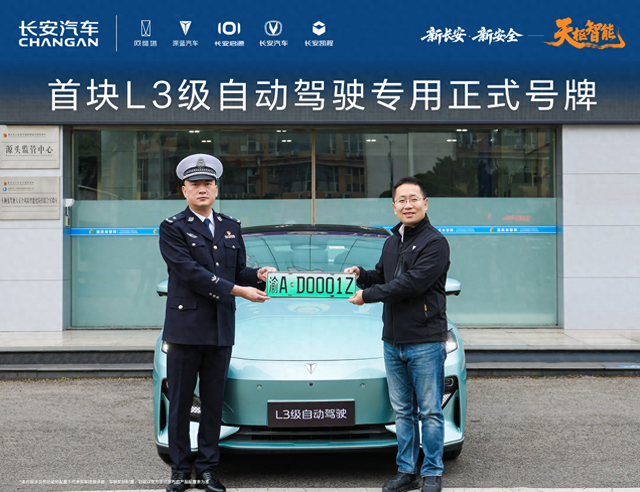
深蓝汽车L3级自动驾驶车型

Search documents
长安汽车L3级车型落地 重庆打造智能网联汽车第一城
Zhong Guo Jing Ying Bao· 2026-01-09 19:51
Core Viewpoint - The launch of L3 conditional autonomous driving vehicles by Changan Automobile in Chongqing marks a significant step towards the commercialization of smart connected vehicles in China, with the first dedicated license plate "渝AD0001Z" issued for such vehicles [2][3][4]. Group 1: Autonomous Driving Development - Changan Automobile has received approval for its L3 level conditional autonomous driving vehicles, becoming one of the first companies to do so in China [2][4]. - The first dedicated license plate for L3 autonomous driving was issued in Chongqing, allowing these vehicles to operate on specific urban roads known for complex traffic conditions [3][4]. - The current pilot program is limited to designated routes and vehicles, with the aim of gathering data to improve technology and regulatory frameworks before broader consumer access [4][5]. Group 2: Safety and Responsibility - The responsibility for driving remains with the driver, even with the introduction of L3 autonomous vehicles, as the system is only active under specific conditions [5][6]. - The transition from L2 to L3 involves a shift in responsibility, where the vehicle's control system assumes primary responsibility under defined conditions, but the driver must be ready to take over when prompted [6][7]. - Legal frameworks are being developed to clarify the responsibilities of manufacturers and drivers, ensuring safety while promoting the adoption of autonomous driving technologies [6][9]. Group 3: Industry and Policy Implications - Chongqing is positioning itself as a leader in the smart connected vehicle industry, supported by government policies aimed at fostering innovation and collaboration within the automotive sector [7][8]. - The development of smart connected vehicles is seen as a major technological breakthrough that will transform automotive usage and urban traffic management [9]. - The pilot program in Chongqing is expected to provide practical insights that will inform future legislative changes regarding autonomous driving, enhancing the legal framework to support industry growth [9].