
混烃

Search documents
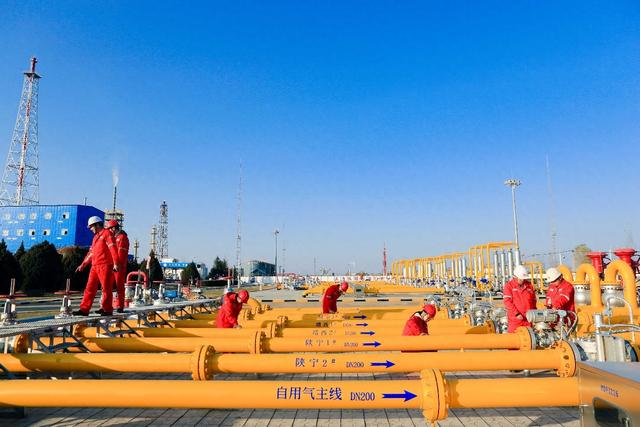
中国石油长庆油田:1.7亿立方米日供气量的绿色担当
Xin Lang Cai Jing· 2026-01-23 08:54
Core Viewpoint - The Longqing Oilfield is playing a crucial role in ensuring natural gas supply during winter while promoting green energy initiatives, contributing significantly to China's carbon reduction goals. Group 1: Natural Gas Production and Supply - The Longqing Oilfield is producing over 170 million cubic meters of natural gas daily, supplying more than 50 major cities in regions such as Beijing-Tianjin-Hebei and Shaanxi-Gansu-Ningxia [1][2] - This daily gas production is equivalent to replacing over 200,000 tons of standard coal and reducing carbon dioxide emissions by approximately 240,000 tons [2] Group 2: Green Development Initiatives - Longqing Oilfield integrates environmental protection into the entire gas field development process, establishing a comprehensive green supply system that includes source reduction, pollution control, and end-use efficiency [2] - The oilfield promotes technologies such as large platform well layout to avoid sensitive environmental areas and implements measures for the recycling of drilling mud and fracturing fluids [2] - Energy-saving and emission-reduction technologies have been effectively applied, saving over 60 million cubic meters of natural gas and 80,000 tons of water annually [2] Group 3: Utilization of Associated Gas - The oilfield has developed a closed-loop recovery system for associated gas, achieving a comprehensive utilization rate of over 95%, transforming waste into valuable resources such as mixed hydrocarbons and liquefied natural gas [5][6] Group 4: Innovative Energy Solutions - Longqing Oilfield is exploring a "natural gas+" integrated development model, which combines traditional oil and gas operations with renewable energy sources [6] - The first "hydrogen substitute oil" green drilling demonstration project in China has been successfully launched, marking a breakthrough in hydrogen energy technology [6] - A 15-megawatt photovoltaic project has been completed, expected to meet the electricity needs of 8,000 households by 2025, contributing to a multi-energy complementary and low-carbon production system [6]


一图读懂 | 温室气体自愿减排项目方法学 陆上油田低气量伴生气回收利用
国家能源局· 2025-11-21 13:05
Core Viewpoint - The article discusses the implementation of a new methodology for voluntary greenhouse gas emission reduction projects in the context of low gas recovery from onshore oil fields, aiming to enhance methane recovery, reduce carbon emissions, and promote the green transition of the oil extraction industry in China [4][5]. Summary by Sections Background - The methodology was jointly issued by the Ministry of Ecology and Environment and the National Energy Administration on November 21, 2025, to encourage broader industry participation in greenhouse gas emission reduction [4]. Principles of Methodology - **Scientific Principle**: The emission reduction mechanism must be scientifically sound and comply with industry technical standards [7]. - **Operability Principle**: The methodology should simplify monitoring parameters while ensuring data is verifiable and traceable [9]. - **Conservativeness Principle**: Emission reductions should be conservatively estimated to avoid overestimation [10]. - **Sustainable Development Principle**: Projects must align with sustainable development goals and not negatively impact the environment or socio-economic development [11]. Applicable Conditions - The methodology applies to low gas recovery projects from onshore oil fields, requiring specific conditions such as a processing capacity of at least 30,000 Nm³/d and compliance with national laws and industry policies [14][15]. Project Duration and Baseline Scenario - The project duration for emission reduction claims can last up to 10 years, with a baseline scenario established for comparison [17]. Additionality Demonstration - The projects face challenges such as complex gas composition, remote locations, and high investment costs, which necessitate additionality proof for the emission reduction claims [19][20]. Emission Reduction Calculation - Emission reductions are calculated based on the replacement of newly extracted natural gas with recovered gas, considering various emission sources [21][22]. Data Management Requirements - A robust data management system must be established, including monitoring, recording, and cross-verifying data, with a retention period of at least 10 years for all project-related data [25]. Verification and Public Oversight - Verification of emission reductions will be conducted by designated institutions, with monitoring data made publicly available through local ecological departments [27][30].
