港险

Search documents
去年前三季度保费暴涨55.9%,港险为何持续升温?
Xin Lang Cai Jing· 2026-01-29 06:42
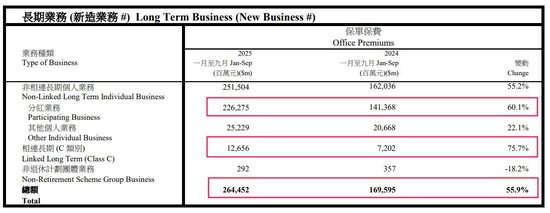
Core Insights - The Hong Kong insurance market continues to attract mainland customers, with new policy premiums reaching 264.45 billion HKD in the first three quarters of 2025, a 55.9% increase compared to the same period in 2024 [1][2][11] - Participating business premiums grew by 60.1% year-on-year, indicating strong demand for investment-linked insurance products among mainland residents [1][2][11] - The shift in interest rates in mainland China has led to a comparative advantage for Hong Kong insurance products, particularly in the context of low interest rates [6][15][16] Market Trends - The demand for participating and linked insurance products has surged, with growth rates of 60.1% and 75.7% respectively, reflecting a shift towards products with investment attributes [2][12][14] - The total new policy premiums from mainland visitors accounted for 29% of the personal business total in 2024, highlighting the significant role of mainland customers in the Hong Kong insurance market [4][13] Regulatory Environment - The Hong Kong Insurance Authority has implemented new regulations affecting the demonstration interest rates for insurance products, which has influenced customer behavior and sales trends [6][15] - The lack of disclosure of mainland visitor data in early 2025 indicates ongoing regulatory reviews, which may impact future reporting and market dynamics [4][14] Investment Considerations - The high expected returns from Hong Kong insurance products, particularly in the context of a 4.5% interest rate differential compared to mainland products, continue to drive demand [7][16] - The introduction of policies with guaranteed rates of 2.5% by mainland insurers in Hong Kong aims to attract high-end customers, indicating competitive pressures in the market [8][17] Customer Behavior - Investors are increasingly looking for alternatives to traditional financial products, with many expressing interest in Hong Kong insurance due to its attractive yields [2][11] - The focus on wealth diversification and the need for high-yield asset allocation among high-net-worth individuals are key drivers for the growth of Hong Kong insurance [5][14]

太疯狂!香港,彻底爆了
Jin Rong Jie· 2025-06-30 23:58
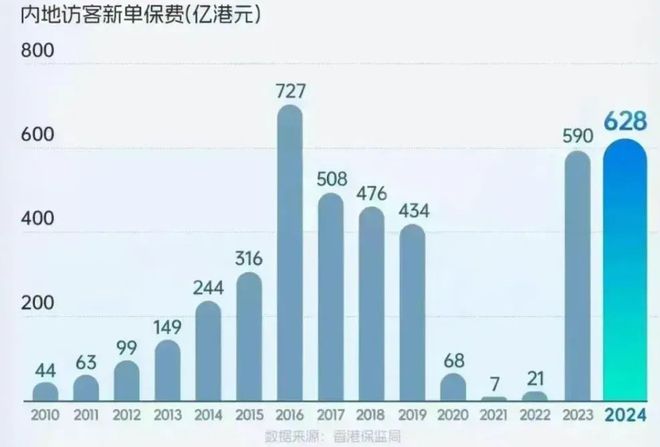
Group 1 - Hong Kong has regained its position as the world's leading market for IPOs, surpassing New York, Shanghai, and Shenzhen, with a fundraising scale of $14 billion (approximately HKD 108.7 billion) in the first half of the year, accounting for 24% of the global IPO total [3] - Major Chinese companies across various sectors are increasingly listing in Hong Kong, including leaders in new energy, food, pharmaceuticals, and agriculture [4] - The insurance market in Hong Kong is experiencing significant growth, with new insurance premiums from mainland visitors expected to exceed HKD 50 billion by mid-2025, indicating a strong demand for Hong Kong insurance products [7] Group 2 - The amount of new insurance premiums from mainland visitors reached HKD 59 billion in 2023 and is projected to hit HKD 62.8 billion in 2024, suggesting a robust recovery and growth trajectory [9] - Mainland insurance capital is increasingly investing in Hong Kong, with investments expected to reach $38.8 billion by the end of 2024, representing 51% of total overseas investments [14] - The influx of both individual and institutional investors into Hong Kong's financial markets highlights a significant shift in investment strategies, with a focus on diversifying portfolios [15] Group 3 - The current economic environment in China is leading to declining interest rates, with the one-year fixed deposit rate expected to fall below 1% by May 2025, making traditional savings less attractive [31] - The changing economic landscape has made Hong Kong insurance products appealing as they offer potentially higher returns compared to other investment options, such as bank deposits and real estate [33] - The trend of increasing investment in Hong Kong insurance reflects a broader shift towards seeking safer and more profitable investment avenues amid a challenging economic climate [34]