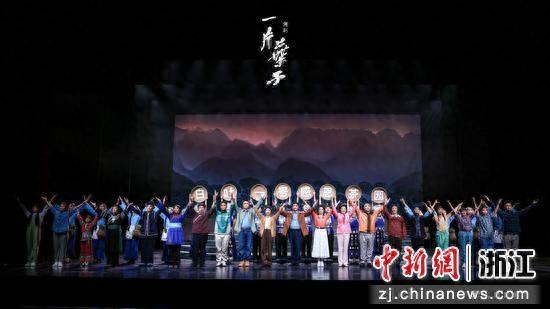
湖剧《一片叶子》

Search documents
看“神奇叶”如何讲述新故事
Xin Lang Cai Jing· 2026-02-26 22:50
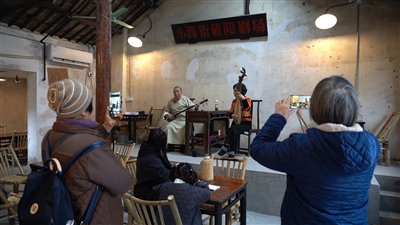
Core Viewpoint - Huzhou's tea industry has a rich history and continues to thrive, with the city leading the province in tea yield and total output for 11 consecutive years [4] Group 1: Tea Culture and Experience - The "Huzhou Old Teahouse" has become a popular destination for locals and tourists, offering a unique experience that combines tea tasting with traditional performances [5][6] - The teahouse aims to create a warm atmosphere that fosters a sense of belonging for regular customers while educating visitors about Huzhou's tea culture [6] - The "Bai Fu Yuan Tea Hall" in Anji redefines tea space with an emphasis on Eastern aesthetics, attracting visitors with its serene environment and cultural displays [6] Group 2: Industry Development and Innovation - Huzhou's tea industry has evolved beyond traditional agriculture, integrating tourism and innovative business models to enhance the value of tea [7] - The "Sky Tea" attraction in Changxing County combines local and international elements to draw more visitors to the tea mountains [7] - Anji County's Huangdu Village, known as the "First Village of Chinese White Tea," is projected to achieve a tea output value exceeding 700 million by 2025, with a focus on enhancing tea tourism [8][9] Group 3: Cultural Transmission and Talent Development - Huzhou emphasizes the importance of talent development in the tea industry through partnerships with educational institutions and practical training [10] - The Huzhou Vocational and Technical College has trained over 1,600 students and 2,800 social tea artists, focusing on both tea skills and cultural appreciation [10] - The "Tea and Heritage" event showcases Huzhou's tea culture through performances and forums, promoting the region's unique tea heritage [11] Group 4: Cultural Innovation and Future Directions - The integration of modern art with traditional tea culture is exemplified by the Huzhou opera "A Leaf," which highlights the story of rural revitalization through tea [12] - The success of "A Leaf" at the National Grand Theatre marks a significant milestone in promoting Huzhou's tea culture [12] - Recommendations for future development include avoiding homogenization, enhancing unique cultural elements, and exploring digital innovations in tea experiences [12]

逐绿前行 原创现实题材湖剧《一片叶子》首演落幕
Zhong Guo Xin Wen Wang· 2025-08-14 09:48
Core Viewpoint - The article highlights the premiere of the original lake drama "A Leaf" in Huzhou, which embodies the concept of "Lucid waters and lush mountains are invaluable assets" and showcases the local story of ecological transformation and common prosperity through the tea industry [1][4]. Group 1: Cultural Significance - The drama "A Leaf" is based on the rural revitalization story of Huangdu Village in Anji County, illustrating how local leaders and community members achieved common prosperity through green transformation in the tea industry [1][3]. - The performance aims to celebrate the 20th anniversary of the "Lucid waters and lush mountains are invaluable assets" philosophy, emphasizing the importance of cultural expression in promoting local stories [1][4]. Group 2: Creative Process - The creative team conducted field research in Anji and Guizhou's Leishan for nearly two years, focusing on the narrative of ecological assistance and community support, which is central to the drama [3]. - The integration of ethnic artistic elements with traditional lake drama enhances the storytelling, allowing audiences to experience the beauty of the mountains and the hope of shared prosperity [3]. Group 3: Future Plans - Following its premiere, "A Leaf" is scheduled to perform at the National Grand Theatre on September 24, aiming to reach a broader audience and share Huzhou's journey towards ecological development [3]. - The production features a diverse cast, including seasoned actors and young performers, reflecting a commitment to preserving and innovating local cultural heritage [3].