湖南医惠保2026

Search documents
惠民保“上新”
Di Yi Cai Jing Zi Xun· 2025-11-14 02:18
Core Insights - The article discusses the evolution and challenges of the Huiminbao insurance scheme, highlighting its significant growth in premium contributions and the disparity in claims experiences among insured individuals [2][3][4] - The introduction of a new commercial insurance drug directory is expected to enhance the coverage of innovative drugs under Huiminbao, while also addressing the sustainability of the insurance model [3][5][6] Group 1: Huiminbao Overview - Huiminbao has been promoted nationwide for nearly six years, with "special drug liability" becoming a standard feature, contributing approximately 18 billion yuan in innovative drug payments last year, a ninefold increase from 2021 [2] - The scheme faces challenges due to a high proportion of elderly and pre-existing condition participants, leading to a "death spiral" in its development [2][3] - Some Huiminbao products are responding to payout pressures by increasing deductibles and reducing high-value drug payment limits, which indirectly lowers medical benefits [2][3] Group 2: Regulatory Changes and Trends - The recent notification from the National Financial Regulatory Administration emphasizes that urban commercial health insurance, including Huiminbao, should align premium collection with coverage levels and avoid chaotic low-price competition [3][8] - The 2026 version of Huiminbao is seeing a shift towards "premium stratification" rather than low premiums, with an expansion of coverage to include chronic diseases, mental health medications, and overseas drugs [3][4][5] Group 3: Special Drug Coverage Expansion - The number of drugs covered under Huiminbao is set to reach 672 by 2024, with a significant focus on cancer and rare disease medications, which account for over 40% of the innovative drugs listed [4][5] - Some regions are expanding their special drug coverage to include high-value innovative drugs for chronic diseases, with certain areas approaching the coverage levels of pure commercial health insurance [5][6] Group 4: Pricing and Risk Management - The core of commercial health insurance is the dynamic balance between funding and benefits, with low premiums slowing the growth of Huiminbao's funding and affecting benefit enhancements [8][11] - The 2026 version of Huiminbao introduces a trend of "layered" special drug and medical coverage, allowing for both standard and upgraded insurance options [8][9] Group 5: Inclusion of New Citizens and Cross-Region Medical Services - Strategies to attract healthier and younger participants include lowering claim thresholds and increasing reimbursement rates for outpatient services and common illnesses [12][13] - New policies in various regions are expanding coverage to include new citizens and those seeking medical services in different locations, enhancing the inclusivity of Huiminbao [12][13]

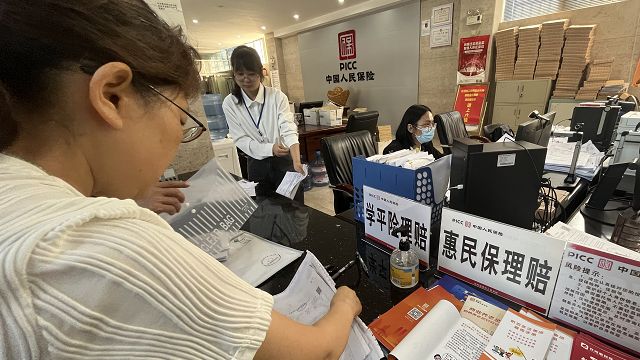
惠民保“上新”
第一财经· 2025-11-14 02:08
Core Viewpoint - The article discusses the evolution and challenges of the "Hui Min Bao" (惠民保) insurance scheme in China, highlighting its rapid growth in coverage and the increasing complexity of claims and benefits, particularly in relation to innovative drugs and treatments [3][4][6]. Group 1: Overview of Hui Min Bao - Hui Min Bao has been promoted nationwide for nearly six years, with "special drug liability" becoming a standard feature. In the previous year, it contributed approximately 1.8 billion yuan in innovative drug payments from a premium scale of less than 20 billion yuan, marking a ninefold increase from 2021 [3][4]. - The scheme faces challenges due to varying experiences among the 150 million insured individuals, with some receiving substantial claims while others struggle to meet deductibles or face reduced payouts due to pre-existing conditions [3][4]. Group 2: Regulatory Changes and Trends - The recent notification from the National Financial Regulatory Administration emphasizes the need for commercial health insurance, including Hui Min Bao, to align premium collection with coverage levels and avoid chaotic low-price competition [4][8]. - The 2026 version of Hui Min Bao is introducing a trend of "premium stratification," moving away from low premiums to better match coverage levels, with new inclusions for chronic diseases and overseas drugs [4][6]. Group 3: Expansion of Special Drug Coverage - As of 2024, 90% of Hui Min Bao projects include "special drug liability," with a total of 672 drugs covered, reflecting a 1.8 times increase since 2021. The focus remains on cancer and rare disease medications, with over 40% of the drugs being innovative cancer treatments [6][7]. - Some regions are expanding their special drug coverage to include high-value drugs for chronic diseases, with certain plans approaching the coverage levels of pure commercial health insurance [7][8]. Group 4: Pricing and Risk Management - The core of commercial health insurance is the dynamic balance between funding and benefits. The low premium model of Hui Min Bao has slowed funding growth, impacting benefit enhancements [10][12]. - The 2026 version of Hui Min Bao is adopting a risk stratification approach, allowing for differentiated pricing based on factors like age and health status, which aims to enhance fairness and adaptability in product offerings [10][11]. Group 5: Inclusion of New Citizens and Cross-Regional Medical Services - The new Hui Min Bao products are increasingly targeting healthy individuals and young people by lowering deductibles and enhancing coverage for outpatient services and common illnesses [16][18]. - Several regions are allowing the use of personal medical insurance accounts for family members and expanding coverage to include new citizens and those seeking medical services across regions [17][18].
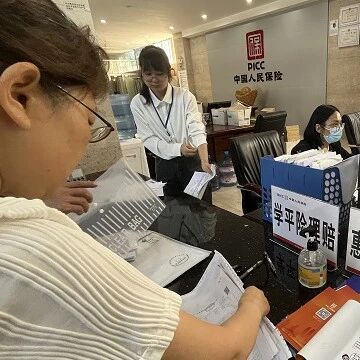
惠民保“上新”:多地保费分层,汕头主动衔接创新药目录丨“病有所保”大调研
Di Yi Cai Jing· 2025-11-13 12:41
Core Insights - The "惠民保" (Huimin Insurance) has expanded its coverage to include chronic diseases, mental health medications, outpatient drugs, overseas drugs, and original research drugs, reflecting a shift in the insurance landscape [1][2] - The insurance scheme has seen a significant increase in claims, with approximately 18 billion yuan paid for innovative drugs in the previous year, a ninefold increase from 2021 [1] - However, the experience of claims varies widely among the 150 million insured individuals, with some facing high out-of-pocket costs due to thresholds and pre-existing conditions [1][6] Group 1: Policy Changes and Trends - The recent notification from the National Financial Regulatory Administration emphasizes the need for commercial health insurance to align premium collection with coverage levels and avoid low-price competition [2] - The 2026 version of "惠民保" has introduced a tiered premium structure, moving away from the previous low-cost model, and has expanded coverage to include more drug categories [2][3] - The number of drugs covered under "惠民保" is expected to reach 672 by 2024, with a significant focus on innovative treatments for cancer and rare diseases [3] Group 2: Coverage Expansion - The 2026 "北京普惠健康保" (Beijing Universal Health Insurance) will cover 87 disease categories and 159 drugs, including new treatments for Alzheimer's and CAR-T therapy [4] - The "齐鲁保2026版" (Qilu Insurance 2026) has expanded its coverage to include 3 high-value medical devices and additional innovative drugs for chronic conditions [4] - Many regions are now including outpatient drugs and original research drugs in their coverage, indicating a trend towards more comprehensive health insurance products [3][4] Group 3: Risk Management and Pricing Strategies - The insurance sector is adopting a risk-based pricing model, allowing for differentiated premiums based on age, health status, and pre-existing conditions [6][10] - The introduction of tiered coverage options aims to balance the need for affordable premiums with adequate benefits, particularly for high-risk groups [6][10] - Recent adjustments have led to increased reimbursement rates for patients with pre-existing conditions, reflecting a shift towards more equitable coverage [8][10] Group 4: Inclusion of New Demographics - The 2026 "惠民保" products are increasingly targeting new citizens and those seeking medical care outside their registered locations, broadening the scope of insured individuals [10][11] - Initiatives to allow family members to share health insurance accounts and to include flexible workers and retirees in coverage are being implemented in various regions [10][11] - The trend towards inclusivity aims to enhance the overall participation rate in the "惠民保" scheme, particularly among younger and healthier individuals [10]
“湖南医惠保2026”启动 构筑普惠医疗保障新防线
Chang Sha Wan Bao· 2025-10-20 07:56
Core Viewpoint - The launch of "Hunan Medical Insurance 2026" represents a significant advancement in Hunan's multi-tiered medical security system, providing affordable supplementary medical insurance with a maximum coverage of 200 million yuan for both policy-covered and out-of-pocket expenses, starting from an annual premium of 128 yuan [1][3][7]. Group 1: Policy and Implementation - "Hunan Medical Insurance 2026" is guided by the Hunan Provincial Medical Security Bureau and the Hunan Regulatory Bureau of the National Financial Supervision Administration, co-underwritten by China Life Insurance Co., Ltd. Hunan Branch and China People's Property Insurance Co., Ltd. Hunan Branch, along with 11 other insurance institutions [3][4]. - The initiative aligns with the national "Healthy China" strategy and aims to reduce the medical burden on citizens by complementing basic medical insurance, showcasing characteristics such as government guidance, affordable pricing, and comprehensive coverage [3][4]. Group 2: Features and Benefits - The insurance product is characterized by strong inclusivity, with a low annual premium starting at 128 yuan, providing high coverage of up to 200 million yuan, thus achieving "low premium, high coverage" [7]. - It has a wide coverage scope, allowing all basic medical insurance participants in Hunan to purchase the insurance regardless of age, occupation, or health status [7][8]. - The coverage includes both out-of-pocket expenses under the basic medical insurance policy and additional costs for innovative drugs and rare disease treatments [7]. - The insurance allows for family pooling, enabling insured individuals to use their personal medical accounts to cover family members, enhancing accessibility [7]. - The service experience is optimized with a one-stop instant settlement system, allowing automatic claims processing upon patient discharge, thus streamlining the process [7]. - Additional health services include early screening for critical illnesses, basic health check-ups at designated institutions, and 24/7 online consultation services, shifting the focus from post-event claims to comprehensive health protection [7].