湖景房

Search documents
当房子成为家庭资产的“定海神针”,是福是祸?
Sou Hu Cai Jing· 2025-10-01 11:49
Core Insights - The article discusses the ongoing wealth distribution crisis in China, particularly in the real estate sector, highlighting the anxiety of individuals like Zhang Mingyuan who are caught in a financial dilemma as property prices continue to rise [1] - It emphasizes the stark contrast between the housing asset ratios of Chinese families compared to those in the United States, revealing a heavy reliance on real estate for wealth accumulation [3] - The article also points out the generational shift in financial burdens, with younger generations facing hidden financial pressures due to consumer debt and high living costs [5] - It addresses the demographic changes in China, including a declining birth rate and an aging population, which are contributing to a looming pension gap and wealth reallocation among the affluent [6] - Finally, it suggests potential solutions for individuals to navigate this wealth crisis, focusing on fundamental financial wisdom and seizing opportunities in emerging technologies [8] Group 1 - The article highlights the significant increase in local government reliance on land sales for revenue, with land transfer fees rising from 18% of fiscal revenue in 2003 to 67% in 2023 [1] - It reveals that housing assets account for 77% of total assets for Chinese families, compared to only 35% in the U.S., indicating a heavy dependence on real estate [3] - The debt-to-income ratio for urban households has surpassed 150%, with over 75% of this debt being mortgage-related, showcasing the financial strain on families [3] Group 2 - The article notes that the average debt-to-income ratio for individuals aged 18-25 has reached 180%, with 62% of this debt being consumer loans, reflecting a trend of financial overextension among younger generations [5] - It discusses the demographic shift, with the birth rate dropping to 8.5 million, the lowest since 1949, and the proportion of individuals over 60 exceeding 28%, leading to concerns about future pension sustainability [6] - The article mentions that high-net-worth individuals are increasingly reallocating their assets overseas, with the proportion of offshore investments rising from 15% to 35%, indicating a strategic shift in wealth management [6] Group 3 - The article suggests that individuals should focus on cash flow management, risk control, and the importance of sleep quality over mere account balances as fundamental financial principles [8] - It highlights the potential for wealth creation in artificial intelligence and renewable energy sectors, suggesting that knowledge will be the key to success for the new generation [8] - The article invites readers to consider various wealth preservation strategies, including real estate, index funds, personal skill investment, overseas asset allocation, and holding hard currencies like gold [8]


每远离旌湖100米,房价递减10%
Sou Hu Cai Jing· 2025-07-17 08:10
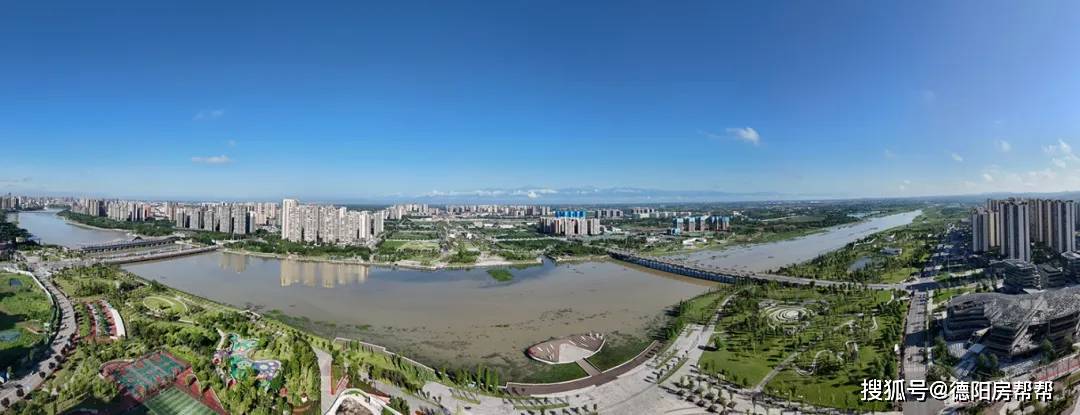
湖山,只属于懂她的人。 这样的人,在德阳只有少部分。 不是房子贵,是土地贵 你要清楚,土地才是房价的背景板,有一只大手对土地价格在掌控。 大家可能不是很清楚,有一个东西叫"基准地价",对德阳的土地做了等级划分,人不分三六九等,地要分啊。 而且是分Ⅰ、Ⅱ、Ⅲ、Ⅳ、Ⅴ这5个等级。 Ⅰ级是最高级别,我给大家看一张图,看你看到了什么? Ⅰ级土地绝对是城市核心地段,围绕旌湖而产生的或者是老城区的中心地带,不是湖景房也是离旌湖不远的土地。 5512元/㎡的基准地价也彰显了这一区域里的土地含金量。把房子买在这个区域内,毫无疑问,地段价值优势100%。 所以,湖景房地块,为啥一定比其他地块贵,秘密就在这。 但是,我可以很明确的告诉你,Ⅰ级土地区域内的可开发地块非常稀少,同时在售的楼盘也非常稀少,以后会更少。想在最好的地段买房,只有两个字: 趁早。 为什么? 两个字:资源! 最新的基准地价,我觉得肯定会沿着旌湖往北扩张!依旧是围绕着旌湖做文章。 核心资源,永远的神 城市的核心会随着城市发展而转移或者势能变弱。 比如,以前德阳只有一个中心,叫文庙。现在德阳城市板块分化成了多中心结构,并且伴随资源的转移,有些中心没落了。 ▲老火车 ...