灭菌乳(常温纯牛奶)

Search documents
生活观察|复原乳被请出灭菌乳新国标,牛奶该咋选?
Xin Hua Wang· 2025-09-17 10:20
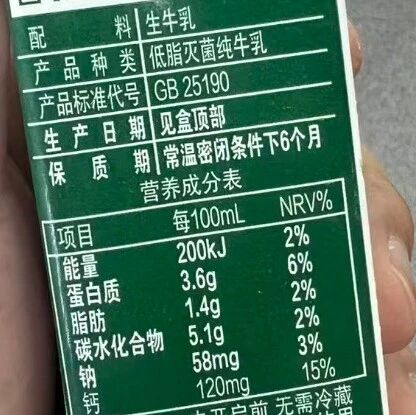
Core Viewpoint - The new national standard for sterilized milk in China prohibits the use of reconstituted milk, ensuring that consumers receive fresher and purer "pure milk" made solely from raw milk [1][2]. Group 1: Industry Changes - The revision of the national standard, effective from September 16, mandates that sterilized milk can only be produced using raw milk, eliminating the use of reconstituted milk [1][2]. - The use of reconstituted milk was previously allowed to manage production costs and supply fluctuations, but the current high quality and stable supply of fresh milk in China have made it unnecessary [2][3]. - The implementation of the new standard is seen as a positive step towards improving the quality of milk products in China, marking a shift towards higher quality standards in the dairy industry [3]. Group 2: Consumer Guidance - Consumers are advised to check the nutritional content on product packaging, with full-fat pure milk needing to meet specific standards: protein content of at least 2.9 grams per 100 grams and fat content of at least 3.1 grams per 100 grams [3][4]. - The sensory qualities of high-quality milk include a milky white or slightly yellow color, uniform liquid state without visible particles, and a pleasant, slightly sweet taste [3]. - The variety of dairy products available includes liquid milk, milk powder, and other dairy products, with liquid milk being the most commonly consumed category [4][5]. Group 3: Nutritional Recommendations - The 2022 Dietary Guidelines for Chinese Residents recommend a daily intake of at least 300 grams of dairy products [5]. - Different demographic groups should choose dairy products based on their specific nutritional needs, such as high-calcium milk for adolescents and specialized formula for pregnant women [5].
事关纯牛奶,今起全面禁用!
券商中国· 2025-09-16 04:05
Core Viewpoint - The new national standard for sterilized milk, effective from September 16, prohibits the use of reconstituted milk, mandating that only raw milk can be used as the sole ingredient for production [2][3]. Group 1: Changes in Standards - The prohibition of reconstituted milk is the most significant change in the revised standard, ensuring that products labeled as "sterilized milk" must be made from raw milk directly obtained from cows or sheep [2]. - The revised standard strictly limits the use of raw cow (or sheep) milk as the sole ingredient, ensuring the original quality of the product and enhancing the purity of domestic milk [2]. - The labeling requirements have become more stringent, mandating that companies accurately disclose ingredient information on product packaging, thereby improving transparency for consumers [2]. Group 2: Impact on the Dairy Industry - These three modifications are expected to have a profound impact on the high-quality development of the dairy industry, contributing to the overall quality and standards of sterilized milk products [3].