灵筹智算处理平台

Search documents
低空视界丨订单释放、取证加快 低空经济飞向“新高度”
Xin Hua Cai Jing· 2025-07-28 13:36
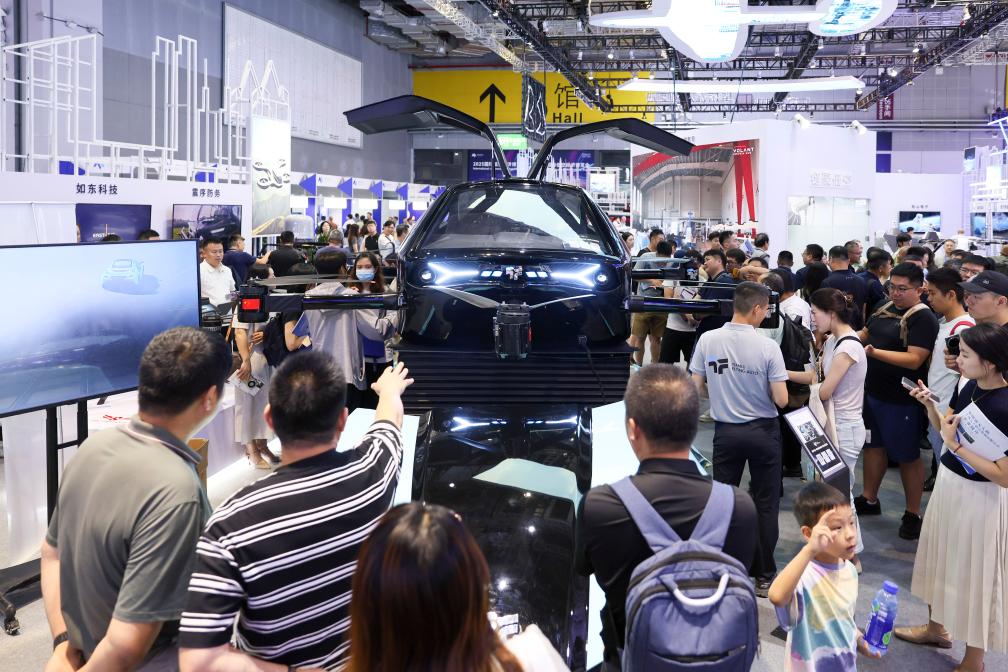
Core Viewpoint - The 2025 International Low Altitude Economy Expo showcased significant advancements in low-altitude technology, highlighting China's capabilities in the sector and resulting in substantial international orders totaling $1.75 billion [1][4]. Group 1: Event Highlights - The expo featured 201 low-altitude aircraft, including 155 drones, 34 general aviation aircraft, and 12 eVTOL products, demonstrating China's hard power in low-altitude economy [1]. - The event included innovative applications such as drone soccer, which is rapidly gaining popularity globally, combining technology with sports [2]. - China Post presented the ZC500 dual-rotor drone, capable of carrying 260 kg and operating for up to 10 hours, already in use across 16 provinces for various delivery services [2]. Group 2: Orders and Collaborations - Autocraft from the UAE signed a $1 billion agreement for 350 eVTOLs, while Volant Aerospace secured a record $1.75 billion deal for 500 eVTOLs with a Thai group [4]. - The Joint Aircraft Group received orders for 450 industrial drones, and Seabee amphibious aircraft is in talks for over 400 units with investors [4]. - EHang has achieved significant milestones in airworthiness certification, positioning itself as a leader in the eVTOL market [4][5]. Group 3: Safety and Regulatory Environment - Safety emerged as a primary concern, with the National Development and Reform Commission emphasizing the importance of safety in the development of the low-altitude economy [6]. - The industry is urged to establish a comprehensive safety system, including quality assurance for aircraft and robust regulatory frameworks [6][7]. - The future of new flying vehicles is expected to involve advanced decision-making capabilities and real-time control, necessitating stringent entry barriers and safety standards [7].

财经聚焦丨场景上新 取证加快 安全优先——低空经济发展呈现三大新动向
Xin Hua She· 2025-07-28 11:16
Group 1: Core Trends in Low-altitude Economy - The low-altitude economy is emerging as a new competitive arena for local governments and enterprises, with expanding application scenarios and accelerated airworthiness certification processes [1][4] - Over 19 products had their global debut and 25 had their domestic debut at the recent International Low-altitude Economy Expo, showcasing continuous innovation and new application scenarios [1][2] - The introduction of innovative products like the "magic football" drone and the ZC500 dual-rotor drone by China Post highlights the integration of technology in sports and logistics [1][2] Group 2: Airworthiness Certification Progress - The airworthiness certification process is accelerating, with companies like EHang and Peak Fly Aviation receiving necessary certifications for commercial operations, indicating a maturing regulatory environment [3][4] - EHang received its first operational qualification certificate for manned civil unmanned aerial vehicles, allowing for commercial operations in approved areas [3] - The completion of the "three certificates" signifies that the aircraft can meet all conditions for commercial delivery, positioning China ahead of the U.S. and Europe in eVTOL certification [4] Group 3: Safety as a Priority - Safety has become a paramount concern in the low-altitude economy, with the National Development and Reform Commission emphasizing that "no safety, no low-altitude" [6] - A comprehensive safety system is essential, involving the quality of aircraft, infrastructure networks, and real-time communication capabilities to prevent collisions [6] - The development of intelligent processing platforms aims to enhance decision-making and control capabilities for new flying vehicles, ensuring safety in dynamic and high-risk environments [6]