热皮

Search documents
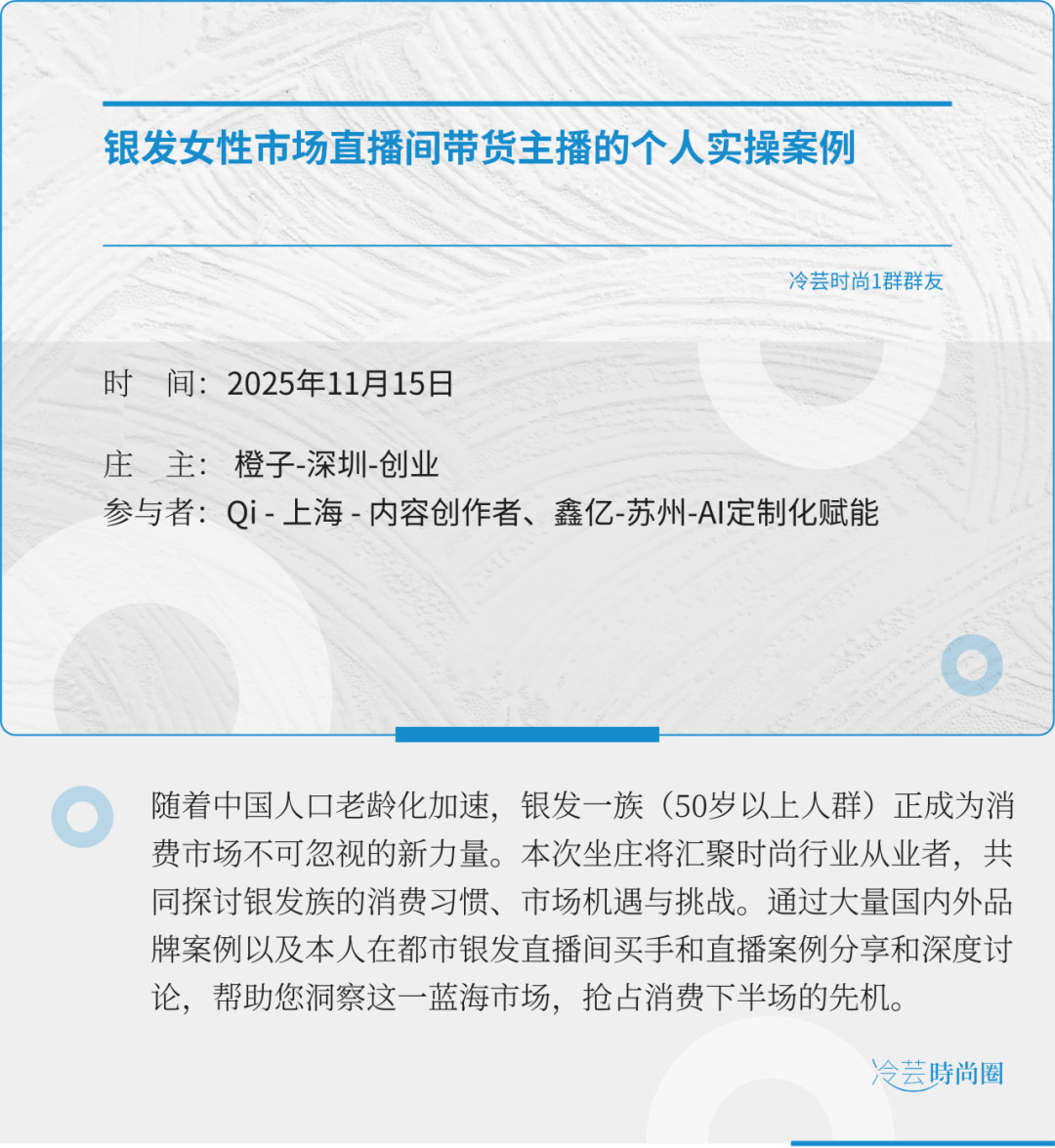
女装市场|银发女性市场直播间带货主播实操案例分享
Sou Hu Cai Jing· 2026-01-16 01:21
Core Insights - The aging population in China, particularly those aged 50 and above, is becoming a significant consumer force in the market, presenting both opportunities and challenges for businesses targeting this demographic [1][5]. Group 1: Characteristics of the Silver-Haired Consumer Market - The silver-haired demographic is diverse, with varying consumption capabilities influenced by factors such as retirement income, which can range from a few hundred to over 8,000 yuan per month [6]. - Consumption habits among the elderly can be segmented by region, city, and education level, similar to younger demographics, due to the large population base and significant differences in financial capacity [6][8]. Group 2: Consumption Behavior and Preferences - Some elderly women prefer offline shopping for the ability to try on clothes, while others are open to online purchases, especially through live streaming, where they can make quick decisions based on visual appeal [8][10]. - The live streaming audience for the host's channel includes a wide range of consumers from first-tier to lower-tier cities, who may not have access to the brands sold in their local stores [8][10]. - The consumption motivation for the audience is often driven by the appeal of the host's outfit combinations, leading to impulsive purchases during live streams [8][9]. Group 3: Market Size and Challenges - The silver-haired demographic faces high return rates in fashion e-commerce, often due to issues like color discrepancies and sizing problems, with women's clothing return rates averaging around 80% [10][11]. - Many elderly consumers are susceptible to scams in live streaming, often lured by low-priced products that may not meet quality expectations [10][11]. Group 4: Brand Preferences and Market Trends - Popular brands among the silver-haired demographic include those that offer stylish options without the "elderly" stigma, such as Uniqlo and Skechers, which appeal to their desire for quality and design [15][16]. - The decline in sales for brands like 足力健 (Aolijian) indicates a shift in preferences, as more elderly consumers seek fashionable and comfortable alternatives available through e-commerce platforms [13][15]. Group 5: Live Streaming and Influencer Impact - Successful KOLs (Key Opinion Leaders) in the silver-haired market have amassed significant followings, with some achieving sales figures in the millions during live streams [19][20]. - The effectiveness of live streaming as a sales channel is enhanced by the frequency and duration of broadcasts, with longer sessions often leading to higher engagement and sales [22][23].

一年卖近70亿的蕉内,最大对手不是优衣库|厚雪专访
36氪未来消费· 2025-05-08 06:41
Core Viewpoint - The article discusses the growth and strategic positioning of the company Bananai, emphasizing its differentiation in the clothing market and the challenges it faces from competitors, particularly white-label brands, rather than established players like Uniqlo [2][5][8]. Group 1: Company Growth and Strategy - Bananai achieved a remarkable growth rate of 300% and became a top player in the underwear market, with a projected GMV of nearly 7 billion in 2024 [2][5]. - The company has expanded from being an underwear brand to a comprehensive clothing brand, aiming to establish itself as a significant player in the slow fashion segment rather than merely a competitor to Uniqlo [5][10]. - The founder, Zang Chongyu, emphasizes the importance of physical differentiation in products, such as the introduction of tagless underwear, which has helped the brand stand out in a crowded market [3][38]. Group 2: Market Positioning and Competition - Bananai's primary competition is not Uniqlo but rather white-label brands, which pose a significant threat due to market saturation and consumer downgrading [14][16]. - The brand aims to maintain its pricing strategy despite market changes, focusing on delivering quality and value to its customers [17][18]. - Zang Chongyu believes that the long-term survival of a brand is more critical than short-term explosive growth, advocating for a sustainable growth strategy [6][22]. Group 3: Brand Identity and Consumer Engagement - Bananai seeks to redefine comfort through its "body sensation science" approach, which has been a core concept since its inception [11][12]. - The company is focused on creating a unique brand identity that resonates with consumers, moving beyond the traditional associations of comfort to a more engaging and interesting brand narrative [25][27]. - The founder expresses a desire for the brand to be perceived as "cool," emphasizing the importance of being relevant and appealing to a broad audience [26][27]. Group 4: Future Outlook and Challenges - The company recognizes the need for a balanced online and offline presence, stating that "without offline, there is no future" and "without e-commerce, there is no growth" [44]. - Bananai is committed to enhancing its retail capabilities and expanding its physical store presence to better communicate its brand identity [39][42]. - The focus for the next few years will be on achieving synergy between online and offline channels while continuing to innovate in product development [43][44].