
爬楼梯轮椅

Search documents
实现用意念驾驭轮椅 科技广货怎么做到的?
Xin Lang Cai Jing· 2026-01-25 00:45
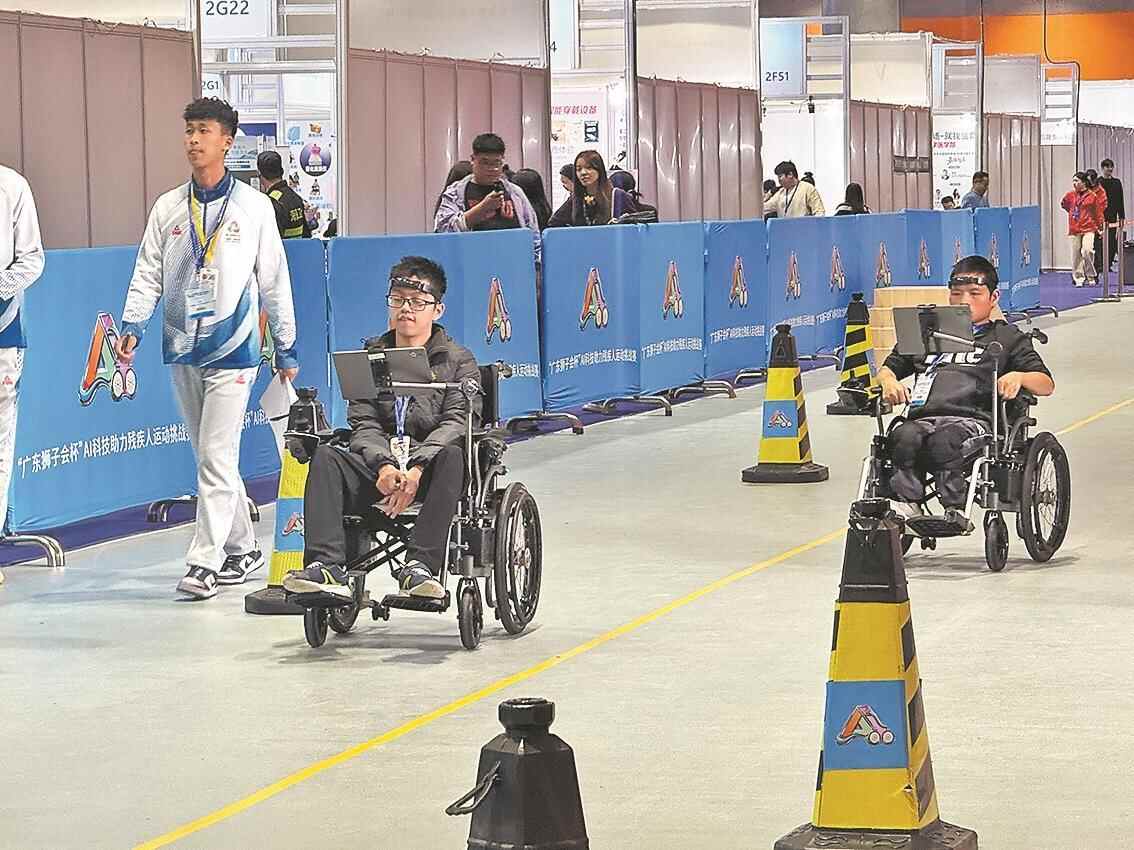
Core Viewpoint - The article highlights the innovative use of brain-machine interface technology in smart wheelchairs, which allows individuals with disabilities to control their movement through thought, significantly enhancing their mobility and independence [5][10]. Group 1: Technological Innovation - The smart wheelchair developed by Huazhong Brain Control utilizes non-invasive brain-machine interface technology, enabling users to control the wheelchair using brain signals captured by a lightweight headband [5][9]. - The technology allows for various control methods, such as focusing gaze to start, blinking to confirm direction, turning the head to steer, and nodding to brake, thus eliminating the need for physical movement [5][9]. - The brain-machine interface system has been integrated into competitive sports, allowing athletes to compete using their mental focus, showcasing the technology's potential in both sports and rehabilitation [5][9]. Group 2: Market and Industry Impact - Guangdong's smart wheelchair industry has a market share of 50%-60% for wheelchairs and walking aids, with a 70% export share nationwide, indicating a robust industry foundation [10]. - The industry has seen significant advancements, evolving from basic mobility solutions to smart, personalized options, including features like automatic following and intelligent navigation [9][10]. - The digital production processes have accelerated customization, reducing delivery times and achieving a product qualification rate of over 99.5% [9]. Group 3: Societal Contribution - The development of smart wheelchairs reflects Guangdong's commitment to assistive technology and the empowerment of individuals with disabilities, enhancing their quality of life and participation in society [10][12]. - The technology not only facilitates mobility but also promotes dignity and equality for disabled individuals in sports and daily life, contributing to a more inclusive society [10][12]. - The integration of brain-machine interface technology into various applications, including rehabilitation and education, has served over 500,000 individuals, demonstrating its wide-reaching impact [9][12].

当“创新基因”碰上“民生温度” 龙岗科技助残产品将亮相残特奥会
Shen Zhen Shang Bao· 2025-06-30 22:45
Group 1 - The core focus of the news is on the integration of AI technology in assistive devices showcased at the 12th National Paralympic Games and the 9th Special Olympics, highlighting advancements in products like smart hearing aids and rehabilitation robots [1][2] - The Longgang District government collaborates with 38 tech companies to select 108 assistive products, including sign language translators and AI glasses for the visually impaired, demonstrating a comprehensive approach to support disabled individuals during the event [2] - Longgang's strategy emphasizes the fusion of innovation and social welfare, leveraging its strong electronic information and AI industry base to enhance the quality of life for people with disabilities [1][2] Group 2 - The establishment of a 4,000 square meter "Smart Assistive Device Experience Center" in Longgang serves as a testing ground for advanced assistive technologies, showcasing the district's commitment to integrating market, public welfare, and government resources [1] - The initiative aims to transform Longgang from an industrial district into a city characterized by technological innovation and accessibility, addressing the real needs of disabled individuals through practical applications of technology [2]