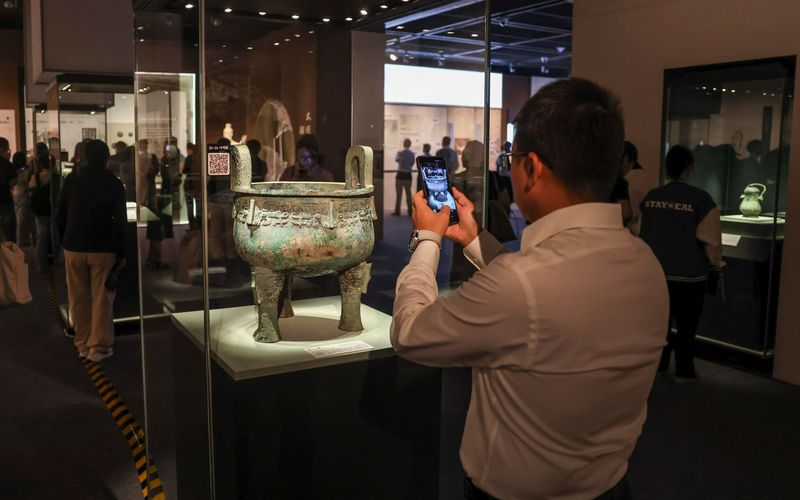
牛头纹带盖伯矩鬲

Search documents
这处遗址将北京建城史推至3千多年前,来看这里出土的青铜器
Xin Lang Cai Jing· 2025-08-30 00:48
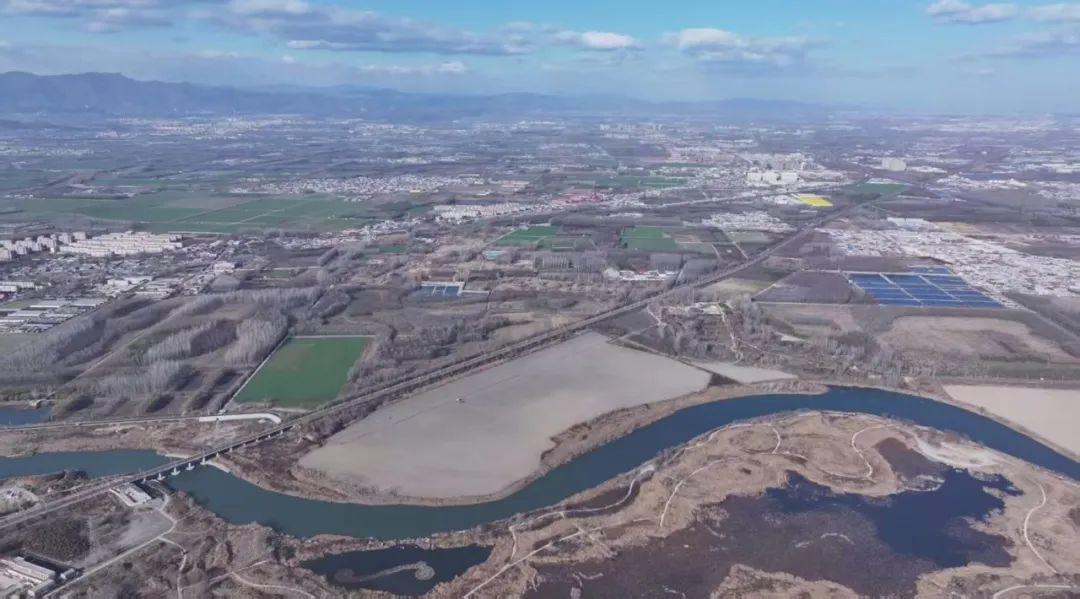
Core Viewpoint - The Liuli River site is recognized as the largest known Western Zhou site in the southern Yanshan region of Beijing, marking the origin of Beijing's city history over 3,000 years ago, and is celebrated as the "source of Beijing city" [1][5][21]. Summary by Sections Exhibition Overview - The "Taibao Yongyan - Liuli River Site Special Exhibition" at the Capital Museum showcases the most comprehensive archaeological findings from the Liuli River site in 80 years, featuring a total of 180 precious artifacts, with 113 items being exhibited for the first time [5][6]. - The exhibition is divided into four sections: "Mandate of the Northern Frontier," "Establishment of the Yan Capital," "Ding Tian Li Di," and "Inheritance and Continuity," revealing the historical and archaeological significance of the site [1][5]. Archaeological Significance - The excavation of the Liuli River site has played a crucial role in understanding the early feudal state of Yan, confirming the specific location of the northern Yan territory mentioned in historical texts [3][5]. - The site has yielded significant findings, including multiple city walls, large buildings, complete burial areas, and inscriptions, showcasing a wealth of artifacts such as exquisite bronze, lacquered wood, jade, primitive porcelain, and pottery [5][24]. Key Artifacts - Notable artifacts include the Jin Ding, the largest and heaviest bronze ritual vessel from the Beijing area, and the Niutouwen Daitou Boju Li, recognized as one of China's most beautiful bronze vessels [6][19]. - The exhibition features three bronze vessels inscribed with "Taibao Yongyan," serving as undeniable textual evidence of Beijing's early city history [10][13]. Historical Context - The Liuli River site, located in the Fangshan District, covers an area of approximately 5.25 square kilometers and has been subject to extensive archaeological work since its discovery in 1945 [21][24]. - The site was confirmed as the capital of the Yan state during the Western Zhou period, with significant discoveries made during excavations, including 69 tombs and chariot pits [23][24]. Recent Developments - Recent archaeological efforts have revealed the existence of an outer city moat and walls, expanding the site’s scale from less than 600,000 square meters to approximately 1 million square meters [24][25]. - The site has been selected as one of the "Top Ten Archaeological Discoveries of 2024," highlighting its importance in understanding the early urban development of Beijing [25]. Cultural Engagement - The exhibition includes a creative design area for public participation in the planning of the Liuli River archaeological park, allowing visitors to engage with the historical narrative [25][26]. - A cultural and creative product area has been established, featuring non-heritage crafts and designs that reflect the regional civilization of Fangshan, enabling visitors to take home a piece of history [26].

首博重磅新展拿出镇馆之宝,百余件文物首亮相探寻北京“城之源”
Xin Jing Bao· 2025-08-28 10:21
Core Viewpoint - The "Taibao Yongyan - Liuli River Site Special Exhibition" at the Capital Museum showcases 180 precious cultural relics, marking the most comprehensive and highest standard exhibition of archaeological findings from the Liuli River site in 80 years, and is the first exhibition of the "2024 Annual Top Ten New Archaeological Discoveries in China" [1][3]. Summary by Sections Exhibition Overview - The exhibition runs from August 28 to November 28, featuring 180 artifacts that illustrate the historical significance of the Liuli River site, which is considered the "source of Beijing city" [1]. - It is the first exhibition in the "Beijing Historical and Cultural Exhibition" series at the Capital Museum [1]. Artifacts and Their Significance - Among the 180 artifacts, 39 are categorized as important relics, representing one of the highest proportions in recent years, with 113 items being publicly exhibited for the first time [3]. - The exhibition includes significant items such as the Jin Ding, the largest and heaviest bronze ritual vessel found in Beijing, and the Niutouwen Daigebuju, recognized as one of China's most beautiful bronze artifacts [4][3]. Thematic Structure - The exhibition is divided into four sections: "Receiving Orders from the Northern Frontier," "Establishment of Yandu," "Ding Tian Li Di," and "Inheritance and Continuity," focusing on archaeological achievements and cultural heritage protection from the Liuli River site [3]. - It aims to reveal the mysterious past of the Liuli River site through a historical and archaeological narrative that integrates text, capital, and artifacts [3]. Notable Discoveries - The exhibition features three bronze vessels inscribed with "Taibao Yongyan," which provide undeniable textual evidence of Beijing's city-building history, pushing the timeline back over 3,000 years [9][11]. - The "one mistake for three thousand years" artifacts, the Boyu Gui and the Yu Gui, are also displayed, showcasing their historical significance and the confusion in their burial context [9][11]. Interactive and Educational Features - The exhibition incorporates multimedia interactions, allowing visitors to engage with the artifacts and the historical context of the Liuli River site [12]. - A creative space features 116 unique cultural products inspired by the Liuli River site, enhancing visitor experience and connection to the historical elements [12]. Community Engagement and Future Plans - The exhibition includes a message book for visitors to share their thoughts, fostering community involvement in the narrative of the Liuli River site [14][15]. - Future plans for the Liuli River Archaeological Park are underway, with design proposals being collected from the public to shape the site's development [15].