特斯拉擎天柱机器人(Optimus)

Search documents
国泰海通|汽车:中国人形机器人公司在CES 2026上表现亮眼
国泰海通证券研究· 2026-01-13 13:20
Core Viewpoint - The humanoid robot industry is entering its early commercialization phase, necessitating attention to marginal changes affecting both domestic and overseas quality companies [1] Group 1: Industry Progress - Recent advancements in humanoid robot enterprises in both domestic and international markets indicate a potential resonance between the two, accelerating the global commercialization of humanoid robots [2] - At CES 2026, over 28 Chinese humanoid robot companies showcased their technologies, representing more than half of the exhibitors in the humanoid robot sector, highlighting China's technological capabilities [2] - Notable products included Zhiyuan Robot's full product line and interactive demonstrations from companies like Zhongqing Robot, showcasing the industry's innovation and engagement [2] Group 2: International Developments - Several overseas companies also made significant strides in humanoid robotics at CES 2026, including LG's CLOiD for home tasks and Boston Dynamics' new Atlas robot with advanced capabilities [3] - Boston Dynamics' Atlas features 56 degrees of freedom and can autonomously change its battery, indicating a leap in robotic functionality and potential applications in various industries [3] Group 3: Market Dynamics - New Jian Transmission has initiated its listing guidance, with plans to assist in its IPO application, emphasizing its role as a core component supplier for Tesla's humanoid robot [4] - The company specializes in manufacturing various components, indicating a growing supply chain for humanoid robotics in the automotive sector [4]


特斯拉“小伙伴”启动上市辅导
Zhong Guo Zheng Quan Bao· 2026-01-11 00:58
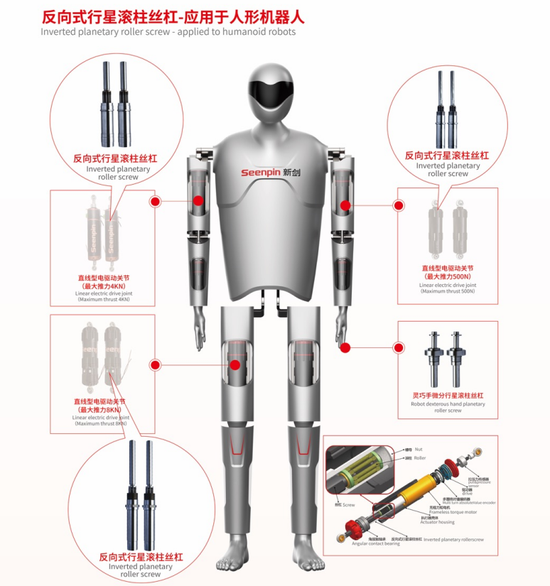
Core Viewpoint - Hangzhou Xinjian Electromechanical Transmission Co., Ltd. (referred to as "Xinjian Transmission") has initiated the listing guidance process, with CITIC Securities as its advisory institution. The company is a core supplier of components for Tesla's humanoid robots, with its products already applied in Tesla's Optimus robot in 2022 [1][2]. Company Overview - Xinjian Transmission was established in 1999 and is classified as a C34 general equipment manufacturer, with Shanghai Xinjian Asset Management Co., Ltd. holding a 29.40% stake. The company specializes in the research and production of various components, including rolling forming worm gears and electric drive joints [2]. - In 2022, Xinjian Transmission reported a total revenue of 200 million yuan and a net profit of 17.51 million yuan. The company has obtained multiple patents related to humanoid robots, including methods for self-disturbance control and assembly methods for planetary roller screw pairs [2][3]. Strategic Developments - In the first quarter of 2025, Xinjian Transmission will commence construction of its headquarters and a production base for 1 million units of humanoid robot planetary roller screws, with a total investment of 2.6 billion yuan [3]. - The company has signed strategic cooperation agreements with several listed companies, including a partnership with Zhejiang Honghui Electric Co., Ltd. to collaborate on humanoid robot actuators and another agreement with Wuzhou Xinchun to enhance the production of various components [4]. Industry Trends - The domestic humanoid robot shipment volume is expected to reach 18,000 units in 2025, representing a growth of over 650% compared to 2024. By 2026, this figure could rise to 62,500 units, driven by companies like Tesla and others accelerating production [5][6]. - The global humanoid robot production capacity is anticipated to see significant growth by 2026, with Chinese supply chain companies expected to double their revenues due to increased demand for core components such as 3D vision systems and reducers [6].
特斯拉“小伙伴”,启动上市辅导
Zhong Guo Zheng Quan Bao· 2026-01-11 00:24
Core Viewpoint - Hangzhou Xinjian Electromechanical Transmission Co., Ltd. (referred to as "Xinjian Transmission") has initiated its listing guidance work, with CITIC Securities as the advisory institution, focusing on the production of core components for humanoid robots, particularly for Tesla's Optimus robot [1][3]. Company Overview - Xinjian Transmission was established in 1999 and is classified as a C34 general equipment manufacturer, with Shanghai Xinjian Asset Management Co., Ltd. holding 29.40% of its shares [1]. - The company specializes in the research and production of various products, including rolling forming worm gears, seat horizontal actuators, planetary roller screw linear electric drive joints, and rotary electric drive joints [1]. Financial Performance - In 2022, Xinjian Transmission reported a total revenue of 200 million yuan and a net profit of 17.51 million yuan [3]. Patent Developments - By 2025, Xinjian Transmission has obtained multiple patents related to humanoid robots, including methods for self-disturbance control in linear electric drive joints and assembly methods for planetary roller screw pairs [3]. Strategic Initiatives - In the first quarter of 2025, Xinjian Transmission will commence construction of its headquarters and a production base for 1 million units of humanoid robot planetary roller screws, with a total investment of 2.6 billion yuan [4]. - The company has signed strategic cooperation agreements with several listed companies, including a partnership with Zhejiang Honghui Electric Co., Ltd. to collaborate on humanoid robot actuators [4]. Industry Growth Projections - The domestic humanoid robot shipment volume is expected to reach 18,000 units in 2025, representing a growth of over 650% compared to 2024, with projections for 2026 indicating a rise to 62,500 units [4]. - Major manufacturers like Tesla and others are accelerating the development of humanoid robots, with Tesla's Optimus aiming for mass production of 1 million units by 2026 [5]. Market Dynamics - The global humanoid robot production capacity is anticipated to see significant growth by 2026, driven by the expansion of leading manufacturers and domestic enterprises, with related companies in the supply chain expected to double their revenues [6]. - Key growth drivers include the surge in demand for core components such as 3D vision systems, reducers, and screws, alongside advancements in computational power and policy support [6].