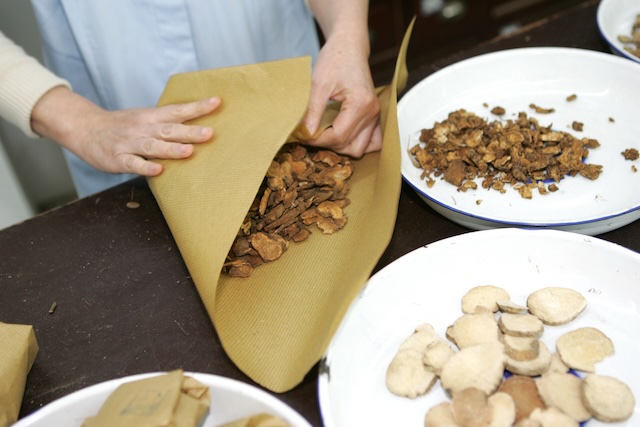
猫爪草

Search documents
【财经分析】中药材价格“过山车” 震荡冲击中医药产业链稳定
Xin Hua Cai Jing· 2025-12-12 09:33
Core Viewpoint - The Chinese herbal medicine market has experienced extreme price fluctuations over the past two years, resembling a "roller coaster," which disrupts the stability of the industry chain and harms the interests of farmers, enterprises, and patients. There is a call for enhanced price monitoring and market regulation to promote stable development in the industry [1]. Price Volatility - The price of cat's claw grass has seen dramatic fluctuations, rising from 70-80 yuan per kilogram to 1100 yuan in March 2023, and then plummeting to 46 yuan [2]. - Major herbs like astragalus, codonopsis, and angelica have also seen average price declines of about 40%, with prices for codonopsis dropping from 120 yuan to around 50 yuan per kilogram [2]. - The China Traditional Chinese Medicine Price Index indicates a continuous decline in herbal prices since July 2024, following a significant increase of 31% from 1702.86 points to 2227.69 points in the previous year [2]. Industry Challenges - Farmers face high risks due to information asymmetry and "blind planting," leading to losses when prices drop after a period of high prices [4]. - For instance, a farmer in Gansu reported a loss of 800 yuan per mu due to low yields and high costs [4]. - The volatility in prices disrupts production and operational rhythms for herbal medicine companies, leading to rapid devaluation of inventory and profit erosion [4]. Calls for Improvement - The industry is urged to enhance quality, control production volume, and extend the value chain to stabilize the market [5]. - Legal measures are being implemented to protect local herbal varieties, such as the new regulations in Gansu aimed at establishing a traceability system using IoT and blockchain technology [6]. - There is a push for increased organizational capacity within the industry, promoting cooperative models to improve risk resistance and market stability [7]. - Branding strategies are recommended to elevate the value of herbal products, drawing on successful practices from other industries [7].
暴跌,“曾经论克卖的药材,如今按斤称都嫌贵”
Di Yi Cai Jing· 2025-08-08 10:58
Core Viewpoint - The significant decline in traditional Chinese medicine (TCM) herb prices reflects a broader downturn in the TCM market, with many herbs experiencing price drops of nearly 90% from previous highs [2][3]. Price Trends - Prices for TCM herbs such as Ziwun and Cat Claw Grass have plummeted from 80 yuan and over 1,000 yuan per kilogram to 9 yuan and 66 yuan, respectively [2]. - A total of 835 out of 1,095 TCM herb varieties tracked by Kangmei TCM Network have seen price declines this year, representing approximately 75% of the total [2]. - The TCM Comprehensive 200 Index has dropped from 3549.47 on July 18, 2024, to 2812.85 on August 4, 2025 [2]. Market Dynamics - The current price drop is attributed to the aftermath of previous speculative trading, leading to overproduction and excess inventory in the TCM market [3]. - The decline in prices has caused panic among stockpilers and traders, prompting them to liquidate their holdings, further driving down prices [3]. - Experts indicate that the market has not yet fully adjusted, with many industry participants facing significant financial losses due to the price drop [4]. Supply and Demand Factors - The supply of TCM herbs is heavily influenced by weather conditions and regional planting volumes, making it less flexible compared to chemical drug raw materials [5]. - The demand for TCM herbs is driven by consumer health needs, processing into TCM tablets, and production of traditional Chinese patent medicines [5]. - Despite the short-term benefits of lower herb prices for manufacturers and consumers, the long-term implications could harm the stability of the industry due to the adverse effects on farmers [5].

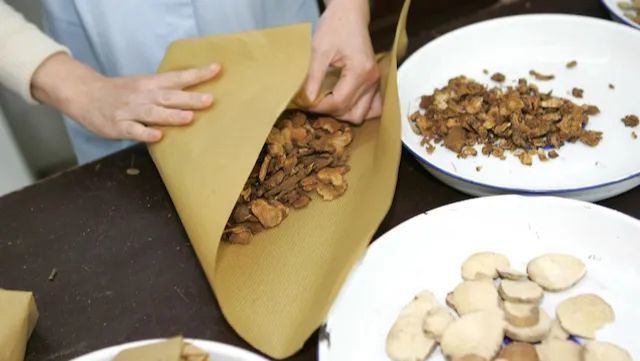
暴跌!“曾经论克卖的药材,如今按斤称都嫌贵”
第一财经· 2025-08-08 10:35
Core Viewpoint - The article highlights a significant decline in the prices of traditional Chinese medicinal herbs, reflecting a broader downturn in the industry after a period of speculative price increases. Price Decline Overview - The price of Ziwun has dropped from 80 yuan per kilogram to 9 yuan, while the price of Cat Claw Grass has fallen from over 1,000 yuan to 66 yuan, indicating a nearly 90% decrease in prices for these herbs this year [3][4] - A total of 835 out of 1,095 monitored medicinal herb varieties have seen price declines this year, accounting for approximately 75% of the market [3] - Notable herbs with price drops exceeding 30% include Bai Zhu, Lian Qiao, Jin Yin Hua, Niu Huang, Ban Lan Gen, and Dang Gui [3] Market Dynamics - The current price drop is attributed to the aftermath of previous speculative trading, which led to overproduction and excess inventory in the market [4] - The market has experienced a panic sell-off as traders rush to liquidate stock, further driving down prices [4] - Experts suggest that the price adjustments have not yet reached a stable level, with many industry participants facing significant financial losses due to the downturn [5] Supply and Demand Factors - The supply of medicinal herbs is heavily influenced by environmental factors, making it less flexible compared to chemical raw materials [5] - The demand for medicinal herbs is driven by consumer health needs, processing into medicinal slices, and production of traditional Chinese medicine [5] - The current imbalance between excess supply and stagnant demand from downstream manufacturers is a key factor in the price decline [6] Long-term Implications - While the price drop may temporarily reduce costs for manufacturers and benefit consumers, it poses risks to the long-term stability of the industry, as low prices can harm farmers [6]
1095个品种有835个今年价格累计下跌,中药材价格缘何现暴跌
Di Yi Cai Jing· 2025-08-08 09:46
Core Viewpoint - The significant decline in traditional Chinese medicine (TCM) herb prices reflects a broader downturn in the industry, with many herbs experiencing price drops of nearly 90% from previous highs, indicating a market correction after years of speculation and overproduction [1][3]. Price Trends - Prices of specific herbs like Cat's Claw and Aster have plummeted, with Cat's Claw dropping from over 1,000 yuan per kilogram to 66 yuan, and Aster from 80 yuan to 9 yuan [1]. - A total of 835 out of 1,095 TCM herb varieties tracked by Kangmei TCM Network have seen price declines this year, representing approximately 75% of the market [1]. - The TCM Comprehensive 200 Index has decreased from 3549.47 on July 18, 2024, to 2812.85 by August 4, 2025, indicating a significant market downturn [1]. Market Dynamics - The current price drop is attributed to the aftermath of previous speculative trading, leading to overproduction and excess inventory in the TCM sector [3]. - Market panic has led to wholesalers and traders rushing to liquidate stock, further driving down prices [3]. - Experts suggest that the decline in prices has not yet reached a stable adjustment point, indicating ongoing volatility in the market [3]. Supply and Demand Factors - The supply of TCM herbs is heavily influenced by environmental factors, making it less flexible compared to chemical drug production [4]. - The demand for TCM herbs is driven by consumer health needs, production of herbal tablets, and traditional Chinese medicine formulations [4]. - The current imbalance between overproduction and insufficient demand from downstream manufacturers is contributing to the price decline, which may benefit short-term costs but poses long-term risks to industry stability [4].