玉米淀粉糖

Search documents
重申食品饮料产业链-把握上游-还是上游
2026-03-13 04:46
Summary of Conference Call on Food and Beverage Industry Industry Overview - The food and beverage industry is expected to face dual pressures from rising upstream costs and weak downstream demand in 2026, leading profits to tilt towards the upstream B-end segments [1][4] - Geopolitical factors and national security concerns are driving commodity prices to remain high, with expectations for continued price increases in raw materials like corn until 2026 [1][2] Key Insights and Arguments - The current price increase logic is primarily driven by upstream factors rather than downstream consumer goods, as the economy is in a structural transition or at the end of a recession [2] - The ability to pass on cost increases to consumers is limited due to the overall L-shaped consumer power, making upstream positions safer [2][4] - The main drivers of the current price increases are geopolitical factors, followed by supply-demand dynamics, particularly in energy prices affecting agricultural products [2][3] Investment Strategies - Investment in the upstream supply chain should focus on three main lines: 1. Identifying companies with price transmission capabilities 2. Focusing on those that can achieve supply-side clearing 3. Targeting companies with low-cost inventory to facilitate profit recovery [5] - Specific areas of interest include: 1. Corn industry chain, especially starch sugars and related products 2. Agricultural processing sectors, particularly tomatoes and cotton 3. Food packaging, where companies producing aluminum sheets may have pricing power [5] Company-Specific Insights Huakang Co., Ltd. - Huakang is positioned to benefit from rising raw material prices leading to supply-side clearing, similar to the pig cycle model [6] - The company is expected to see significant profit improvements by the second half of 2026, with a favorable price point anticipated due to industry supply clearing [6] Guannong Co., Ltd. and COFCO Technology - Guannong's investment logic is currently focused on its stable profits from potassium mining, while its tomato sauce business is expected to benefit from rising raw material prices [7][8] - COFCO Technology is involved in corn starch and biofuel ethanol production, with potential profit improvements linked to rising oil prices and increased ethanol demand [8] Downstream Sector Analysis - The core influencing factor for the downstream sector is consumer demand, which remains weak, particularly for the liquor sector [9] - The first quarter of 2026 will be a critical observation point for the liquor sector, with potential for a trend reversal if earnings downgrades are sufficient [9] Investment Potential in Downstream - Companies with B-end customization capabilities are viewed as having greater investment potential, such as Miaokelan and Yihai International [10] - The focus on B-end clients allows for premium pricing due to higher customization demands, making it easier to implement price increases [10] Overall Investment Rhythm for 2026 - The recommended investment rhythm for 2026 suggests focusing on upstream sectors in the first half and potentially shifting to downstream sectors in the second half, contingent on consumer recovery [10] - Key areas for short-term focus include starch sugar processing, juice processing, wood products, functional sugars, and bio-extraction, with notable companies being Guannong, Huakang, COFCO Technology, and others [10]
构建标准体系助力民企规范生产
Xin Lang Cai Jing· 2026-01-05 22:49
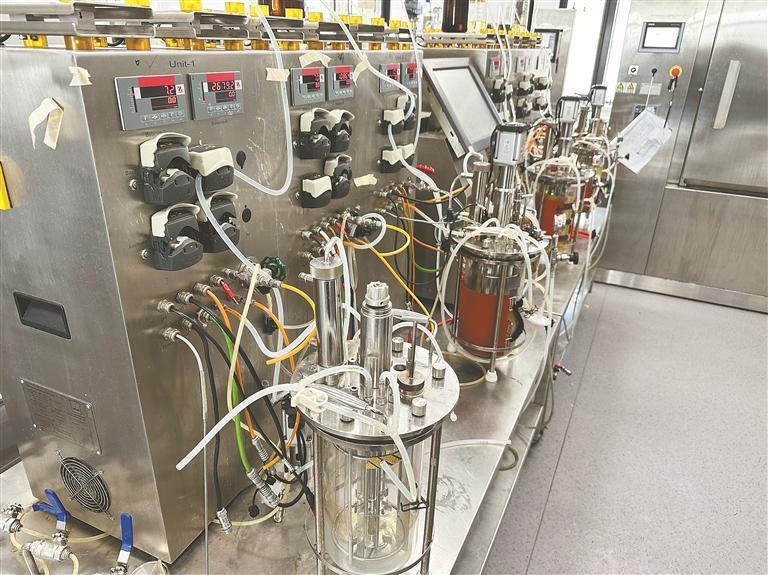
Group 1 - The core viewpoint of the article highlights the establishment of a comprehensive standard system for the corn bio-fermentation industry in Suihua City, leveraging the region's corn resource advantages and industrial foundation to empower private enterprises for high-quality development [3][4] Group 2 - The "Suihua City Corn Bio-Fermentation Industry Standard System" integrates a total of 497 standards, including national, industry, local, and group standards, covering four sub-systems: basic general standards, product standards, method standards, and management standards [3] - The product standards sub-system includes nine major industrial chains, providing standardized technical guidance for corn bio-fermentation enterprises [3] - An expert database has been established, comprising 19 experts from testing institutions and key enterprises, covering fields such as food testing, corn starch sugar, and fermentation vitamins, to assist companies in overcoming technical challenges during the implementation of standardization [4] - The Suihua City government has created an online service area for the corn bio-fermentation industry standard system, offering customized standardization consulting, production guidance, and policy inquiries, thus injecting strong momentum into the development of private enterprises [4] - The standard system has provided over 500 query services and conducted seven technical assistance sessions for more than 30 private corn bio-fermentation enterprises, guiding three companies in establishing their own standard systems and assisting four companies in revising nine enterprise standards [4] - The Suihua City Market Supervision Administration plans to continue focusing on the development needs of private enterprises, using standardization construction as a key approach to support high-quality development [4]