
玉虎

Search documents
“玉”见中华文明——155件(组)珍贵玉器亮相中国考古博物馆
Ren Min Ri Bao Hai Wai Ban· 2026-02-12 04:03
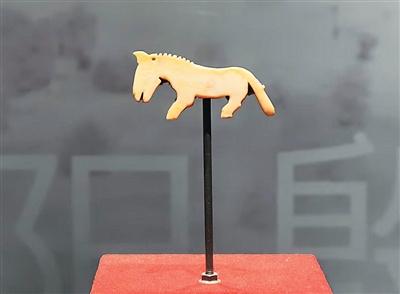
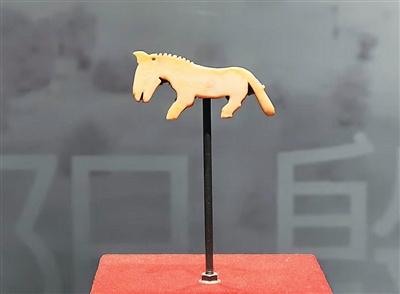
Core Viewpoint - The exhibition "Jade Culture and Chinese Civilization" showcases 155 precious jade artifacts from the Chinese Academy of History, spanning from the Neolithic era to the Ming and Qing dynasties, illustrating the evolution of jade culture in China [1] Group 1: Evolution of Jade Culture - The use of stone tools in China dates back over a million years, with jade emerging as a significant material during the Neolithic era, transcending its functional use to become a unique cultural artifact [2] - The first chapter of the exhibition, "Jade from the East," highlights jade artifacts from the Xinglongwa culture, marking the transition from stone to jade craftsmanship [2][4] - The exhibition includes four chapters: "Jade from the East," "Jade Witnesses Civilization," "Jade Gifts to the World," and "Jade Enriches China," outlining the development of jade culture and its integration into Chinese identity [4] Group 2: Key Artifacts and Their Significance - The exhibition features jade artifacts from the tomb of Fu Hao in Anyang, including two jade horses, which are the earliest known representations of horses in China [5] - Fu Hao's tomb contained 755 jade artifacts, showcasing the advanced craftsmanship of the Shang dynasty, with realistic animal forms and intricate details [5][6] - A kneeling jade figure from Fu Hao's tomb, dating back approximately 5,000 years, exemplifies the intricate artistry of the period [6][7] Group 3: Technological Integration in Cultural Presentation - The exhibition introduces a mixed reality (MR) interactive experience called "The Amazing Archaeological Team: Seeking Jade," allowing visitors to engage with virtual artifacts and participate in immersive archaeological tasks [8] - Technology is utilized to enhance visitor understanding of the artifacts, providing interactive displays that offer detailed descriptions and excavation contexts [9]

“玉”见中华文明
Ren Min Ri Bao Hai Wai Ban· 2026-02-11 22:49
Core Viewpoint - The exhibition "Jade Culture and Chinese Civilization" showcases 155 precious jade artifacts from the Chinese Academy of History, spanning from the Neolithic era to the Ming and Qing dynasties, illustrating the evolution of jade culture in China [1] Group 1: Evolution of Jade Culture - The use of stone tools in China dates back over a million years, with jade emerging as a significant material during the Neolithic era, transcending its functional use to become a unique cultural artifact [2] - The first chapter of the exhibition, "Jade from the East," highlights jade artifacts from the Xinglongwa culture, marking the transition from stone to jade craftsmanship [3] - The exhibition includes three additional chapters: "Jade Witnesses Civilization," "Jade Gifts to the World," and "Jade Enriches China," which collectively outline the development of jade culture and its integration into Chinese identity [3] Group 2: Notable Artifacts - The exhibition features a jade horse from the tomb of Fu Hao, which is considered the earliest known jade representation of a horse, showcasing the craftsmanship of the Shang dynasty [4] - Fu Hao's tomb contained 755 jade artifacts, representing a wide variety of types and exquisite craftsmanship, highlighting the advanced jade carving techniques of the Shang dynasty [4] - The exhibition also includes a kneeling jade figure, intricately carved and dating back to around 5000 years ago, reflecting the artistic styles of the Hongshan culture [5][6] Group 3: Technological Integration - The exhibition incorporates a mixed reality interactive experience called "The Amazing Archaeological Team," allowing visitors to engage with virtual representations of jade artifacts, enhancing their understanding of the cultural significance [7] - This innovative approach aims to make the artifacts more relatable and accessible to the audience, bridging the gap between ancient history and modern technology [8]
六朝古都荆州:楚都四百年,三国古战场
Jing Ji Guan Cha Bao· 2025-11-17 06:56
Historical Significance of Jingzhou - Jingzhou served as a crucial geographical crossroads in ancient China, connecting the north and south, as well as the east and west, which facilitated trade and cultural exchange [1][25] - The city was the center of the Chu state for over 400 years, with its capital at Jingnan, highlighting its political importance during the Warring States period [4][12] Cultural Heritage - Jingzhou is renowned for its rich cultural history, producing 138 chancellors, earning it the title "City of Chancellors" [1] - The region has a deep literary tradition, with famous poets such as Qu Yuan, Li Bai, and Du Fu having connections to Jingzhou [1] Archaeological Findings - Significant archaeological discoveries from the Neolithic period, such as jade artifacts and bronze vessels, reflect the advanced craftsmanship and cultural practices of the Chu people [2][6][7] - The region's artifacts, including unique bronze and jade items, illustrate the spiritual beliefs and social structures of ancient Chu society [6][9][10] Economic Development - The favorable natural environment of Jingzhou supported agricultural development, contributing to the prosperity of its inhabitants [1] - The city became a vital transportation hub during the Han dynasty, facilitating trade and military movements across the region [12][25] Military Importance - During the Three Kingdoms period, Jingzhou was a strategic military stronghold, with various factions vying for control, underscoring its significance in historical conflicts [15][16] - The city was pivotal in the strategies of prominent military leaders, including Zhuge Liang and Sun Quan, who recognized its value for controlling southern China [15][16] Architectural Heritage - The remnants of ancient structures, such as the Jingnan city walls, reflect the architectural prowess of the time and the city's historical significance [27][28] - The construction of the city walls during the Ming dynasty involved meticulous quality control, showcasing the administrative capabilities of the era [27]