
环磷酰胺

Search documents
BMJ:复旦大学邵志敏团队证实,加入卡铂,显著改善高危早期三阴性乳腺癌生存期
生物世界· 2026-03-04 10:00
Core Viewpoint - The study published in the British Medical Journal demonstrates that adding carboplatin to standard chemotherapy significantly improves survival outcomes for high-risk early-stage triple-negative breast cancer (TNBC) patients, increasing the three-year disease-free survival rate from 85.8% to 92.3% [2][3]. Study Design: Focus on High-Risk Patients - The CITRINE trial included 808 high-risk early-stage TNBC patients who underwent definitive surgical treatment, defined as high-risk due to either positive regional lymph nodes or negative lymph nodes with a Ki-67 proliferation index of ≥50% [5]. Treatment Protocol - Patients were randomly assigned to two groups: - Carboplatin group (experimental): Received four cycles of epirubicin and cyclophosphamide followed by four cycles of paclitaxel combined with carboplatin [6][7]. - Standard treatment group (control): Received four cycles of epirubicin and cyclophosphamide followed by four cycles of paclitaxel alone [9][10]. Significant Efficacy: Reduced Recurrence Risk - After a median follow-up of 44.7 months, the carboplatin group achieved a three-year disease-free survival rate of 92.3%, compared to 85.8% in the control group, indicating a 36% reduction in the risk of recurrence or death (hazard ratio of 0.64) [12][11]. Safety Profile: Manageable Risks - The incidence of grade 3-4 treatment-related adverse events was 66.7% in the carboplatin group, slightly higher than the 55.0% in the control group, primarily involving hematological toxicities. No new safety issues were identified, and there were no treatment-related deaths [15][16]. Three-Year Survival Rates - Three-year recurrence-free survival: Carboplatin group 93.8% vs. control group 88.3% - Three-year distant disease-free survival: Carboplatin group 94.8% vs. control group 89.8% - Three-year overall survival: Carboplatin group 98.0% vs. control group 94.0% [17]. Study Significance - This research fills the evidence gap regarding carboplatin in adjuvant therapy, providing a clear treatment option for high-risk TNBC patients who undergo direct surgery without neoadjuvant therapy. Over half of clinical stage II-III TNBC patients receive direct surgery, highlighting the need for effective adjuvant therapies [18]. Future Outlook: Personalized Treatment Directions - The study offers hope for high-risk early-stage TNBC patients, showing that adding carboplatin to standard chemotherapy can significantly lower recurrence risk and improve survival rates. This "Chinese solution" not only marks a milestone in breast cancer research in China but also provides new options for global TNBC treatment [20]. Future research will focus on more precise treatments through the discovery and validation of additional biomarkers, as well as the combination of carboplatin with other targeted therapies or immunotherapies [21].


崩溃的“前药”没有输
3 6 Ke· 2025-12-24 02:13
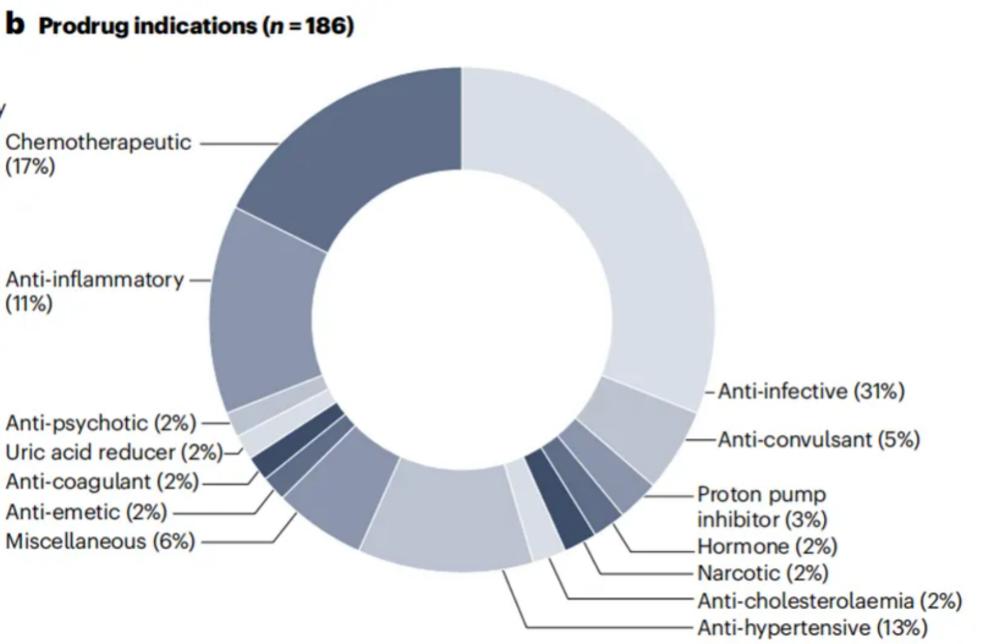
Core Insights - The recent failure of Janux's drug candidate has cast a shadow over the future of prodrugs, which are compounds that are inactive until metabolized in the body to release active drugs [1] - Despite setbacks, prodrugs remain crucial in addressing challenges in drug development, such as poor solubility, low stability, insufficient targeting, and significant side effects [1] Group 1: Prodrug Mechanism and Classification - Prodrugs can be categorized into three main types: bioprecursor prodrugs, carrier prodrugs, and synergistic prodrugs, each utilizing different activation mechanisms [2] - According to statistics from "Nature Drug Discovery," the FDA has approved 178 prodrugs, representing 9% of all approved small molecule drugs, with the largest indications being anti-infectives (33%) and chemotherapy agents (18%) [2] Group 2: Advantages and Applications of Prodrugs - Prodrugs enhance drug solubility, membrane permeability, and stability, allowing previously unviable compounds to reach clinical application, as seen with Sofosbuvir and Aspirin [5] - The PROTAC technology, once seen as revolutionary, faces challenges in pharmacokinetics, but recent studies suggest prodrug strategies could improve its viability [5] Group 3: Evolution of Prodrug Technology - Prodrug technology has evolved through three generations, from simple chemical modifications to AI-driven precise designs that enhance efficacy and safety [7][8] - The third generation focuses on microenvironment-triggered prodrugs, which utilize specific enzymes or conditions in disease tissues for targeted activation [8] Group 4: Market Trends and Future Prospects - The global prodrug market is projected to grow from under $20 billion in 2015 to approximately $35 billion by 2025, with a stable annual growth rate of around 6% [10] - Prodrugs are increasingly seen as a key driver of innovation in high-risk therapeutic areas like oncology and central nervous system disorders, attracting significant investment [10] Group 5: Challenges and Innovations - Future development of prodrugs faces challenges such as individual metabolic variability and the heterogeneity of tumor microenvironments, which can affect drug activation and efficacy [13] - Companies like Gilead and domestic firms are actively pursuing innovative prodrug platforms, with notable advancements in various therapeutic areas [14][15]
趋势研判!2025年中国烷化剂行业产业链、市场规模、竞争格局及发展趋势分析:市场规模持续扩大,有望达到126.1亿元[图]
Chan Ye Xin Xi Wang· 2025-09-29 01:17
Core Insights - Alkylating agents are essential cytotoxic drugs primarily used for treating malignant lymphomas and chronic lymphocytic leukemia, with increasing demand due to rising global cancer incidence [1][2][4] - The global alkylating agent market is projected to grow from $2.23 billion in 2015 to $3.19 billion in 2024, while China's market is expected to increase from ¥7.46 billion to ¥12.26 billion in the same period [1][5] Alkylating Agent Industry Definition and Classification - Alkylating agents, also known as biological alkylating agents, are a crucial class of antitumor drugs that work by damaging DNA structure and function, inhibiting the proliferation of rapidly dividing cells like cancer cells [2][6] - Common alkylating agents include cyclophosphamide, nitrogen mustard, and temozolomide, with cyclophosphamide being the most widely used in clinical settings [2][6] Current Development Status of Alkylating Agent Industry - The demand for alkylating agents is increasing due to the rising incidence of cancer, with over 4.5 million new cancer cases reported annually in China [6][8] - The Chinese alkylating agent market is expected to reach ¥12.61 billion by 2025, reflecting a stable growth trajectory supported by government policies [5][11] Alkylating Agent Industry Chain - The upstream of the alkylating agent industry includes basic chemical raw materials and key intermediates, while the midstream focuses on the production of alkylating agents concentrated in major industrial clusters [5][6] - The downstream market primarily serves hospitals and specialized cancer treatment centers, catering to patients with various types of cancers [5][6] Competitive Landscape of Alkylating Agent Industry - Major companies in the alkylating agent sector include Hengrui Medicine, Beijing Double-Crane Pharmaceutical, and Jiangsu Hengrui Medicine, among others [2][8] - Hengrui Medicine has a strong product matrix with 19 new molecular entities approved in China and a significant focus on oncology [9][10] Development Trends in Alkylating Agent Industry - The demand for alkylating agents is expected to grow due to advancements in the pharmaceutical sector, with a focus on technological innovation and improved production processes [11][12] - The industry is moving towards greener, smarter, and higher-quality production methods to meet increasing market demands [11][12]



华东医药:注射用HDM2005临床试验获批
news flash· 2025-05-06 09:03
Core Viewpoint - The approval of the clinical trial for HDM2005 marks a significant advancement in the company's drug development process, enhancing its core competitiveness in the oncology treatment sector [1] Group 1: Clinical Trial Approval - The company's wholly-owned subsidiary, Hangzhou Sino-American East Pharmaceutical Co., Ltd., received the clinical trial approval notice from the National Medical Products Administration for HDM2005 [1] - HDM2005 is an antibody-drug conjugate (ADC) targeting receptor tyrosine kinase-like orphan receptor 1 (ROR1), used in combination with rituximab, cyclophosphamide, doxorubicin (or epirubicin), and prednisone (R-CHP) for treating previously untreated diffuse large B-cell lymphoma (DLBCL) [1] Group 2: Clinical Trial Progress - The drug has received approval for clinical trials in both China and the United States, with indications for advanced malignancies [1] - Currently, the drug is in the I phase of clinical trials in China, having completed the first four dose escalations without any dose-limiting toxicities (DLT), and is now in the fifth dose escalation stage [1] Group 3: Regulatory Milestones - In February 2025, HDM2005 received orphan drug designation from the FDA for the indication of mantle cell lymphoma (MCL) [1] - The approval of this clinical trial is a crucial step in the product's development, which is expected to strengthen the company's position in the oncology market [1]
