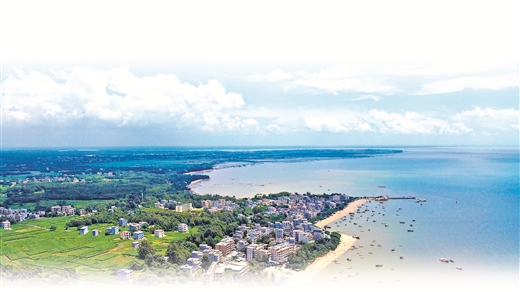
珊瑚礁修复

Search documents
美丽海湾建设的广西画卷
Guang Xi Ri Bao· 2025-12-07 03:14
Core Viewpoint - The article highlights the ecological restoration efforts in Guangxi, particularly focusing on the protection and rehabilitation of marine ecosystems, including coral reefs and mangroves, to enhance biodiversity and improve water quality in coastal areas [6][7][8]. Group 1: Coral Reef Restoration - The coral reef ecosystem around Weizhou Island has suffered a 70% decline in coral coverage due to climate change and pollution, prompting significant restoration efforts [6]. - A research team from Guangxi University has successfully identified a 72-hour "golden window" for coral spawning, marking a significant advancement in coral restoration techniques [6][7]. - The coral restoration project has increased live coral coverage to 93.3%, with the number of coral species rising from 46 to 62, covering an area of 300,000 square meters [7]. Group 2: Mangrove Protection - Guangxi has completed 1,100 hectares of mangrove restoration and has a total mangrove area of 10,800 hectares, ranking second in the country, with a 14,000-hectare increase since 2019 [8]. - The establishment of a national mangrove germplasm resource bank has been achieved, collecting various species and genetic resources [8]. Group 3: Pollution Control - The city of Fangchenggang has implemented systematic governance to address pollution sources, achieving a 96% rate of good water quality in coastal areas [9][10]. - Over 3,800 marine pollution outlets have been identified and managed, with a 100% completion rate for the remediation of key bay pollution outlets [10]. Group 4: Bay Management System - Guangxi has established a comprehensive bay management system with 412 bay managers across various administrative levels, ensuring accountability and regular monitoring [12]. - The "one bay, one policy" approach has been adopted for ecological management, focusing on tailored solutions for each of the 13 bays in the region [12].