
陆海统筹

Search documents
逐梦深蓝:海南锚定“深海策源地” 打造海洋新质生产力增长极
Zhong Guo Jing Ying Bao· 2026-02-28 01:23
Core Viewpoint - Hainan Province is focusing on transforming its marine economy through technological innovation and strategic development, aiming to become a strong marine province by leveraging its vast maritime territory and resources [1][2]. Group 1: Strategic Development - Hainan is implementing a strategy that emphasizes "land-sea coordination, military-civil integration, technological leadership, and open cooperation" to enhance its marine economy from "scale growth" to "quality upgrade" [1]. - The province aims to establish itself as a deep-sea technology innovation hub, a modern marine industry cluster, and a high ground for international marine cooperation [1]. Group 2: Economic Growth - From 2021 to 2025, Hainan's marine production value is projected to grow at an average annual rate of 9.7%, with the secondary industry share increasing from 9.2% in 2021 to 16.6% in 2025 [2]. - The province is developing a division of labor in industries, with research concentrated in Qizhou, manufacturing in the west, and services in Chengmai [2]. Group 3: Technological Innovation - The establishment of the Sanya Marine Laboratory and the entry of major research institutions and enterprises into deep-sea research signify progress in deep-sea scientific capabilities [1][4]. - Hainan is focusing on a modern marine industry system categorized as "6+4+2," which includes deep-sea technology, blue carbon economy, marine high-end equipment, marine renewable energy, marine biological manufacturing, and AI marine models [4]. Group 4: Institutional Innovation - Hainan has created a "three-dimensional collaboration" institutional innovation system to facilitate cross-departmental cooperation and resource sharing for deep-sea technology and blue carbon development [7]. - The province has implemented a closed-loop incentive system covering tax, finance, and talent to ensure that deep-sea technologies transition from laboratories to market applications [9]. Group 5: Environmental and Economic Synergy - Hainan's blue carbon protection model has received recognition from the United Nations, maintaining a 99.9% good water quality ratio in coastal waters, demonstrating the coexistence of ecological assets and economic value [10]. - The province is establishing six equipment bases in the western industrial corridor to create a trillion-level cluster for high-end deep-sea equipment manufacturing, promoting a full industrial chain in deep-sea oil and gas and marine renewable energy [11].
向海图强启新程
Zhong Guo Zi Ran Zi Yuan Bao· 2026-02-26 02:30
Core Viewpoint - The 20th Central Committee of the Communist Party of China emphasizes the promotion of high-quality development of the marine economy and the acceleration of building a strong marine nation [1] Group 1: Marine Economic Development - By 2025, coastal provinces will release their 14th Five-Year Plan proposals, outlining new directions for marine development [2] - As of early February 2026, coastal provinces' government work reports reflect confidence in marine development, emphasizing strategies like "integrated land and sea" and "mountain-sea coordination" [2] - The marine production value is projected to account for approximately 14% of the regional GDP in Zhejiang [5] Group 2: Spatial Layout Optimization - Coastal regions are establishing a differentiated development pattern based on their geographical advantages, focusing on port integration, technological leadership, and ecological priorities [4] - Liaoning aims to deepen port reforms and enhance cooperation with the Northeast hinterland [4] - Guangdong plans to optimize marine economic development space and strengthen overall planning of major bays [6] Group 3: Modern Marine Industry Construction - By 2025, China's marine production value reached 7.9 trillion yuan, with a year-on-year growth of 5.6%, surpassing the national GDP growth rate [8] - Shandong is set to invest over 80 billion yuan in 211 key marine projects, while Shanghai's container throughput reached 55.063 million TEUs, maintaining its position as the world's top port for 16 consecutive years [8] - Guangdong aims to strengthen modern marine industries, including shipbuilding, marine power, and marine tourism, while also developing deep-sea technologies [9] Group 4: Technological Support - Guangdong emphasizes the importance of technological innovation in marine development, proposing the establishment of various marine research and innovation platforms [11] - Zhejiang plans to accelerate the construction of a national marine comprehensive experimental field and develop emerging industries like marine clean energy and marine biomedicine [12] Group 5: Marine Ecological Protection - China is prioritizing marine ecological civilization, with 15.1 million square kilometers designated as marine ecological protection red lines [14] - Coastal provinces are implementing differentiated governance strategies for ecological protection, focusing on specific bay characteristics and pollution causes [14] - Hainan is set to enhance its ecological protection measures, including the construction of a comprehensive underwater pipeline system [16] Group 6: Systematic Marine Governance - The government work reports from coastal provinces indicate a shift from focusing solely on economic indicators to a more systematic approach to marine governance, encompassing ecological protection, industrial upgrades, and technological innovation [17]

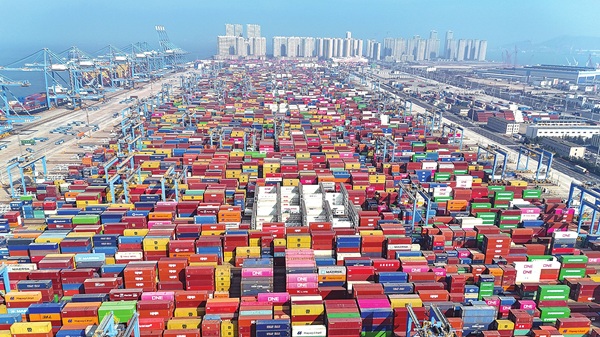
珠江南海局分党组书记、局长曹可:锚定职责助推区域生态环境质量持续向好
Zhong Guo Huan Jing Bao· 2026-02-11 23:29
Core Viewpoint - The Pearl River Basin and South China Sea are crucial for the development of the Guangdong-Hong Kong-Macao Greater Bay Area and the high-quality economic growth of the region, with a focus on ecological protection and sustainable development [1] Group 1: Ecological Protection and Management - The Pearl River South China Sea Bureau emphasizes a comprehensive approach to water resource conservation, water environment governance, and ecological protection to support sustainable economic and social development [2] - The bureau has implemented a systematic tracking and verification process for ecological environment protection, focusing on the "14th Five-Year" plan to ensure effective execution of water ecological environment protection [2][3] - A total of 86 cities have undergone inspections for black and odorous water bodies, identifying 125 problematic water bodies, and 256 issues in industrial parks have been reported [3] Group 2: Collaborative Efforts and Achievements - The bureau has established a cross-regional collaboration system to enhance monitoring, emergency response, and law enforcement, ensuring timely identification and resolution of water pollution issues [4] - By 2025, the proportion of national control sections in the Pearl River Basin achieving or exceeding Class III water quality is expected to reach 96%, a 5% increase from 2020, with zero sections classified as Class V [4] - The bureau has successfully identified and addressed 23 specific issues related to phosphorus pollution in the Nanpan River through targeted investigations and collaborative efforts [3][4] Group 3: Marine Ecological Management - The bureau adopts a holistic approach to marine ecological management, focusing on pollution source reduction and effective governance of coastal areas [5][6] - By 2025, the area of good water quality in the South China Sea is projected to reach 93.9%, reflecting a 1.2% improvement since 2020, indicating a positive trend in coastal ecological quality [8] - The bureau has implemented a comprehensive regulatory system for marine safety, including emergency drills and monitoring of oil spill risks, to enhance ecological risk management [7][8]
连云港打造三文鱼全产业链
Xin Lang Cai Jing· 2026-02-05 22:20
Core Insights - The global first 100,000-ton aquaculture vessel "Suhai No. 1" will be operational by the end of 2025, enabling a new model of mobile ocean ranching for salmon production [1] - The facility in Lianyungang utilizes advanced technology, including IoT and AI, to monitor and optimize key water quality parameters, achieving over 97% water recycling efficiency [1] - The innovative "land-sea relay" model ensures the safety and standardization of fish seed production while enhancing fish quality and reducing production cycles [1] Industry Developments - Lianyungang is establishing a comprehensive salmon industry framework centered around "Suhai No. 1," aiming to create the largest integrated shore-sea aquaculture base in China within three years [2] - The initiative includes six key centers: breeding research, seedling cultivation, port supply, product processing, cold chain logistics, and brand marketing [2] - The project aligns with provincial government goals to enhance deep-sea development and transform coastal areas into new growth engines for the province [2]

徐州领冲后,长三角“腰部五虎”下一个万亿是谁?
Xin Hua Ri Bao· 2026-02-02 14:32
Group 1 - The core viewpoint of the articles highlights the ambition of several cities in the Yangtze River Delta to achieve a GDP of over 1 trillion yuan during the 14th Five-Year Plan period, with specific targets set for 2025 and 2027 [1][2][3][4][5][7]. - Xu Zhou is projected to reach a GDP of 995.72 billion yuan by 2025, making it the first city in the Yangtze River Delta to break the trillion yuan mark during the 14th Five-Year Plan [1]. - Shao Xing aims for a GDP of approximately 900 billion yuan by 2025 and plans to exceed 1 trillion yuan by 2027, focusing on industrial transformation and new economic drivers [2]. - Yang Zhou's GDP is expected to surpass 800 billion yuan by 2025, with a strong emphasis on high-quality development through its "three famous cities" initiative [3]. - Yan Cheng anticipates a GDP of over 800 billion yuan by 2025, leveraging its coastal resources to enhance its marine economy [4]. - Jia Xing's GDP is projected at 785.11 billion yuan for 2025, with a goal of becoming a significant center city in the Yangtze River Delta [5]. - Tai Zhou aims to exceed 1 trillion yuan by the end of the 14th Five-Year Plan, focusing on high-quality development and champion industries [7]. Group 2 - The articles emphasize the importance of regional collaboration and differentiation in industrial development among these cities, suggesting that they should leverage their unique strengths to achieve economic growth [8]. - Recommendations include focusing on specialized industrial clusters, enhancing resource allocation efficiency through regional cooperation, and improving the business environment to attract high-end resources [9].
绘就“海上新广东”生态底色
Zhong Guo Zi Ran Zi Yuan Bao· 2026-01-30 07:24
Core Viewpoint - Guangdong Province is prioritizing marine ecological protection and restoration during the 14th Five-Year Plan period, implementing significant projects and innovative measures to improve water quality and strengthen ecological barriers [1][3]. Group 1: Marine Ecological Restoration Initiatives - Guangdong has launched five major marine ecological restoration projects focusing on coastal line rehabilitation, beach enhancement, ecological seawall construction, coastal wetland restoration, and beautiful bay development [3][4]. - The province has established a marine ecological protection red line covering 16,600 square kilometers, accounting for 25.62% of the total marine area under its jurisdiction [3]. - Over the 14th Five-Year period, Guangdong has received more than 3.3 billion yuan in special funds for marine ecological restoration, completing 33 projects that restored over 200 kilometers of coastline and 7,600 hectares of coastal wetlands [4]. Group 2: Sustainable Development and Economic Growth - Guangdong is balancing development and protection by creating a comprehensive coastal development and protection framework, planning marine ecological spaces of 20,700 square kilometers and development zones of 44,000 square kilometers [7]. - The province's marine production value is projected to exceed 2 trillion yuan in 2024, maintaining its position as the top in the country for 30 consecutive years [7]. - The "Blue Bay" restoration project on Nan'ao Island has significantly improved the area's landscape and attracted over 10 million visitors in 2024, generating more than 4 billion yuan in tourism revenue [8]. Group 3: Innovation in Marine Carbon Trading - Guangdong is exploring pathways for realizing the value of marine ecological products, including establishing a carbon trading platform for ecological products and promoting blue carbon trading [10]. - The province has successfully completed the first blue carbon project in China, certifying and trading 380 hectares of newly planted mangrove carbon credits [10]. - Innovative models for carbon credit trading, such as public subscription for mangrove protection credits, have been developed, expanding the scope of blue carbon trading [10]. Group 4: Future Directions - Guangdong will continue to uphold the principle of ecological priority, deepen integrated land-sea governance, and advance marine ecological protection and high-quality economic development [11].
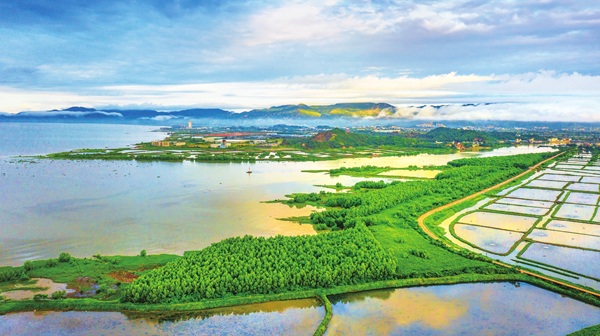
山东沿海三市发布涉海新规划
Zhong Guo Zi Ran Zi Yuan Bao· 2026-01-29 05:55
Group 1 - The core focus of the news is the commitment of three coastal cities in Shandong—Qingdao, Yantai, and Rizhao—to high-quality development of the marine economy, emphasizing marine industry upgrades, port capacity enhancement, marine ecological protection, and breakthroughs in marine science and technology [1][2][3] Group 2 - Qingdao aims to become a modern marine center city by 2026, focusing on building "three centers and one highland," which includes an international marine technology innovation center, a world-class international shipping center, a marine international cooperation center, and a modern marine industry development highland [1] - Yantai's government report highlights the goal of creating a "new marine Yantai" during the 14th Five-Year Plan period, with a target of exceeding 550 million tons in port cargo throughput by 2026, and emphasizes the importance of port-industry-city integration [2] - Rizhao plans to enhance its port competitiveness, aiming for a cargo throughput of 660 million tons and over 8 million TEUs by 2026, while also focusing on developing new energy, high-end marine equipment, and deep-sea aquaculture industries [2] - The three cities are collaborating to build a modern marine industry system that promotes green, intelligent, and high-end upgrades in the marine economy, with specific quantitative goals and projects [3]
海洋经济如何实现“乘风破浪”?代表委员们这样说——于蔚蓝深处向“新”求“强”
Hai Nan Ri Bao· 2026-01-29 02:42
Core Viewpoint - Hainan is focusing on developing its marine economy as part of the national strategy to build a strong marine nation, aiming to create a new "Marine Hainan" through coordinated land and sea development [1][9]. Group 1: Marine Economic Development - The development of marine economy in Hainan is centered around enhancing productivity and creating new growth points through quality improvement, innovation, and originality in marine industries such as marine ranching, offshore wind power, and ship manufacturing [2][10]. - Hainan's marine industries are thriving, transforming natural resources into economic opportunities, such as converting wind energy into offshore green electricity and utilizing new aquaculture methods [3]. Group 2: Local Initiatives and Strategies - Wenchang City is leveraging its advantages to create a high-quality development zone for fisheries, focusing on innovation in aquaculture, economic development, and marine ecological protection [4]. - Yangpu Port has seen significant growth in ship registrations, increasing from 30 ships and 700,000 deadweight tons in 2019 to 380 ships and over 14 million deadweight tons by the end of 2025, indicating a strong future for the port as a regional international shipping hub [4]. Group 3: Technological Innovation - The shift from traditional marine practices to "smart ocean" approaches is essential for the development of the marine economy, with a focus on the integration of bionic intelligent robots in various marine applications to enhance operational efficiency and safety [7][10]. - Hainan is positioned as a natural testing ground for the research and application of marine bionic intelligent robots, which can be utilized in port infrastructure and aquaculture monitoring [7].
盐城今年力争实现海洋生产总值1750亿元
Xin Hua Ri Bao· 2026-01-22 22:03
Core Viewpoint - Yancheng aims to strengthen its marine economy, targeting a marine production value of 175 billion yuan with a growth rate of over 8% by 2026 [1] Group 1: Economic Development Goals - Yancheng plans to accelerate high-quality development of its marine economy, transitioning from "scale growth" to "quality and efficiency improvement" [1] - The city will leverage its geographical advantages to integrate into national strategic initiatives, focusing on "marine+" and "+marine" development [1] Group 2: Industry Strategy - Yancheng will implement a coordinated development strategy for land and sea, promoting a comprehensive layout of marine industries across the city [1] - The city aims to cultivate a "3+3+X" marine industry system and accelerate the green transformation of chemical parks [1] Group 3: Project and Investment Initiatives - Yancheng will support the establishment of provincial-level marine industry characteristic parks in eligible development zones and attract no less than 150 marine industry projects with investments exceeding 100 million yuan each [1] - The city will focus on significant port-related industrial projects to enhance its economic output through port-driven production [1]
制度型开放赋能福建海洋经济高质量发展
Xin Lang Cai Jing· 2026-01-19 23:20
Core Viewpoint - The 20th Central Committee of the Communist Party of China has established "steadily expanding institutional openness" as the core path for deepening reform and expanding openness, emphasizing the need to "enhance maritime capabilities and promote high-quality development of the marine economy," providing fundamental guidance for coastal provinces to build a higher-level open marine economic system [1]. Historical Logic of Institutional Openness Empowering Fujian's Marine Economic Development - The development trajectory of Fujian's marine economy is essentially a process of deepening and evolving institutional openness, with historical roots in ancient maritime trade traditions and modern port openings [2]. - Fujian's historical maritime trade, particularly during the Tang and Song dynasties, established a foundation for an open and inclusive marine culture, which has been further strengthened by modern advancements in maritime technology and management [2]. Theoretical Logic of Institutional Openness Empowering Fujian's Marine Economic Development - Institutional openness, characterized by the alignment of rules, regulations, management, and standards, is essential for the high-quality development of the marine economy, which inherently requires support from institutional frameworks [3]. Practical Logic of Institutional Openness Empowering Fujian's Marine Economic Development - Fujian aims to leverage unique marine resources and strategic positioning through institutional innovation in customs facilitation, industrial clustering, regional collaboration, and ecological protection to establish a high-quality development path for its marine economy [6]. Key Initiatives for Institutional Innovation - **Customs Service Innovation**: Aiming to overcome bottlenecks in marine trade facilitation by promoting integrated customs processes and optimizing cross-border trade mechanisms [7]. - **Industrial Policy Innovation**: Focused on enhancing the capabilities of emerging marine industries through dynamic policy adjustments and collaborative mechanisms for technology transfer [8]. - **Regional Collaboration**: Enhancing the efficiency of land-sea hubs and establishing information-sharing networks to facilitate the flow of marine products [8]. - **Ecological Innovation**: Strengthening the foundation for green development in the marine economy by improving carbon trading systems and enhancing marine environmental protection measures [8].