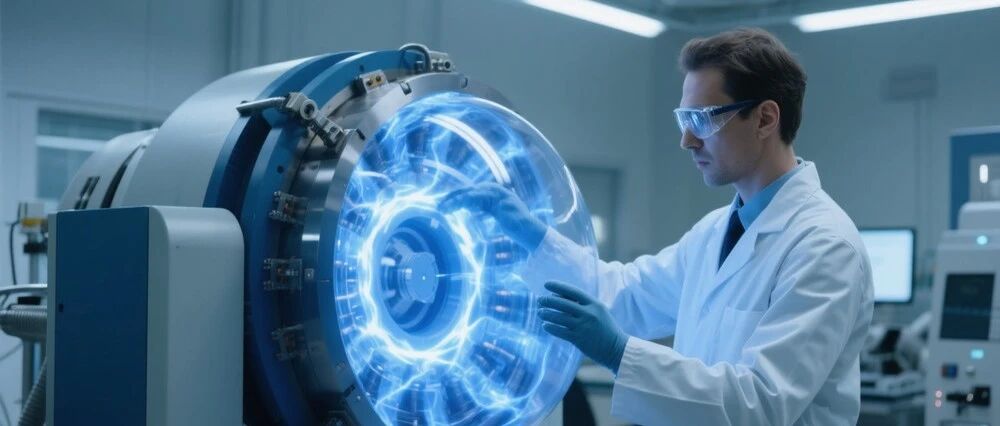
球形托卡马克装置

Search documents
行业洞察丨2026上海核聚变“全链布局”,“多维联动”擘画“人造太阳”蓝图
Xin Hua Cai Jing· 2026-02-05 14:12
Core Insights - The commercialization of controlled nuclear fusion in China is reaching significant milestones, with multiple landmark financing events occurring in Shanghai, indicating strong confidence from the capital market in the sector's future [2][3] - The Chinese government has elevated nuclear fusion to a national strategic priority, as outlined in the 14th Five-Year Plan, which aims to promote future industries like quantum technology, biomanufacturing, hydrogen energy, and nuclear fusion as new economic growth points [2][6] Financing and Investment - Star Ring Fusion has completed a 1 billion yuan Series A financing led by Shanghai state-owned enterprises, while Dongsheng Fusion has received several hundred million yuan in funding from top-tier institutions like Sequoia China and Hillhouse [2] - Supermagnetic New Energy has also secured several hundred million yuan in angel round financing, focusing on key systems in the nuclear fusion industry chain [2][3] Technological Development - Star Ring Fusion is focusing on the engineering implementation of spherical tokamak devices, aiming to achieve a significant milestone of Q>1 by around 2029 and to establish a demonstration reactor capable of generating electricity by 2033 [3][5] - The company has initiated the "Star Ring No. 1" project in Jiading, which will include a research and experimental base for the verification of key technologies [3][4] Industry Ecosystem - Shanghai is emerging as a preferred location for fusion enterprise financing, driven by a complete industrial chain, abundant research supply, and strong international collaboration [6][7] - The city boasts nearly 200 upstream and downstream enterprises in the nuclear power industry, providing essential engineering support for fusion device development [6][7] Collaborative Efforts - The collaboration between government and enterprises is exemplified by the deep integration of Star Ring Fusion with Shanghai's state-owned enterprises, which has facilitated its growth and technological advancements [4][8] - The Shanghai Science and Technology Group has played a pivotal role in supporting the development of fusion technology, aiming to accelerate the transition from scientific research to commercial application [8][9] Regional Development - Shanghai's nuclear fusion industry is characterized by a "multi-point blooming" strategy, with different districts focusing on various aspects of development, such as engineering verification in Jiading and original innovation in Yangpu [9][10] - The city's strategic planning aims for a future industry output value of approximately 500 billion yuan by 2030, with a focus on advanced technologies including controlled nuclear fusion [9][10]


“永远50年”魔咒终结
虎嗅APP· 2025-12-14 02:54
Core Viewpoint - The article discusses the advancements and investment opportunities in the field of controlled nuclear fusion, highlighting the potential for commercial viability by 2030-2035, driven by increasing demand for green energy due to AI's computational needs [4][10][55]. Group 1: Industry Trends - The controlled nuclear fusion sector is experiencing a surge in investment, particularly from technology giants, as the demand for energy to support AI models grows exponentially [4][10]. - China and the US are advancing in the controlled nuclear fusion space, with China showing competitive advantages in certain aspects [4][10]. - The global energy landscape is shifting, with controlled nuclear fusion positioned as a key player in meeting future energy demands, especially in light of the increasing energy consumption from AI technologies [10][54]. Group 2: Company Development - Star Ring Fusion, a leading Chinese company in the controlled nuclear fusion sector, has made significant progress in its development, having completed its first experimental device in a record time of 279 days after its initial funding [16][24]. - The company aims to achieve a Q value greater than 1 by 2028, which is a critical milestone for commercial viability [19][56]. - Star Ring Fusion's strategy focuses on a compact spherical tokamak design, which allows for lower costs and faster iterations compared to traditional large-scale tokamak designs [13][35]. Group 3: Technological Innovations - The company is leveraging AI to enhance the performance of its fusion devices, aiming for significant improvements in efficiency and stability [17][54]. - The controlled nuclear fusion process involves combining light atomic nuclei to release energy, with the potential for vast energy production from seawater [11][12]. - The company is addressing the challenges of developing materials that can withstand extreme conditions within fusion reactors, which is crucial for the success of the technology [57]. Group 4: Market Dynamics - The investment landscape for controlled nuclear fusion has evolved, with a shift from state funding to private capital, reflecting growing confidence in the sector's potential [10][26]. - The entry of national teams and supportive policies has bolstered market confidence and facilitated the development of a robust supply chain for fusion technology in China [26][49]. - The urgency for green energy solutions, driven by AI's energy demands, is reshaping the investment narrative around controlled nuclear fusion, making it a focal point for future energy strategies [54][55].