
瑶族服饰

Search documents
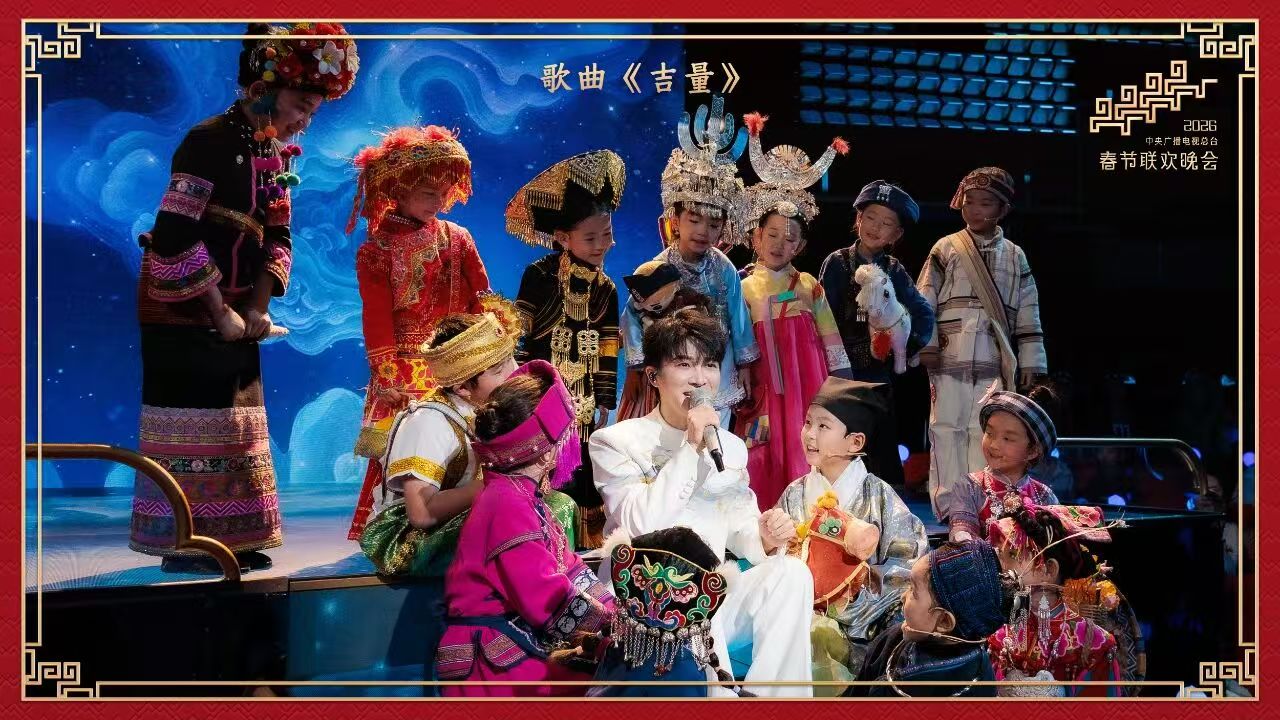
“贵州村T”亮相央视春晚,这些民族服饰,一定能惊艳到你
Xin Lang Cai Jing· 2026-02-16 15:14
Core Viewpoint - The performance of Guizhou singer Zhou Shen and the "Guizhou Village T" troupe at the 2026 CCTV Spring Festival Gala showcased the rich cultural heritage of Guizhou, particularly through the presentation of traditional ethnic costumes and music [1][3]. Summary by Sections Cultural Representation - The "Guizhou Village T" troupe, consisting of 12 children, displayed confidence while wearing traditional Miao and Dong ethnic costumes, highlighting the diversity of Guizhou's cultural heritage [3]. - Guizhou is known as the "Cultural Thousand Islands," home to 18 ethnic groups that have contributed to a rich tapestry of cultural treasures [5]. Ethnic Costumes - Ethnic costumes serve as a vivid representation of cultural identity, akin to a flowing history book, showcasing the unique characteristics of various ethnic groups [7]. - The Miao ethnic costumes are noted for their diversity, with over 200 styles featuring silver ornaments, embroidery, and batik, reflecting a deep connection to nature and spirituality [17][21]. Specific Ethnic Costumes - The Dong ethnic costumes, with a history tracing back to the Han and Tang dynasties, are renowned for their exquisite craftsmanship and are characterized by elegant patterns and colors [24][26]. - The Shui ethnic group, unique to Guizhou, has a distinct preference for dark colors and is known for its intricate embroidery, which is recognized as a national intangible cultural heritage [44]. - The Gelao ethnic costumes are distinguished by their intricate designs and vibrant colors, symbolizing the group's rich historical and cultural background [49]. Cultural Significance - The costumes of various ethnic groups not only serve as artistic expressions but also encapsulate deep cultural meanings, with many groups lacking written language, relying instead on textile art to convey their history and beliefs [21][73]. - The exploration of Guizhou's ethnic costumes offers an opportunity for cultural discovery, inviting visitors to engage with the region's diverse heritage [112].

回应时代考题 守护文化遗产
Zhong Guo Qing Nian Bao· 2025-11-05 22:47
Core Insights - The article highlights the challenges faced by cultural heritage preservation, particularly in the context of intellectual property rights and the impact of e-commerce on traditional craftsmanship [1][2][6] Group 1: Intellectual Property Challenges - The project by students from Guilin University of Technology focuses on the intellectual property issues surrounding non-material cultural heritage, specifically the challenges faced by original creators in the face of rapid imitation and low-cost knockoffs [1][2] - The original designs of non-material cultural heritage items are being quickly copied and sold at low prices on e-commerce platforms, severely impacting the livelihoods of traditional artisans [2] Group 2: Field Research and Solutions - The students conducted field research in the Yao ethnic areas of Hunan, Guangxi, and Guangdong provinces, discovering that infringement not only harms the rights of innovators but also threatens the livelihoods of entire artisan communities [2] - The team proposed a "graded authorization" approach, advocating for a fair profit-sharing mechanism where businesses can legally use non-material cultural elements and return a portion of the profits to the original creators [2] Group 3: Microbial Threats to Cultural Artifacts - A research project from Beijing University of Science and Technology addresses the hidden threats posed by microorganisms to cultural relics, emphasizing the need for effective preservation methods [3] - The team successfully identified and developed a chemical agent to combat microbial damage on historical artifacts, showcasing a proactive approach to cultural heritage preservation [3] Group 4: AI in Archaeology - A project from Jilin University demonstrates the application of artificial intelligence in archaeology, specifically in correcting dating errors of bronze artifacts [4][5] - The team created a comprehensive database and an AI model to analyze and infer dating characteristics from images of bronze artifacts, which serves both public education and professional validation [5] Group 5: Cultural Heritage and Future Pathways - The article concludes by emphasizing the importance of these academic efforts in preserving cultural heritage and ensuring that ancient cultural genes find sustainable pathways in contemporary society [6]