
分级授权

Search documents
瞭望 | 以伦理治理建人机共生秩序
Xin Hua She· 2025-11-18 03:06
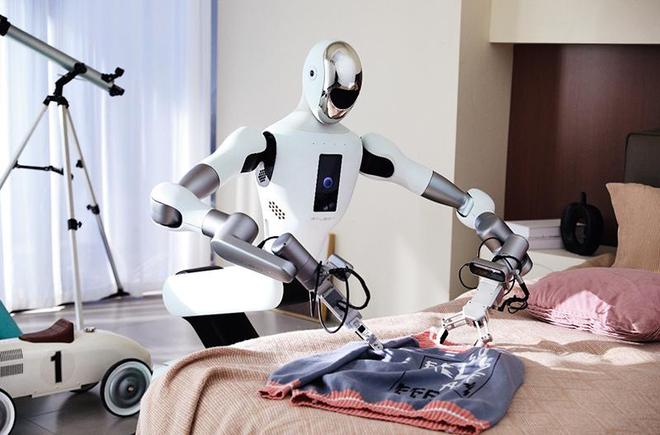
Core Viewpoint - The article emphasizes the need for a systematic and forward-looking ethical governance framework to guide the development of embodied intelligence, particularly in sensitive areas such as health, property, and ethics, to enhance social trust and technology acceptance [1][5]. Group 1: Ethical Concerns of Embodied Intelligence - The shift from "human-dominated" to "human-machine co-creation" necessitates adjustments in governance to address challenges such as blurred responsibility boundaries, privacy erosion from sensitive data, and labor market impacts due to job displacement [2][4]. - The "black box" nature of large models complicates the predictability and explanation of decision-making processes, creating a need for optimized responsibility recognition mechanisms in scenarios like autonomous driving and medical robotics [2][4]. - Current privacy protection laws are limited in their ability to regulate new data collection methods used by embodied intelligence, necessitating a balance between data utilization and privacy protection [4][8]. Group 2: Governance Framework Proposals - A tiered authorization governance model is suggested to manage the decentralized decision-making power of embodied intelligence systems, ensuring human oversight in high-risk scenarios [6][7]. - Social experiments are proposed as a method to explore effective governance models, particularly in addressing employment displacement through human-machine collaboration certification systems [7]. - The article advocates for China's active participation in international standard-setting for embodied intelligence governance, promoting principles such as fairness, transparency, and accountability [8].

回应时代考题 守护文化遗产
Zhong Guo Qing Nian Bao· 2025-11-05 22:47
Core Insights - The article highlights the challenges faced by cultural heritage preservation, particularly in the context of intellectual property rights and the impact of e-commerce on traditional craftsmanship [1][2][6] Group 1: Intellectual Property Challenges - The project by students from Guilin University of Technology focuses on the intellectual property issues surrounding non-material cultural heritage, specifically the challenges faced by original creators in the face of rapid imitation and low-cost knockoffs [1][2] - The original designs of non-material cultural heritage items are being quickly copied and sold at low prices on e-commerce platforms, severely impacting the livelihoods of traditional artisans [2] Group 2: Field Research and Solutions - The students conducted field research in the Yao ethnic areas of Hunan, Guangxi, and Guangdong provinces, discovering that infringement not only harms the rights of innovators but also threatens the livelihoods of entire artisan communities [2] - The team proposed a "graded authorization" approach, advocating for a fair profit-sharing mechanism where businesses can legally use non-material cultural elements and return a portion of the profits to the original creators [2] Group 3: Microbial Threats to Cultural Artifacts - A research project from Beijing University of Science and Technology addresses the hidden threats posed by microorganisms to cultural relics, emphasizing the need for effective preservation methods [3] - The team successfully identified and developed a chemical agent to combat microbial damage on historical artifacts, showcasing a proactive approach to cultural heritage preservation [3] Group 4: AI in Archaeology - A project from Jilin University demonstrates the application of artificial intelligence in archaeology, specifically in correcting dating errors of bronze artifacts [4][5] - The team created a comprehensive database and an AI model to analyze and infer dating characteristics from images of bronze artifacts, which serves both public education and professional validation [5] Group 5: Cultural Heritage and Future Pathways - The article concludes by emphasizing the importance of these academic efforts in preserving cultural heritage and ensuring that ancient cultural genes find sustainable pathways in contemporary society [6]