
生肖壶

Search documents
传统基因与时代活力的 双向奔赴
Xin Lang Cai Jing· 2026-02-24 19:18
Core Viewpoint - The article highlights the vibrant revival of traditional Chinese culture during the Spring Festival, showcasing how various regions integrate non-material cultural heritage into contemporary celebrations, enhancing the festive atmosphere and community engagement [6][9][11]. Group 1: Cultural Events and Activities - In Hubei Province, folk artists performed "Fire Dragon Steel Flowers" at the Huashang City Fantasy Valley, illustrating the blend of tradition and modernity [2]. - In Shaanxi Province, folk performances such as the Yingge dance were held, emphasizing the lively spirit of the New Year [6]. - The "Opening Kiln" ceremony in Jiangsu's Yixing showcased ancient pottery techniques, attracting ceramic enthusiasts and highlighting the importance of cultural heritage [7]. Group 2: Non-Material Cultural Heritage - The China Non-Material Cultural Heritage Museum featured over a hundred projects related to traditional customs, creating a rich tapestry of New Year celebrations [7]. - In Shanghai, public interest in non-material heritage experiences surged after the successful application for UNESCO recognition, with hundreds of activities planned for the Spring Festival [9]. - Various regions, including Hunan and Zhejiang, incorporated interactive elements into their cultural displays, making traditional practices more accessible and engaging for the public [10][12]. Group 3: Technological Integration - The integration of technology into traditional cultural expressions was evident in Chongqing, where drone displays enhanced the festive experience, leading to increased nighttime consumer spending [12]. - In Dalian, AI and interactive technologies were used to create engaging experiences, merging traditional customs with modern innovations [13]. - The use of immersive experiences in cultural events allowed visitors to actively participate in the festivities, transforming passive observation into interactive engagement [12][13].

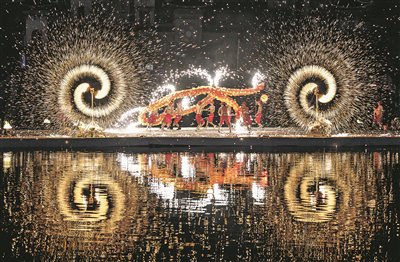
文化新观察丨民俗新声迎新春:传统基因与时代活力的双向奔赴
Xin Hua She· 2026-02-23 02:19
Group 1 - The article highlights the revival of traditional customs and their integration with modern vitality during the 2026 Spring Festival, showcasing a dynamic interaction between cultural heritage and contemporary life [1] - Various regions in China are celebrating the New Year with rich cultural activities, including traditional performances and exhibitions that attract both locals and tourists [2][3] - The use of technology in cultural events is emphasized, with innovations such as drone light shows and interactive installations enhancing the experience of traditional customs [7][8] Group 2 - The article discusses the significance of intangible cultural heritage (ICH) in enriching the New Year celebrations, with numerous activities designed to engage the public and promote cultural participation [4][5] - There is a notable increase in public interest in ICH experiences following the successful application for UNESCO recognition, leading to a surge in related events and activities [4] - The integration of technology with traditional practices is transforming how cultural heritage is experienced, making it more interactive and accessible to a wider audience [6][8]