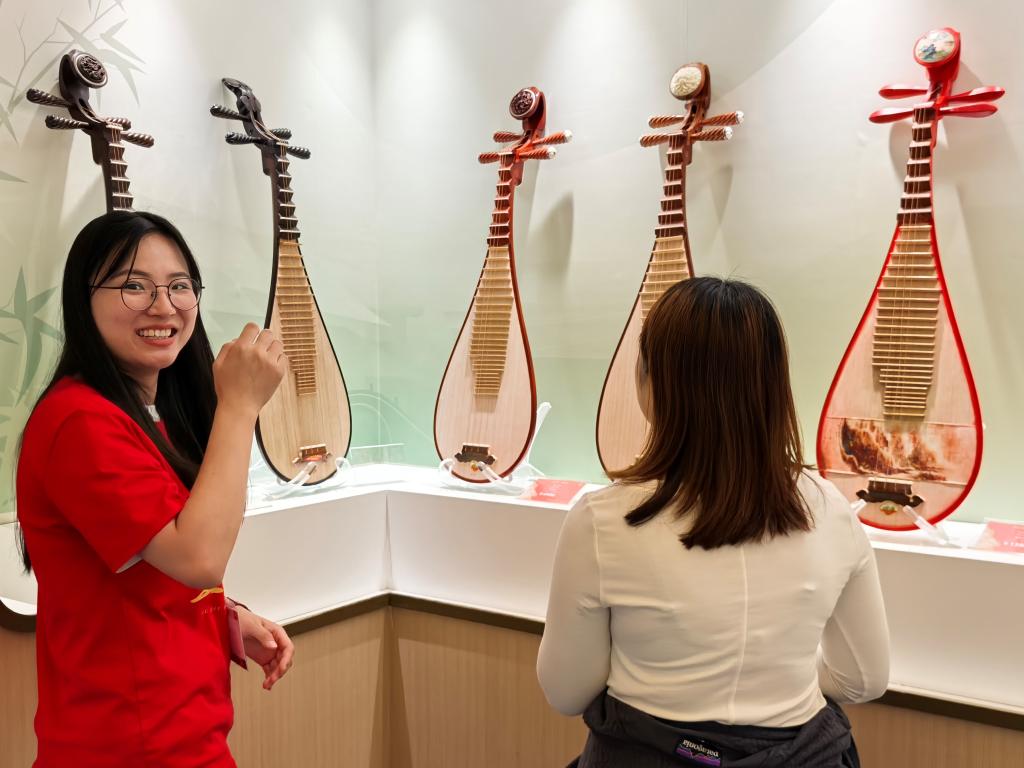
电子琴

Search documents
奏响适老化“新乐章”
Jing Ji Ri Bao· 2025-12-04 00:14
Group 1 - The integration of the music industry with the silver economy is creating new opportunities, with products like smart instruments and AI massage chairs catering to the elderly market, transforming passive aging into active enjoyment of life [1] - The silver economy encompasses both tangible products related to daily needs and intangible services such as education and cultural tourism, with the music industry emerging as one of the fastest-growing sectors [1] - Countries like the US and EU are implementing structured policies to support music therapy and lifelong music education for the elderly, highlighting the potential for China's music industry to tap into the vast silver economy market [1] Group 2 - Policy support is crucial for the growth of the music industry within the silver economy, as seen in Wuxi, which has implemented targeted policies to incentivize music events and education, fostering a complete ecosystem that connects elderly individuals [2] - There is a strong demand for cultural and educational services among the elderly, prompting art colleges to take social responsibility by offering music education tailored for older adults, enhancing their engagement and enjoyment [2] - The development of digital technology is facilitating easier access to music services for the elderly, leading to the formation of a comprehensive online music education industry chain that addresses their specific needs [3] Group 3 - Continuous innovation in age-appropriate music products is essential, with a focus on developing user-friendly instruments and devices that cater to the elderly's operational challenges and hearing impairments [3]
从“懂五线谱”到“会编程” 上海国际乐器展勾勒行业未来方向
Xin Hua She· 2025-10-26 06:03
Core Insights - The China (Shanghai) International Musical Instruments Exhibition showcased the industry's core data and innovative achievements, highlighting the dual focus on traditional and smart musical instruments to maintain China's position as a global leader in manufacturing, consumption, and export of musical instruments [1][3]. Industry Overview - The exhibition attracted nearly 1,700 companies from 28 countries and regions, covering an exhibition area of 140,000 square meters [3]. - Smart musical instruments emerged as a focal point, featuring products like a headless electric guitar with built-in chips and audio algorithms, and a digital piano with advanced sampling sources and intuitive interfaces [3][5]. Financial Performance - According to the China Musical Instruments Association, the smart musical instrument sector is projected to achieve a revenue of 5.655 billion yuan in 2024, accounting for nearly 30% of the total revenue of large-scale musical instrument enterprises, with a profit of 361 million yuan and a profit margin of 6.39%, leading the industry [3][5]. Export Growth - In 2024, exports of musical instruments to ASEAN markets are expected to grow by 50%, while exports to countries involved in the Belt and Road Initiative are projected to increase by nearly 30%, reflecting strong recognition from over 20 major musical instrument producing and selling countries [3]. Future Trends - The integration of artificial intelligence in smart musical instruments allows for features like automatic accompaniment and real-time error correction, lowering the learning barrier and enhancing performance and creative sharing [5]. - Industry experts suggest that future professionals in the musical instrument sector will need to be proficient not only in traditional music notation but also in digital programming, indicating a shift in consumer interaction with musical instruments [5].