
疆电

Search documents
重庆消纳“疆电”突破100亿千瓦时
Xin Lang Cai Jing· 2026-01-11 19:16
Core Insights - The Hami-Chongqing ±800 kV UHVDC project has enabled Chongqing to consume over 10 billion kilowatt-hours of electricity from Xinjiang, marking a significant milestone in cross-regional energy cooperation in China [1] - This achievement supports the construction of the Chengdu-Chongqing economic circle by providing stable green energy [1] - The stable consumption of 10 billion kilowatt-hours of "Xinjiang electricity" addresses Chongqing's energy challenges due to its limited local resources [1] Energy Supply and Demand - During the peak electricity demand in the summer of 2025, external electricity supply to Chongqing is expected to exceed 10 million kilowatts for the first time, with "Xinjiang electricity" playing a crucial role [1]
重庆累计消纳“疆电” 突破100亿千瓦时
Zhong Guo Dian Li Bao· 2026-01-06 02:58
Core Insights - The "Xinjiang Power to Chongqing" project has successfully transmitted over 10 billion kilowatt-hours of electricity since its operation, marking a significant milestone in cross-regional energy cooperation in China [1] Group 1: Project Overview - The "Xinjiang Power to Chongqing" project is part of China's 14th Five-Year Plan and is the first ultra-high voltage direct current (UHVDC) line connecting Northwest and Southwest China [1] - The project was commissioned on June 10, 2025, with a total length of 2,260 kilometers and an investment of approximately 28.6 billion yuan [1] Group 2: Technical Advantages - Utilizing UHV technology, electricity generated from wind and solar energy in Xinjiang can reach Chongqing in just 7 milliseconds, with a maximum daily transmission capacity of nearly 100 million kilowatt-hours [1] Group 3: Economic and Social Impact - The abundant electricity supply supports the development of trillion-yuan industrial clusters in sectors such as automotive and electronics [1] - The project has integrated into various aspects of daily life in Chongqing, from residential electricity use to commercial operations and public services, becoming a cornerstone for the city's stable operation [1]
电力“高速”越天山 重庆累计消纳“疆电”突破100亿千瓦时
Yang Shi Xin Wen· 2025-12-30 04:01
Core Insights - The Hami-Chongqing ±800 kV UHVDC project has successfully transmitted over 10 billion kilowatt-hours of electricity from Xinjiang to Chongqing, marking a significant milestone in regional energy cooperation in China [1][3][7] - This project is part of China's 14th Five-Year Plan and represents the first direct high-voltage direct current connection between the northwest and southwest regions, enhancing energy integration [3] - The project, which began operations on June 10, 2023, spans 2,260 kilometers and has a total investment of approximately 28.6 billion yuan, functioning as a "highway" for electricity [3] Technical Advantages - The UHVDC technology allows for rapid transmission of electricity, with energy generated from wind and solar in Xinjiang reaching Chongqing in just 7 milliseconds, and a maximum daily transmission capacity nearing 100 million kilowatt-hours [5] - The project can deliver over 10% of Chongqing's maximum grid load, showcasing its capacity to support the region's energy needs [5] Regional Impact - The stable consumption of 10 billion kilowatt-hours of "Xinjiang electricity" has effectively addressed Chongqing's energy challenges, characterized by limited coal, water, and oil resources [7] - The project has played a crucial role in balancing electricity supply and demand during peak summer months, with external electricity supply exceeding 10 million kilowatts for the first time, with "Xinjiang electricity" being a key contributor [7] - The Hami-Chongqing project is expected to continue enhancing regional energy complementarity, providing a more abundant and greener energy supply for Chongqing's high-quality development [7]

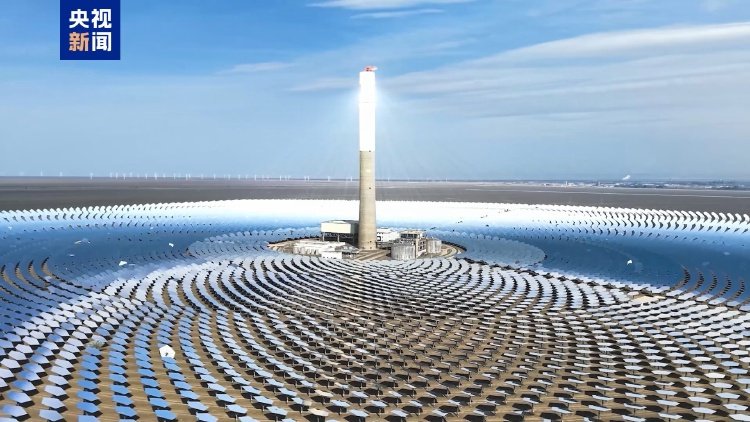
砥砺奋进七十载 天山南北谱华章|坚持以人民为中心推进新疆各项事业发展——完整准确全面贯彻新时代党的治疆方略之富民兴疆篇
Xin Hua She· 2025-09-17 12:40
Group 1 - Xinjiang has focused on high-quality economic development, leveraging its resource advantages to establish itself as a key energy and resource strategic support base, with an industrial output value expected to exceed 100 billion yuan in 2024, creating over 20,000 new jobs [2] - The cotton and textile industry has become a significant livelihood and pillar industry in Xinjiang, with an average monthly salary of 3,500 yuan for skilled workers, and the industry expected to generate over 3 billion yuan in industrial output annually [3] - Since the 18th National Congress, Xinjiang has seen a rise in employment, reaching 13.91 million in 2024, an increase of 1.45 million since 2012, with urban and rural per capita disposable incomes growing significantly [3] Group 2 - Major infrastructure projects have been developed in Xinjiang, including the 825-kilometer railway from Hotan to Ruoqiang, which has significantly reduced travel distances for local residents [4] - The region has committed over 75% of its fiscal spending to improve people's livelihoods, addressing key issues such as healthcare, education, and housing [4] - Environmental improvements have been prioritized, with the goal of achieving a 90% good air quality rate in the Tianshan North Slope urban cluster by 2024, alongside significant reductions in PM2.5 and PM10 concentrations [5] Group 3 - The southern region of Xinjiang is being activated as a key development area, with infrastructure improvements such as the 750 kV power transmission project enhancing connectivity and supporting economic growth [6] - The implementation of the Belt and Road Initiative has strengthened Xinjiang's external trade, with the Kashgar Free Trade Zone seeing 81% of its reform tasks completed and a significant increase in registered enterprises [6] - Xinjiang's GDP is projected to reach 2,053.408 billion yuan in 2024, with a year-on-year growth rate of 6.1%, reflecting the positive impact of coordinated regional development strategies [6]
砥砺奋进七十载 天山南北谱华章|坚持以人民为中心推进新疆各项事业发展——完整准确全面贯彻新时代党的治疆方略之富民兴疆篇
Xin Hua She· 2025-09-16 13:57
Core Viewpoint - The article emphasizes the importance of a people-centered approach in promoting development in Xinjiang, highlighting the significant improvements in the quality of life for various ethnic groups in the region since the 18th National Congress of the Communist Party of China [2][8]. Economic Development - Xinjiang has accelerated high-quality economic development by leveraging its resource advantages, with a focus on industries such as oil and gas production, clean coal utilization, and food processing, contributing positively to national energy and food security [3][4]. - The industrial output value in the Xinjiang Economic and Technological Development Zone is expected to exceed 100 billion yuan in 2024, creating over 20,000 new jobs [3]. Employment and Income - The cotton and textile industry has become a crucial livelihood sector in Xinjiang, with an average monthly salary of 3,500 yuan for skilled workers [4]. - By 2024, the total employment in Xinjiang is projected to reach 13.91 million, an increase of 1.45 million since 2012, with urban residents' per capita disposable income at 42,820 yuan and rural residents at 19,427 yuan, showing significant growth [4]. Infrastructure and Public Services - Major infrastructure projects have been completed, including the 825-kilometer railway from Hotan to Ruoqiang, significantly reducing travel distances for local residents [5]. - Over 75% of Xinjiang's fiscal spending is dedicated to improving public welfare, addressing issues related to healthcare, education, and housing [5]. Environmental Improvements - The government has prioritized ecological improvements, with a target of achieving 90% of good air quality days in the Tianshan North Slope urban cluster by 2024, alongside significant reductions in PM2.5 and PM10 concentrations [6]. Regional Coordination and Development - The development gap between southern and northern Xinjiang is narrowing, with infrastructure projects like the 750 kV power transmission project enhancing connectivity [7]. - The establishment of the Xinjiang Free Trade Zone in Kashgar has led to the registration of 1,168 new enterprises, contributing to a growing industrial system [7]. Overall Progress - Xinjiang is characterized by stability, harmony, and prosperity, with various ethnic groups working together to share development benefits and build a better community [8].
今年“疆电入渝”规模预计超过80亿千瓦时
Zhong Guo Chan Ye Jing Ji Xin Xi Wang· 2025-05-24 23:36
Group 1 - The core viewpoint of the news is the ongoing collaboration between Chongqing and Xinjiang in the electricity sector, particularly the "Xinjiang Electricity into Chongqing" initiative, which has significantly increased electricity supply to Chongqing since its inception in 2017 [1][2] - The cumulative electricity supply from Xinjiang to Chongqing has reached 99.3 billion kilowatt-hours, with peak electricity supply accounting for approximately 15% of the city's increased electricity purchases [1] - The construction of the "Xinjiang Electricity into Chongqing" ultra-high voltage direct current project is progressing, with expectations for it to be operational by June this year, marking a new chapter in electricity cooperation between the two regions [1] Group 2 - Future plans include enhancing the working mechanism for energy and electricity cooperation, setting annual cooperation goals, and regularly monitoring and reporting on progress [2] - There will be a focus on green electricity trading and inter-regional electricity support, particularly to maximize electricity supply during the peak summer months from June to September in 2025 [2] - The collaboration will also extend to coal supply, with efforts to ensure railway transport capacity is coordinated to meet annual targets [2]