石墨/铝

Search documents
华为哈勃与中发展投了家热控材料公司,创始人曾造出国内首块金属基复合材料|36氪首发
Sou Hu Cai Jing· 2026-02-25 01:18
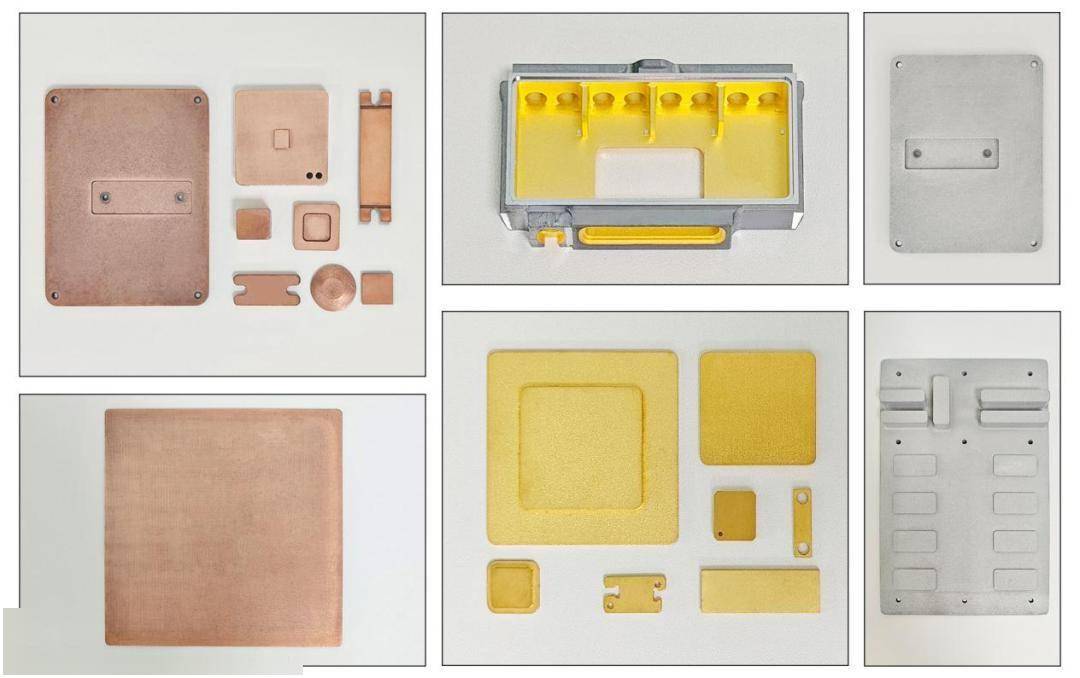
Core Insights - Harbin Yisheng New Materials Technology Co., Ltd. has completed a multi-million A round financing, with investments from Huawei Hubble and Zhongguancun Development Group Qihang Investment, aimed at equipment procurement, capacity expansion, and R&D of next-generation thermal control materials [1][2] - The company specializes in high-performance metal matrix composite materials, leveraging advanced technologies to meet the growing demands in sectors such as advanced semiconductors, new energy, consumer electronics, aerospace, and electric vehicles [1][2][6] Company Overview - Established on September 18, 2024, Harbin Yisheng New Materials is a high-tech enterprise focused on the research and development of cutting-edge metal composite materials, with a team supported by a national-level engineering laboratory [1] - The founder, Wu Gaohui, is a prominent figure in the field of metal matrix composites, having initiated research over 40 years ago and developed China's first metal matrix composite [1][8] Market Demand - The demand for fourth-generation high thermal conductivity composite materials is rapidly increasing due to the explosion of AI computing power, the proliferation of electric vehicles, and the rapid development of communication base stations, with chip power consumption increasing by 4-5 times [2] - The domestic market potential for diamond/aluminum and diamond/copper materials alone is estimated to reach hundreds of billions [2] Technology and Production - The mainstream process for high thermal conductivity composites is powder metallurgy, but the company employs a vacuum/pressure infiltration method, achieving nearly 100% density and high product quality and stability [3][4] - The thermal conductivity of the diamond/aluminum composite reaches 550-750 W/(m·k), while diamond/copper achieves 750-980 W/(m·k), surpassing similar products from international competitors [4] Production Capacity and Expansion - The company has established long-term supply relationships with military units and is expanding its customer base in civilian sectors, including key power devices and new energy vehicles [6] - Following the recent financing, the company plans to launch its first self-developed automated infiltration equipment, aiming for an annual production capacity of one million pieces, with a long-term goal of reaching tens of millions [6][7] Investment Perspective - Investors recognize the high thermal conductivity composite materials as the next generation of thermal management solutions, with significant market potential in high-end fields such as communication, data centers, and aerospace [8] - The company has developed a comprehensive intellectual property system from theory to product, positioning itself as a leader in the field with a robust product matrix and industrialization capabilities [8]

25年金属复合材料行业全景图:技术突破与百亿市场机遇
材料汇· 2025-11-13 14:20
Core Viewpoint - The metal composite materials industry is experiencing unprecedented growth opportunities due to advancements in high-end manufacturing sectors such as aerospace, military electronics, smart terminals, and semiconductor equipment. The report aims to provide a comprehensive analysis of the technology classification, industry chain structure, market size, competitive landscape, and core enterprises in the metal composite materials sector, with a special focus on diamond-copper composite materials [2]. Industry Overview - Metal composite materials are new materials formed by combining two or more different metals or metal and non-metal materials through physical, chemical, or mechanical methods. They exhibit superior performance due to the synergistic effects of their components, meeting specific performance requirements in various applications [4]. - Metal composite materials can be categorized into metal matrix composites and layered metal composites. Metal matrix composites include continuous fiber-reinforced and discontinuous reinforced types, while layered metal composites are created through advanced manufacturing techniques such as explosive bonding and rolling [4][6]. Industry Chain Analysis - The upstream of the metal matrix composite materials industry chain includes metals and alloys such as aluminum, magnesium, and titanium, as well as ceramic fibers/particles and auxiliary materials [9][10]. - The midstream involves the preparation of metal matrix composites and component manufacturing [10]. - The downstream applications are widespread, including aerospace, military electronics, smart terminals, and automotive industries [11][16]. Market Analysis - The market for metal composite materials in China is projected to grow from 26.4 billion yuan in 2020 to 42 billion yuan in 2024, with a compound annual growth rate (CAGR) of 12.31%. By 2027, the market size is expected to reach 61 billion yuan [25]. - The market for metal matrix composites is expected to increase from 7 billion yuan in 2020 to 11 billion yuan in 2024, with a CAGR of 11.94%, reaching 21.2 billion yuan by 2027 [27]. - The layered metal composite materials market is anticipated to grow from 19.43 billion yuan in 2020 to 31 billion yuan in 2024, with a CAGR of 12.40%, reaching 39.8 billion yuan by 2027 [29]. Production Processes - The production process for metal matrix composites involves several key steps, including mixing, hot isostatic pressing, forging, and high-temperature stamping, which ensure the uniform distribution of components and enhance material properties [36][39]. Technical Level and Characteristics - Metal matrix composites are characterized by their complex multi-material and multi-process nature, requiring advanced technologies for component design, interface control, and quality consistency. The performance metrics include mechanical properties such as strength and fatigue resistance, as well as physical properties like thermal conductivity [43]. - The domestic supply of raw materials for metal matrix composites has largely achieved self-sufficiency, with significant advancements in the purity and distribution of high-end materials [44]. Competitive Landscape - The global market for aluminum matrix composites is dominated by international giants, with companies like DWA Aluminium Composites and Alvant holding a combined market share of 70%. Domestic players are rapidly catching up, with companies such as Yuyuan Metal Composite Materials and Zhongke Composite Materials making significant strides [48][49]. - The layered metal composite materials market is primarily led by international firms like DMC and Asahi Kasei, but domestic companies are increasing their market share through technological advancements and product development [51][52]. Future Development Trends - The metal composite materials industry is expected to achieve breakthroughs in multiple markets, driven by technological advancements and policy support. The focus will be on high-performance and integrated structural-functional materials to meet the evolving demands of various applications [64][66]. - The market demand for metal composite materials is anticipated to expand as applications diversify into military electronics, smart terminals, and semiconductor equipment, providing sustained growth momentum [69].