
金属基复合材料

Search documents
从信披违规到业绩预亏,ST东尼风波不断
Xin Lang Cai Jing· 2026-02-26 08:27
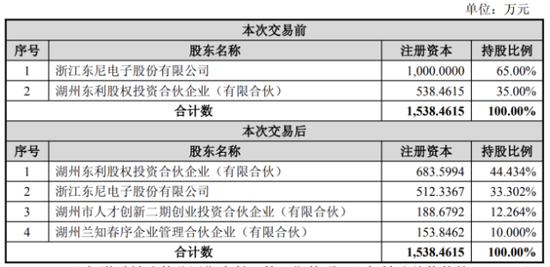
Core Viewpoint - ST Dongni plans to transfer 31.698% equity of its subsidiary Dongni New Energy to quickly recover funds and optimize its asset structure, despite the subsidiary being a core profit contributor [1][11]. Group 1: Equity Transfer Details - ST Dongni intends to sell 21.698% of Dongni New Energy for 230 million yuan and 10% to the management team for 33.36 million yuan [2][12]. - The valuation of Dongni New Energy is set at 1.06 billion yuan, reflecting a 217.78% increase over its net asset value [13]. - After the transaction, ST Dongni's shareholding will decrease from 65% to 33.3%, removing Dongni New Energy from its consolidated financial statements [2][13]. Group 2: Financial Performance of Dongni New Energy - Dongni New Energy is projected to generate revenues of 406 million yuan in 2024 and 585 million yuan in the first 11 months of 2025, with net profits of 17.39 million yuan and 54.89 million yuan respectively [4][15]. - The subsidiary contributes approximately 98% of ST Dongni's net profit, making it a critical profit source [4][15]. Group 3: Semiconductor Business Challenges - ST Dongni's semiconductor business has been underperforming, with expected losses of 45 million to 65 million yuan in 2025, transitioning from profit to loss [5][16]. - The semiconductor segment has faced continuous losses, with a reported loss of 600 million yuan in 2023 due to contract delivery failures and high production costs [6][17]. - In 2024, the semiconductor business revenue fell by 45.28% to 70.82 million yuan, with a gross margin of -28.34% [18]. Group 4: Regulatory Issues and Penalties - ST Dongni has been penalized for disclosure violations, including late reporting of significant contract progress and false records in annual reports, resulting in fines totaling 15.7 million yuan [19][21]. - The company failed to meet delivery targets for a 675 million yuan contract, completing only 6.74% by the deadline [20].


定制调研:全球及中国金属复合材料行业全景调研及投资建议发展规划预测评估报告(2026版)-中金企信发布
Sou Hu Cai Jing· 2026-01-20 01:51
Core Insights - The metal matrix composite materials industry is experiencing significant growth, driven by demand from emerging sectors such as smart terminals and new energy vehicles, with the market size projected to increase from 26.4 billion yuan in 2020 to 42 billion yuan by 2024, reflecting a compound annual growth rate (CAGR) of 12.31% [9] - The market for metal matrix composites is expected to further expand to 61 billion yuan by 2027, indicating a robust growth trajectory [9] - The metal matrix composite materials can be categorized into metal matrix composites and layered metal composites, each with distinct applications and performance characteristics [6][8] Industry Overview - Metal matrix composites are new materials formed by combining two or more different metals or metals with non-metals through physical, chemical, or mechanical methods, resulting in superior performance due to synergistic effects [5] - The industry is characterized by a high level of collaboration between full-time consulting staff and external experts, with a successful project delivery rate of 98.7% and an overall satisfaction rate of approximately 96% [5] Market Segmentation - The metal matrix composites can be divided into two main categories: - Metal matrix composites, which include continuous fiber-reinforced and discontinuous reinforced types [6] - Layered metal composites, which utilize advanced manufacturing techniques such as explosive bonding and rolling to achieve metallurgical bonding [8] Application Areas - Key application areas for metal matrix composites include: - Aerospace, requiring high specific strength and modulus, and fatigue resistance [8] - Military electronics, demanding high conductivity and low expansion [8] - Smart terminals, focusing on low density and high thermal conductivity [8] - Automotive industry, emphasizing wear resistance and thermal stability [8] Market Growth Projections - The market for metal matrix composites in China is projected to grow from 7 billion yuan in 2020 to 11 billion yuan by 2024, with a CAGR of 11.94%, and further to 21.2 billion yuan by 2027 [12] - The layered metal composites market is expected to expand from 19.43 billion yuan in 2020 to 31 billion yuan by 2024, with a CAGR of 12.40%, reaching 39.8 billion yuan by 2027 [12]
先进功能性金属材料创新应用趋势(8431字)
材料汇· 2025-12-21 13:39
Core Viewpoint - The article emphasizes the growing demand and application trends for advanced metal materials driven by global sustainability initiatives, technological advancements in industries such as electric vehicles, telecommunications, aerospace, and healthcare [2][4]. Group 1: Introduction and Global Trends - The article highlights the urgent need for industries to transition towards sustainable energy and reduce greenhouse gas emissions, with a focus on lightweight materials as a primary development direction in the metal industry [4]. - The shift towards electric vehicles is accelerating the demand for high-strength, lightweight metal materials that enhance safety and energy efficiency [4]. - The article discusses the impact of global events such as climate change, supply chain disruptions, and the COVID-19 pandemic on the development of functional metal materials [4]. Group 2: Advanced Steel Materials - Advanced steel materials are categorized into high-strength steel and high-nitrogen steel, with a focus on lightweight, high-strength, and cost-effective solutions [7][11]. - The development of third-generation advanced high-strength steel aims for tensile strength over 1000 MPa and ductility above 30%, with applications expanding beyond automotive to rail, energy, and aerospace industries [10]. - High-nitrogen steel, with nitrogen content of 0.4-1.0 wt%, enhances mechanical and corrosion resistance, making it suitable for high-temperature and medical applications [12][14]. Group 3: Advanced Aluminum Alloys - Aluminum is highlighted for its lightweight and corrosion-resistant properties, with significant applications in transportation and construction [16][17]. - The energy required to produce primary aluminum has decreased significantly, and the use of recycled aluminum is being promoted to reduce carbon emissions [20]. - High-strength aluminum alloys, particularly the 6xxx series, are being utilized in advanced applications such as aerospace and electric vehicles, with a focus on improving manufacturing efficiency and product performance [21][22]. Group 4: New Copper Alloys - Copper alloys are recognized for their excellent electrical and thermal conductivity, with applications spanning electronics, construction, and transportation [26]. - High-strength, high-conductivity copper alloys, such as beryllium copper, are being developed to meet the demands of the aerospace and automotive industries, although concerns over beryllium toxicity are driving research into alternative alloys [28][29]. - The development of copper-iron alloys aims to combine the strength of iron with the conductivity of copper, with commercial products already emerging [30][32]. Group 5: Metal Matrix Composites - The demand for metal matrix composites (MMCs) is growing, with applications in automotive and aerospace industries, driven by the need for materials that combine the benefits of multiple components [37]. - Aluminum-based composites are being developed for applications requiring high wear resistance and thermal management, particularly in engine components [39][40]. - Copper-based composites are being explored for their thermal management capabilities, essential for high-power electronic applications [43][44]. Conclusion - The development and application of metal materials are closely aligned with global industrial trends, focusing on sustainability, energy efficiency, and advanced performance characteristics [46].
嘉洧创新材料科技(泰兴)有限公司成立 注册资本500万人民币
Sou Hu Cai Jing· 2025-12-09 00:22
Group 1 - The company Jiawei Innovation Materials Technology (Taixing) Co., Ltd. has been established with a registered capital of 5 million RMB [1] - The legal representative of the company is Qian Guanping [1] - The business scope includes research and development of new materials technology, manufacturing and sales of non-ferrous metal alloys, and various construction materials [1] Group 2 - The company is involved in the manufacturing and sales of metal structures and composite materials [1] - It also engages in the retail of hardware products and the processing of metal surface treatments [1] - The company is authorized to conduct import and export agency services [1]
原阳县新尹新材料科技有限公司成立 注册资本10万人民币
Sou Hu Cai Jing· 2025-11-21 05:18
Core Viewpoint - A new company, Yuanyang Xinyin New Materials Technology Co., Ltd., has been established with a registered capital of 100,000 RMB, focusing on various technology services and sales of composite materials [1] Company Summary - The legal representative of the company is Li Xinya [1] - The registered capital is 100,000 RMB [1] - The company’s business scope includes technology services, development, consulting, exchange, transfer, and promotion [1] - The company also engages in the sale of plastic products, sealing materials, synthetic materials, metal-based and ceramic-based composite materials, as well as import and export activities [1]
2025年金属复合材料行业分析报告
材料汇· 2025-11-15 15:10
Industry Overview - Metal matrix composites (MMCs) are advanced materials formed by combining different metals or non-metals, offering superior performance compared to single components. Their core value lies in "performance designability," which meets stringent requirements for lightweight, high strength, high thermal conductivity, and corrosion resistance in downstream applications [2][4]. - The industry is experiencing unprecedented growth opportunities due to the continuous upgrades in high-end manufacturing sectors such as aerospace, military electronics, smart terminals, and semiconductor equipment [2]. Metal Matrix Composites Classification - MMCs can be categorized into metal matrix composites and layered metal composites. Metal matrix composites include continuous fiber-reinforced and discontinuous reinforced types, while layered metal composites are created through various advanced preparation techniques [4][6]. Industry Chain Analysis - The upstream of the MMC industry chain includes raw materials like aluminum, magnesium, titanium, and ceramic fibers/particles, along with auxiliary materials and production equipment [9][10]. - The midstream involves the preparation of MMCs and component manufacturing, while the downstream applications span aerospace, military electronics, smart terminals, and automotive industries [11][16]. Market Analysis - The market for metal matrix composites in China is projected to grow from CNY 26.4 billion in 2020 to CNY 42 billion by 2024, with a compound annual growth rate (CAGR) of 12.31%. By 2027, the market size is expected to reach CNY 61 billion [25]. - The market for metal matrix composites has expanded from aerospace applications to include smart terminals and new energy vehicles, driven by demand from emerging civilian industries [25]. Production Processes - The production process for metal matrix composites involves several key steps, including material mixing, hot isostatic pressing, forging, and high-temperature stamping, ensuring uniform distribution and stable performance of the composite materials [36][39]. Technological Advancements - The technology level of MMCs is characterized by complex multi-material and multi-process interactions, focusing on component design, interface control, and quality consistency. The industry is moving towards high-performance and integrated structural-functional materials [42][66]. - The future of MMCs is expected to focus on high-performance applications, with aluminum matrix composites achieving tensile strengths of 500 MPa and aiming for 600-1000 MPa [66][67]. Competitive Landscape - The global market for aluminum matrix composites is dominated by international giants, with companies like DWA Aluminium Composites and Alvant holding a combined market share of 70%. Domestic companies are rapidly catching up in specific segments [48][56]. - Key players in the Chinese market include Youyan Metal Composite Materials, Hunan Xiangtou Light Materials, and Zhongke Composite Materials, which are making significant advancements in technology and market presence [49][60]. Future Development Trends - The metal matrix composites industry is expected to achieve breakthroughs across multiple markets, driven by technological advancements and increased application levels in various sectors [64]. - The demand for MMCs is anticipated to grow as applications expand into military electronics, smart terminals, and semiconductor equipment, providing sustained momentum for market growth [69].

25年金属复合材料行业全景图:技术突破与百亿市场机遇
材料汇· 2025-11-13 14:20
Core Viewpoint - The metal composite materials industry is experiencing unprecedented growth opportunities due to advancements in high-end manufacturing sectors such as aerospace, military electronics, smart terminals, and semiconductor equipment. The report aims to provide a comprehensive analysis of the technology classification, industry chain structure, market size, competitive landscape, and core enterprises in the metal composite materials sector, with a special focus on diamond-copper composite materials [2]. Industry Overview - Metal composite materials are new materials formed by combining two or more different metals or metal and non-metal materials through physical, chemical, or mechanical methods. They exhibit superior performance due to the synergistic effects of their components, meeting specific performance requirements in various applications [4]. - Metal composite materials can be categorized into metal matrix composites and layered metal composites. Metal matrix composites include continuous fiber-reinforced and discontinuous reinforced types, while layered metal composites are created through advanced manufacturing techniques such as explosive bonding and rolling [4][6]. Industry Chain Analysis - The upstream of the metal matrix composite materials industry chain includes metals and alloys such as aluminum, magnesium, and titanium, as well as ceramic fibers/particles and auxiliary materials [9][10]. - The midstream involves the preparation of metal matrix composites and component manufacturing [10]. - The downstream applications are widespread, including aerospace, military electronics, smart terminals, and automotive industries [11][16]. Market Analysis - The market for metal composite materials in China is projected to grow from 26.4 billion yuan in 2020 to 42 billion yuan in 2024, with a compound annual growth rate (CAGR) of 12.31%. By 2027, the market size is expected to reach 61 billion yuan [25]. - The market for metal matrix composites is expected to increase from 7 billion yuan in 2020 to 11 billion yuan in 2024, with a CAGR of 11.94%, reaching 21.2 billion yuan by 2027 [27]. - The layered metal composite materials market is anticipated to grow from 19.43 billion yuan in 2020 to 31 billion yuan in 2024, with a CAGR of 12.40%, reaching 39.8 billion yuan by 2027 [29]. Production Processes - The production process for metal matrix composites involves several key steps, including mixing, hot isostatic pressing, forging, and high-temperature stamping, which ensure the uniform distribution of components and enhance material properties [36][39]. Technical Level and Characteristics - Metal matrix composites are characterized by their complex multi-material and multi-process nature, requiring advanced technologies for component design, interface control, and quality consistency. The performance metrics include mechanical properties such as strength and fatigue resistance, as well as physical properties like thermal conductivity [43]. - The domestic supply of raw materials for metal matrix composites has largely achieved self-sufficiency, with significant advancements in the purity and distribution of high-end materials [44]. Competitive Landscape - The global market for aluminum matrix composites is dominated by international giants, with companies like DWA Aluminium Composites and Alvant holding a combined market share of 70%. Domestic players are rapidly catching up, with companies such as Yuyuan Metal Composite Materials and Zhongke Composite Materials making significant strides [48][49]. - The layered metal composite materials market is primarily led by international firms like DMC and Asahi Kasei, but domestic companies are increasing their market share through technological advancements and product development [51][52]. Future Development Trends - The metal composite materials industry is expected to achieve breakthroughs in multiple markets, driven by technological advancements and policy support. The focus will be on high-performance and integrated structural-functional materials to meet the evolving demands of various applications [64][66]. - The market demand for metal composite materials is anticipated to expand as applications diversify into military electronics, smart terminals, and semiconductor equipment, providing sustained growth momentum [69].

利润造假1个亿、被罚700万元,东尼电子认罚并向广大投资者致歉
Hua Xia Shi Bao· 2025-11-13 09:15
Core Points - Dongni Electronics has been penalized for financial fraud, resulting in a total fine of 15.7 million yuan, with the company itself fined 7 million yuan [2][6] - The company acknowledged the penalty and expressed intentions to rectify the issues and apologize to investors [2][6] Financial Misconduct - Dongni Electronics was found to have inflated profits by over 100 million yuan through various fraudulent practices, including misclassifying expenses and failing to disclose significant contract performance issues [3][4] - The company failed to timely disclose the underperformance of a major contract worth 675 million yuan, which constituted 51.84% of its latest audited revenue [3][4] Impact on Financial Reports - The company’s 2022 and 2023 financial reports contained false records, inflating total profits by 38.63% and 70.95% respectively, amounting to a total of over 110 million yuan [4][5] - Specific fraudulent actions included misclassifying research and development expenses and not adequately accounting for inventory depreciation [4] Regulatory Response - The Zhejiang Securities Regulatory Bureau provided substantial evidence for the violations, leading to the penalties imposed on the company and its executives [6] - Dongni Electronics did not contest the penalties and did not submit any defense or request a hearing after receiving the notice [6] Company Performance - Dongni Electronics has faced declining performance, with reported revenues of 1.836 billion yuan in 2023 and a net loss exceeding 600 million yuan [7] - The company's stock has significantly dropped, with a 78% decline from its peak in January 2023, leading to a change in its stock designation to "ST Dongni" due to risk warnings [7]

603595,被公开谴责!合计罚款超千万
Zhong Guo Ji Jin Bao· 2025-11-12 15:25
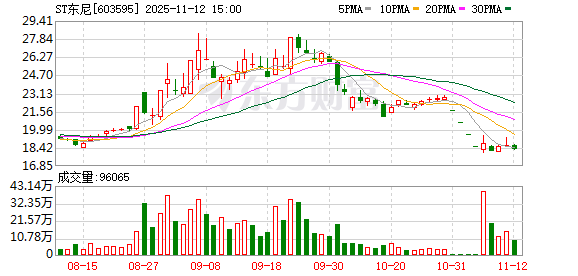
Core Viewpoint - ST Dongni and its former chairman, along with five other individuals, were fined a total of 15.7 million yuan due to delayed disclosure of significant contract progress and false reporting in annual reports [2][10]. Group 1: Regulatory Actions - The China Securities Regulatory Commission (CSRC) initiated an investigation into ST Dongni in April 2023 for suspected violations of information disclosure [6]. - On November 12, 2023, ST Dongni received an administrative penalty decision, resulting in a public reprimand from the Shanghai Stock Exchange [2][10]. - The penalties included a warning and fines for the company and its executives, totaling 15.7 million yuan [10][11]. Group 2: Violations Identified - The company failed to timely disclose that it could not meet the delivery schedule of a significant contract worth 675 million yuan, which accounted for 51.84% of its latest audited main business income [7]. - The 2022 annual report and the 2023 semi-annual report contained false records, inflating profits by 38.63% and 70.95% respectively, due to misclassification of expenses and inadequate provisions for inventory impairment [8]. Group 3: Company Performance - In the first three quarters of the year, ST Dongni reported revenue of 1.457 billion yuan, a year-on-year increase of 1.50%, but incurred a net loss of 14.6051 million yuan [14]. - As of November 12, 2023, ST Dongni's stock price was 18.26 yuan, reflecting a nearly 20% decline since October 31, with a market capitalization of 4.2 billion yuan [14].
603595,立案调查结果“定调”了
Shang Hai Zheng Quan Bao· 2025-11-12 14:37
Core Viewpoint - ST Dongni (603595) has been penalized by the regulatory authority for violations related to information disclosure, resulting in a total fine of 15.7 million yuan for the company and several executives [2][3]. Summary by Relevant Sections Regulatory Actions - On November 12, ST Dongni received an administrative penalty decision from the Zhejiang Securities Regulatory Bureau due to delayed disclosure of significant contract progress and false records in its 2022 annual report and 2023 semi-annual report [2][3]. - The company was fined 7 million yuan for failing to timely disclose the inability to meet contract delivery schedules and for other violations [4][5]. Financial Misstatements - The company inflated its profit totals in the 2022 annual report and 2023 semi-annual report by 38.63% (38.7759 million yuan) and 70.95% (72.2779 million yuan) respectively [3][4]. - Specific misstatements included misclassifying research and development expenses as inventory and failing to adequately account for inventory impairment losses [3][4]. Contractual Issues - ST Dongni's subsidiary, Dongni Semiconductor, signed a procurement contract worth 675 million yuan with Guangdong Tianyu, which represented 51.84% of the company's latest audited main business income [4]. - As of October 2023, the subsidiary had only completed 6.74% of the contract's delivery schedule, leading to a delayed disclosure of this issue until January 2024 [4]. Company Performance - For the first three quarters of the year, ST Dongni reported revenues of 1.457 billion yuan, with a net loss attributable to shareholders of 14.6051 million yuan [10]. - In the third quarter, the company achieved revenues of 618 million yuan, reflecting a year-on-year growth of 2.51%, and a net profit of 26.607 million yuan, up 11.10% year-on-year [10].