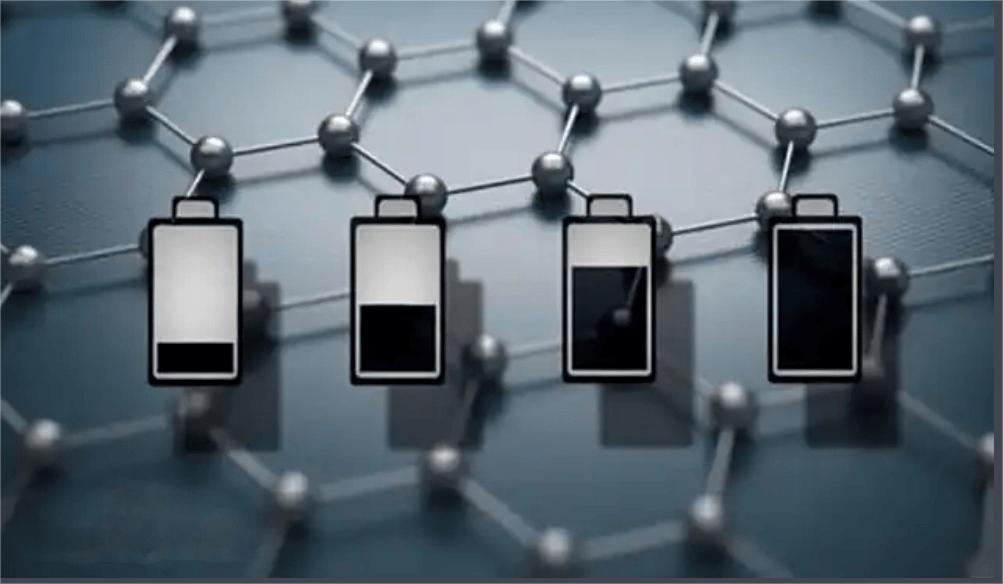
石墨烯航空电池

Search documents
首批确认嘉宾有哪些亮点工作?将带来哪些最新见解?| Carbontech2025新能源碳材料与电池大会
DT新材料· 2025-10-29 16:05
Core Insights - The Carbontech New Energy Carbon Materials and Battery Conference focuses on the preparation of new energy carbon materials and their applications in the battery industry, aiming to overcome technical bottlenecks and diversify application scenarios [2] Group 1: Conference Objectives - The conference aims to break through technical bottlenecks in the field of new energy carbon materials and promote innovations in key preparation processes [2] - It seeks to expand the diversified layout of battery application scenarios, constructing a full-chain value ecosystem from materials to end products [2] Group 2: Research and Development Focus - The conference discusses advancements in porous carbon, silicon-carbon anodes, fast-charging graphite anodes, conductive additives, hard carbon anodes, and new nano-carbon materials [2] - It integrates upstream and downstream resources of the industry chain to promote collaborative innovation in material research, battery manufacturing, and terminal applications [2] Group 3: Key Participants and Contributions - An important participant, An Zhongxun, will present on sodium-ion hybrid capacitor energy storage technology, highlighting the energy density achievements nearing national key research plan levels [4][5] - Other notable speakers include Han Kun, who will discuss low-cost metal salt-assisted polymer chemical foaming strategies for three-dimensional nitrogen-doped graphene-based composites [5] - Liu Hong will present on the development of carbon nanomaterials and carbon fibers from multiple carbon sources, emphasizing the potential for industrial chain integration with CCUS [5] Group 4: Innovations in Battery Technology - The conference features discussions on various innovative battery technologies, including solid-state batteries and sodium-ion batteries, with a focus on their latest advancements and applications [6][12] - Participants will explore the development of high-performance hard carbon materials for sodium-ion batteries and the integration of carbon nanotubes in silicon-carbon anode research [17][18] Group 5: Industry Trends and Future Directions - The conference reflects a growing trend among leading battery manufacturers to explore self-generating anode technologies, with companies like CATL and BYD making significant advancements [13] - The event also highlights the importance of solid-state battery solutions for low-altitude economic applications, showcasing the industry's commitment to innovation and sustainability [14][15]



石墨烯重塑低空经济
3 6 Ke· 2025-10-27 03:24
Core Insights - The emergence of graphene technology is revolutionizing the drone industry by addressing long-standing challenges related to battery life and material limitations [1][5][10] Group 1: Graphene Technology Breakthroughs - Graphene production has entered a "high-quality era," significantly reducing defect density and enabling lower-cost production of high-performance graphene [2][3] - The development of "monolayer aluminum oxide powder" has successfully addressed the traditional conflict between lightweight materials and high thermal conductivity [3] Group 2: Impact on Drone Batteries - Traditional batteries have an energy density of approximately 250 Wh/kg, which is significantly lower than that of aviation kerosene [5] - Graphene batteries can enhance energy density by over 50%, allowing for more energy storage and release within the same volume or weight [5][10] - Graphene batteries can operate effectively at temperatures as low as -40 degrees Celsius, making them suitable for high-altitude drone operations [5][10] Group 3: Structural Advancements - Graphene wings exhibit a 60% increase in impact resistance compared to carbon fiber wings, showcasing graphene's unique ability to enhance mechanical strength while reducing weight [6][7] - The integration of graphene in drone structures not only strengthens them but also provides new functional characteristics, such as lightning protection [7] Group 4: Thermal Management Solutions - Graphene's superior thermal properties are being utilized to address heat management issues in drone electronics, with a notable thermal interface material achieving a thermal conductivity of 6.44 W·m⁻¹·K⁻¹ [9] - Effective thermal management is crucial for maintaining stable performance and extending the lifespan of high-power drone systems [9] Group 5: Market Potential and Future Directions - The application of graphene in drones is expanding into previously inaccessible areas, such as cold-weather operations and emergency rescue missions [10] - The low-altitude economy is emerging as a significant growth area, with expectations for the market to exceed one trillion yuan by 2030, driven by advancements in high-performance power batteries [10][11] - Challenges remain in achieving the necessary energy density for commercial viability, with current graphene battery energy densities still below the required 400-500 Wh/kg threshold [11] - Future developments may focus on multifunctional integrated materials, intelligent drone structures, and environmentally sustainable production processes [11][12][13]