石墨烯技术

Search documents
宝泰隆:持续推进石墨烯材料在高端领域的适配验证
Zheng Quan Ri Bao Wang· 2026-02-10 13:11
Core Viewpoint - The company is focused on the iterative advancement of graphene core technology and aims to enhance its core competitiveness through increased R&D efforts and market expansion [1] Group 1: Company Strategy - The company is committed to the adaptation and validation of graphene materials in high-end fields [1] - The company plans to intensify its R&D efforts to promote the application of graphene materials in more specific areas [1] Group 2: Business Goals - The company aims to achieve commercialization and scaling of its graphene business through technological innovation and market development [1] - The company expresses its commitment to rewarding investors' trust and support through tangible actions and performance [1]

瑞士清洁科技公司Divea研发石墨烯过滤器,从工业废气中分离捕获二氧化碳 | 瑞士创新100强
3 6 Ke· 2026-01-29 00:40
Group 1 - Divea is a Swiss clean technology company founded in 2024, focusing on the development of graphene filters for carbon dioxide separation from industrial emissions [2][5] - The company was established as a spin-off from the École Polytechnique Fédérale de Lausanne (EPFL) by Karl Khalil, Mojtaba Chevalier, and Kumar Agrawal, with Khalil serving as CEO and Chevalier as CTO [2] - The new graphene-based CO2 filter features pores similar in size to carbon dioxide molecules, allowing for direct separation from mixed gases in high CO2-emitting industries such as steel and cement [5][6] Group 2 - Industries like cement, steel, and chemicals account for approximately 34% of global CO2 emissions, making it challenging to control emissions due to the energy-intensive processes involved [4] - Current methods for capturing CO2 from industrial emissions are costly, primarily due to the presence of nitrogen and other gases in the exhaust, which complicates the extraction process [4] - Divea's technology, based on research published in Science Advances, utilizes a technique called lattice gasification to create high-density nanopores in single-layer graphene, enhancing CO2 capture efficiency [5][6] Group 3 - The graphene membrane developed by Divea offers significant advantages, including reduced energy consumption and operational costs, and operates solely on electricity without the need for heating or solvents [6] - The compact structure of the graphene membrane allows for modular installation, making it suitable for space-constrained environments like offshore oil platforms [6] - Divea is collaborating with EPFL on a CCUS demonstration project to scale and commercialize the high-performance graphene membrane, with plans to establish a full-scale carbon capture facility by 2032 [6] Group 4 - Divea has been recognized as one of the top 100 Swiss startups in 2025, highlighting its innovative potential and market prospects in the clean technology sector [8] - The "TOP100 Swiss Startups" list showcases the most pioneering and market-promising Swiss innovation companies across various fields, including low-carbon technology [8]

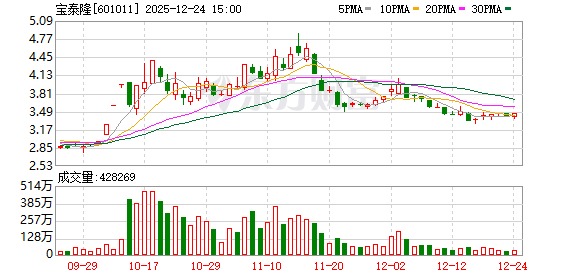
宝泰隆:公司始终聚焦石墨烯核心技术迭代,持续推进石墨烯材料在高端领域的适配验证
Zheng Quan Ri Bao· 2025-12-24 12:11
Core Viewpoint - The company is focused on the iterative development of graphene core technology and aims to enhance its core competitiveness through increased research and development efforts in various high-end applications of graphene materials [2] Group 1 - The company is committed to advancing the application of graphene materials in high-end fields [2] - The company plans to continue increasing its R&D efforts to promote the use of graphene materials in more areas [2] - The focus on core technology iteration is a key strategy for the company to maintain its competitive edge [2]
以”电”之名,产学研用共谋石墨烯产业化应用新路径
Guan Cha Zhe Wang· 2025-11-22 02:34
Core Insights - The Advanced New Materials - Graphene New Material Power Application Development Forum was successfully held in Wenzhou, focusing on the application of graphene technology in the power and new energy sectors [1] - The forum aimed to enhance collaboration among industry, academia, and research institutions, sharing solutions and application results of graphene in the power sector [1] - Graphene technology is becoming a focal point in the industry due to its potential to meet the increasing demands for renewable energy integration and the construction of power grids in challenging environments [1] Group 1: Graphene Applications and Innovations - The collaboration between State Grid Smart Grid Research Institute and Zhejiang Chint Electric Co. has led to a significant improvement in the mechanical lifespan of high-voltage isolation switch contacts, increasing from 10,000 to 28,000 cycles, achieving a world-leading level [2] - The development of high-conductivity graphene-enhanced copper composite materials is crucial for reducing energy loss during transmission and usage, which is essential for achieving carbon neutrality goals [2] - Graphene technology has been applied in various products such as DC charging guns, switch contacts, and transformers, enhancing product performance and promoting energy conservation [2][3] Group 2: Industry Collaboration and Achievements - Chint has established a graphene research platform and achieved breakthroughs in composite materials, surface treatment, and polymer battery technologies, with core performance indicators reaching international leading levels [3] - The company has successfully developed high-conductivity graphene copper-based composite materials with conductivity reaching 108% IACS, comparable to silver [3] - A collaborative effort among multiple companies, including Shanghai Xinch Energy Technology Co. and Wenzhou Hongfeng Electric Alloy Co., has led to the successful development and mass application of new graphene composite products [3] Group 3: Forum Contributions and Perspectives - Experts presented various topics related to graphene applications, including its use in wind turbine blade de-icing and new energy systems [4][5] - The forum clarified the technological pathways and industrial logic related to graphene composite materials, promoting innovation and the efficient transformation of graphene technology into practical value [5]


格林美(002340.SZ):在福安园区已建成年产2万吨磷酸(锰)铁锂产线
Ge Long Hui· 2025-11-17 07:21
Core Viewpoint - Company has established an annual production line of 20,000 tons of lithium iron phosphate in the Fuan Park, indicating a significant expansion in production capacity and commitment to the lithium battery materials market [1] Group 1: Production and Development - Company has built a production line for lithium iron phosphate with an annual capacity of 20,000 tons in Fuan Park [1] - Company is collaborating with Shenzhen Benzheng Equation Graphene Technology Co., Ltd. to develop graphene-enhanced lithium iron phosphate materials, focusing on recycling and utilization of battery waste [1] Group 2: Technological Advancements - The joint development aims to enhance the conductivity and electrochemical performance of recycled lithium iron phosphate materials through graphene technology [1] - The goal is to improve the energy density and cycle life of batteries, facilitating the high-value reuse of recycled lithium iron phosphate materials [1]

石墨烯重塑低空经济
3 6 Ke· 2025-10-27 03:24
Core Insights - The emergence of graphene technology is revolutionizing the drone industry by addressing long-standing challenges related to battery life and material limitations [1][5][10] Group 1: Graphene Technology Breakthroughs - Graphene production has entered a "high-quality era," significantly reducing defect density and enabling lower-cost production of high-performance graphene [2][3] - The development of "monolayer aluminum oxide powder" has successfully addressed the traditional conflict between lightweight materials and high thermal conductivity [3] Group 2: Impact on Drone Batteries - Traditional batteries have an energy density of approximately 250 Wh/kg, which is significantly lower than that of aviation kerosene [5] - Graphene batteries can enhance energy density by over 50%, allowing for more energy storage and release within the same volume or weight [5][10] - Graphene batteries can operate effectively at temperatures as low as -40 degrees Celsius, making them suitable for high-altitude drone operations [5][10] Group 3: Structural Advancements - Graphene wings exhibit a 60% increase in impact resistance compared to carbon fiber wings, showcasing graphene's unique ability to enhance mechanical strength while reducing weight [6][7] - The integration of graphene in drone structures not only strengthens them but also provides new functional characteristics, such as lightning protection [7] Group 4: Thermal Management Solutions - Graphene's superior thermal properties are being utilized to address heat management issues in drone electronics, with a notable thermal interface material achieving a thermal conductivity of 6.44 W·m⁻¹·K⁻¹ [9] - Effective thermal management is crucial for maintaining stable performance and extending the lifespan of high-power drone systems [9] Group 5: Market Potential and Future Directions - The application of graphene in drones is expanding into previously inaccessible areas, such as cold-weather operations and emergency rescue missions [10] - The low-altitude economy is emerging as a significant growth area, with expectations for the market to exceed one trillion yuan by 2030, driven by advancements in high-performance power batteries [10][11] - Challenges remain in achieving the necessary energy density for commercial viability, with current graphene battery energy densities still below the required 400-500 Wh/kg threshold [11] - Future developments may focus on multifunctional integrated materials, intelligent drone structures, and environmentally sustainable production processes [11][12][13]
诺奖得主助力 超威领跑石墨烯技术电池十年庆典暨宣传大片首映
Xin Jing Bao· 2025-03-31 06:31
Core Viewpoint - The event celebrated the 10th anniversary of Super Energy's leadership in graphene technology batteries, highlighting significant advancements and collaborations with Nobel laureate Andre Geim, which have propelled the company to the forefront of the global battery industry [1][3]. Group 1: Company Achievements - Super Energy Group has been a pioneer in graphene technology battery research since 2013, recognizing its potential early on and initiating a technological revolution in the industry [3]. - The collaboration with Andre Geim has brought cutting-edge research concepts and technologies to Super Energy, leading to major breakthroughs in battery technology and enhancing the company's international profile [3][11]. - Super Energy has successfully applied graphene technology in electric vehicle batteries, becoming the first company to achieve mass production in this field [13]. Group 2: Event Highlights - The celebration included a symbolic lighting of the "Graphene Energy Column," representing the enduring vitality of Super Energy's graphene technology batteries over the past decade [5]. - The premiere of the "Andre Geim Global Technology Promotional Film" marked a significant recognition of China's technological innovation capabilities on the global stage [9]. - A report presented by the head of Super Energy's Central Research Institute detailed the company's achievements in graphene technology batteries, emphasizing improvements in energy density and cycle life, which redefine industry standards [11]. Group 3: Future Outlook - Super Energy's Vice President expressed gratitude to all participants and emphasized the company's commitment to innovation and continuous investment in research and development [13]. - There is an expectation for deeper collaboration with Andre Geim in the future, aiming for further advancements in graphene technology batteries [13].