
砷化镓太阳能电池片

Search documents
解码现役太空能源主力技术 砷化镓太阳能电池片产线实探
Zhong Guo Zheng Quan Bao· 2026-01-27 21:48
Core Insights - The space energy system, particularly gallium arsenide (GaAs) solar cells, is becoming a key competitive track in the commercial aerospace industry, with GaAs solar cells dominating the market due to their superior performance [1][3] Performance and Technology - GaAs is recognized as a second-generation semiconductor with high electron mobility, allowing for better matching with the solar spectrum and lower energy loss compared to traditional silicon-based cells [3] - The efficiency of GaAs solar cells has seen significant improvements, with three-junction cells achieving a conversion efficiency of 30% in 2014, increasing to 31.5% in 2017, and further advancements leading to efficiencies of 34.5% for four-junction and five-junction cells by 2025 [3][4] Cost Challenges - Despite their high efficiency, GaAs solar cells are significantly more expensive than silicon cells, primarily due to the scarcity of raw materials like germanium and gallium, and the complex manufacturing processes involved [4] - The production of GaAs solar cells involves numerous intricate steps, including precise control during crystal growth and advanced processing techniques like photolithography and etching [4] Innovations and Alternatives - The industry is exploring flexible solar cell technology to reduce the size and weight of solar wings on spacecraft, which can lower launch costs; flexible three-junction GaAs cells have achieved efficiencies exceeding 33% [5] - There is ongoing research into perovskite solar cells, which hold promise for high theoretical efficiency and lower costs, although challenges in mass production stability remain [5] Market Potential - The commercial aerospace sector is projected to drive significant growth in the space solar cell market, with sales expected to exceed $605 million by 2025 and reach $1.02 billion by 2032, reflecting a compound annual growth rate of 7.9% [6] - Increased demand from the aerospace industry has led to a surge in inquiries for production capacity, with the company having acquired over 120 MOCVD devices, indicating a strong scale cost advantage [6] Industry Position - The company is a key player in the GaAs solar cell market, supplying multiple domestic and international clients, with international sales currently surpassing domestic sales [6] - Another significant supplier in the field, 电科蓝天, is set to launch on the Sci-Tech Innovation Board, with a projected domestic market coverage of over 50% for its aerospace power products in 2024 [7]


三安光电:公司持续推进砷化镓太阳能电池片前瞻性技术研发
Zheng Quan Ri Bao Wang· 2026-01-27 12:53
Group 1 - The company, Sanan Optoelectronics (600703), is actively engaged in the research and development of advanced technology related to MOCVD processes for gallium arsenide solar cells [1] - The company is also focusing on the application of perovskite materials in solar cell technology [1]
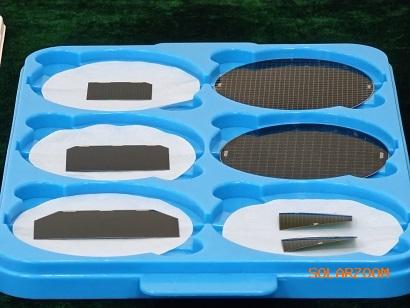
三安光电生产的砷化镓太阳能电池片
Zhong Guo Zheng Quan Bao - Zhong Zheng Wang· 2026-01-26 23:29
Core Insights - The article discusses the recent financial performance of a leading company in the technology sector, highlighting significant revenue growth and strategic initiatives aimed at expanding market share [1] Group 1: Financial Performance - The company reported a revenue increase of 25% year-over-year, reaching $5 billion in the last quarter [1] - Net income rose to $1.2 billion, reflecting a 30% increase compared to the previous year [1] - Earnings per share (EPS) improved to $3.50, up from $2.70, indicating strong profitability [1] Group 2: Strategic Initiatives - The company announced plans to invest $500 million in research and development to enhance product offerings and innovation [1] - A new partnership with a leading cloud service provider is expected to drive additional revenue streams and improve service delivery [1] - The company aims to expand its presence in emerging markets, targeting a 15% growth in these regions over the next two years [1]
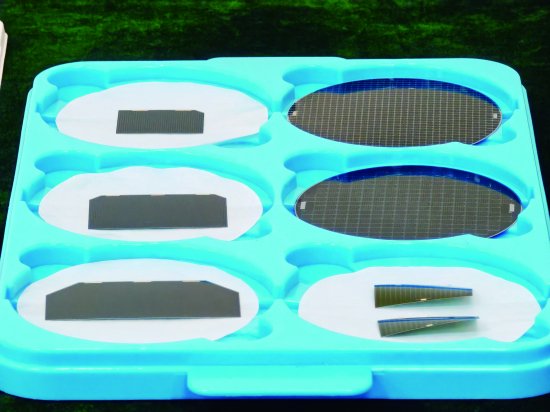
解码太空能源主力技术 砷化镓太阳能电池片产线实探
Zhong Guo Zheng Quan Bao· 2026-01-26 21:00
Core Insights - The space energy system, particularly gallium arsenide (GaAs) solar cells, is becoming a key competitive track in the commercial aerospace industry, with GaAs solar cells dominating the market due to their superior performance [1] Group 1: Performance Advantages - GaAs is recognized as a second-generation semiconductor with high electron mobility, allowing for better matching with the solar spectrum and lower energy loss compared to traditional silicon-based cells [2] - GaAs solar cells can operate stably in extreme space environments, showing slower efficiency degradation and longer lifespan, making them the preferred choice for spacecraft energy systems [2] - Sanan Optoelectronics has made significant advancements in GaAs multi-junction solar cell technology, achieving conversion efficiencies of 30% in 2014, 31.5% in 2017, and 34.5% with the latest four-junction and five-junction cells [2] Group 2: Cost Challenges - The high cost of GaAs solar cells is primarily due to the scarcity of raw materials like germanium and gallium, as well as the complex manufacturing processes involved [3] - Despite the superior performance of GaAs cells, their costs are several times higher than silicon cells, which is a significant barrier to wider adoption [3] - The industry is exploring flexible solar cell technology as a breakthrough to reduce the size and weight of solar wings on spacecraft, thereby lowering launch costs [3] Group 3: Market Potential - The commercial aerospace sector is experiencing rapid growth, leading to a projected increase in the global space-grade solar cell market from $605 million in 2025 to $1.02 billion by 2032, with a compound annual growth rate of 7.9% [6] - The rising demand for solar cells is reflected in the supply chain, with Sanan Optoelectronics significantly increasing its production capacity, having acquired over 120 MOCVD devices [6] - The company has already begun mass production of GaAs multi-junction solar cells for commercial satellite power, serving multiple domestic and international clients [6] Group 4: Industry Developments - The upcoming listing of Electric Science Blue Sky on the Sci-Tech Innovation Board highlights its role as a core supplier in the field, with advanced technologies in high-efficiency GaAs solar cells [7] - In 2024, Electric Science Blue Sky is expected to support 144 spacecraft with its power systems, capturing over 50% of the domestic market for aerospace power products [7]
砷化镓太阳能电池片产线实探
Zhong Guo Zheng Quan Bao· 2026-01-26 20:54
Core Insights - The commercial space industry is increasingly focusing on space energy systems, with gallium arsenide (GaAs) solar cells becoming a key competitive area due to their superior performance compared to traditional silicon-based cells [1][2] Group 1: Performance and Technology - GaAs solar cells are recognized for their high electron mobility and ability to match the solar spectrum, leading to lower energy loss and longer lifespan in extreme space environments [1][2] - Sanan Optoelectronics has made significant advancements in GaAs solar cell technology, achieving a conversion efficiency of 30% in 2014, 31.5% in 2017, and a projected 34.5% with four and five-junction cells by 2025 [1][2] Group 2: Cost Challenges - The high cost of GaAs solar cells is primarily due to the scarcity of raw materials like germanium and gallium, as well as the complex manufacturing processes involved [2] - Despite the superior performance of GaAs cells, the cost is several times higher than that of silicon cells, which has led to companies like SpaceX opting for lower-cost alternatives [2] Group 3: Market Potential - The commercial space sector is expected to drive significant growth in the space solar cell market, with projections indicating sales will exceed $605 million by 2025 and reach $1.02 billion by 2032, reflecting a compound annual growth rate of 7.9% [3][4] - Increased satellite launches and space activities are anticipated to provide ongoing demand for solar cells in the aerospace industry [3][4] Group 4: Industry Developments - Sanan Optoelectronics has invested in over 120 MOCVD devices for GaAs solar cell production, significantly outpacing competitors and enhancing cost efficiency [4] - The upcoming listing of Electric Blue Sky on the Science and Technology Innovation Board highlights its role as a key supplier in the GaAs solar cell market, with a projected domestic market coverage of over 50% for its power products in 2024 [5]
再Call太空钙钛矿-重视Space-X产业链
2026-01-19 02:29
Summary of Conference Call on Perovskite Solar Cells and Space Industry Industry Overview - The focus is on the perovskite solar cell industry, particularly its application in space technology and its potential to replace traditional gallium arsenide solar cells in low Earth orbit satellites [1][3][5]. Key Insights and Arguments - **Expansion of Perovskite Applications**: It is anticipated that from 2026 to 2027, perovskite technology will transition from ground applications to space applications, becoming a major investment theme [1][3]. - **Cost Reduction**: The cost of perovskite solar cells for space applications is significantly lower, with prices expected to drop from at least 200,000 yuan per square meter for gallium arsenide to between 10,000 to 20,000 yuan per square meter for perovskite [1][5]. - **Market Demand**: The demand for low-cost solar cells in the low Earth orbit satellite market is increasing, driven by the need for cost control in commercial space ventures [1][5]. - **Domestic Competitiveness**: Shanghai Port Bay has successfully launched pure single-junction space components into low Earth orbit, demonstrating the competitiveness of domestic components in the space application field [2][5]. Future Projections - **Ground Perovskite Development**: The bidding volume for ground perovskite solar cells is expected to exceed 3 to 4 GW in 2026, indicating a significant improvement from 2025 [1][3]. - **Technological Advancements**: The industry is moving from the initial development phase (0 to 1) to a more advanced stage (0.8), with improvements in large-area, high-efficiency, and stability issues being gradually resolved [3][4]. Equipment and Supplier Recommendations - **Key Equipment Suppliers**: The report recommends focusing on companies such as Maiwei Co., Ltd., and also highlights Otovi, Jiejia Weichuang, and High Measurement Co., Ltd. as companies to watch [1][4]. - **Potential Market Opportunities**: If SpaceX adopts P-type heterojunction technology, there will be increased demand for heterojunction equipment, crystalline silicon thin-film equipment, and related components, benefiting domestic suppliers [4][5]. Additional Important Points - **Catalytic Effects**: T Company's ground photovoltaic projects may also provide potential catalytic effects in the market [4]. - **Long-term Recommendations**: The report suggests a long-term investment in Shanghai Port Bay and Maiwei Co., Ltd., while also advising attention to other mentioned companies [4].

三安光电:公司应用于商用航天的产品有砷化镓太阳能电池片等
Zheng Quan Ri Bao Zhi Sheng· 2026-01-13 12:39
Core Viewpoint - Sanan Optoelectronics is actively involved in the commercial aerospace sector, providing advanced semiconductor products and solutions tailored for 5G-A technology [1] Group 1: Product Offerings - The company offers gallium arsenide solar cells, gallium arsenide RF chips, silicon carbide power electronic chips, and photonic technology chips for commercial aerospace applications [1] - Sanan has established a stable mass production platform for HBT and pHEMT, which supports the development of differentiated solutions such as RF power amplifiers, low-noise amplifiers, and wafer-level/chip-level packaged filters [1] Group 2: Market Focus - The solutions provided by the company are designed to meet the dual requirements of compactness and high performance for 5G-A equipment [1]