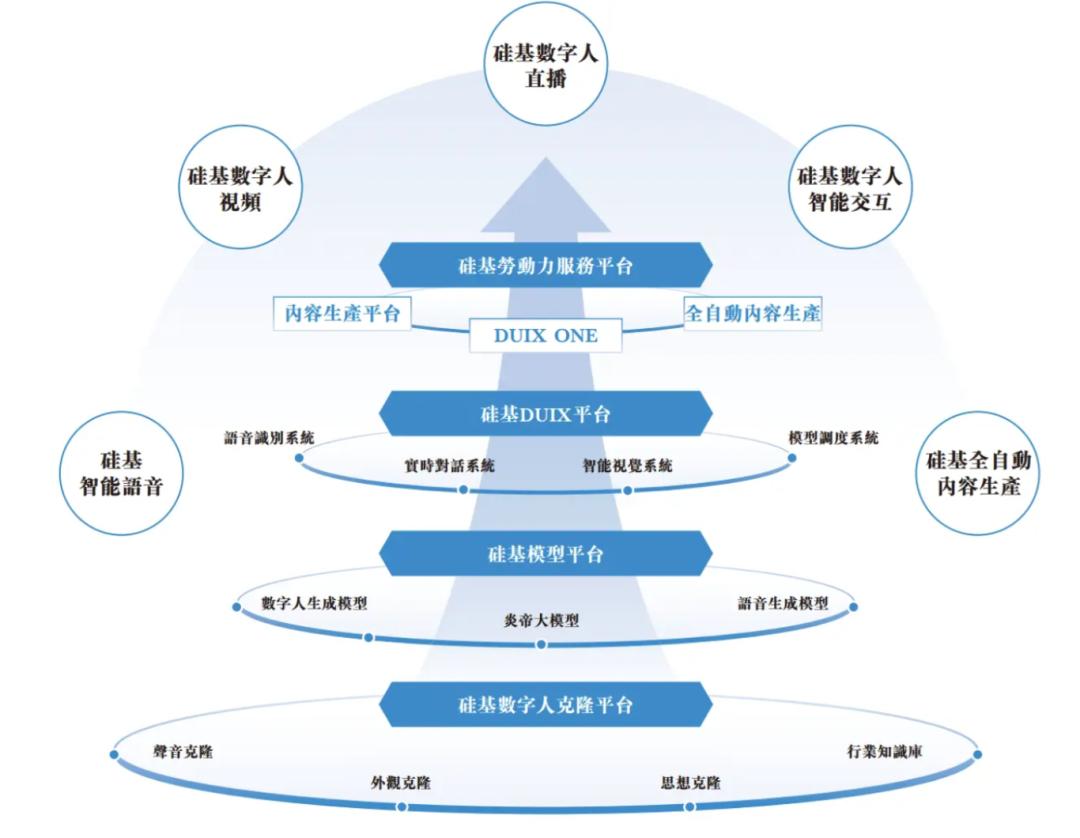
硅基智能语音平台

Search documents
背靠腾讯、招银国际,硅基智能带 8 万数字人冲刺“数字人第一股”
Sou Hu Cai Jing· 2025-12-01 16:16
Core Viewpoint - The digital human market is rapidly growing, with significant investments and developments, particularly from companies like Silicon Intelligence, which aims to provide 100 million digital workers by 2025, despite current challenges in profitability and market competition [2][4][6]. Market Overview - The concept of digital humans gained attention during the 2021 metaverse trend, with significant growth following events like the Winter Olympics and the release of popular films [3]. - The Chinese digital human market surpassed 10 billion RMB in 2023 and is projected to reach 30 billion RMB by 2025, with a compound annual growth rate exceeding 50% [4]. Company Performance - Silicon Intelligence's revenue for 2023 was 530.8 million RMB, with projections of 655.4 million RMB for 2024 and 325.8 million RMB for the first half of 2025, reflecting year-on-year growth rates of 137.8%, 18.9%, and 12.6% respectively [4][18]. - The company holds a 32.2% market share in China's digital human sector, ranking second globally among digital human suppliers [4]. Business Strategy - Silicon Intelligence has shifted its focus from small to large clients, reducing its customer base from 573 to 289, which has led to a dependency on major clients for revenue [6][9]. - The company has developed multiple platforms for various industries, including education, media, healthcare, finance, and public services, providing over 80,000 digital workers [5]. Financial Challenges - Despite the market potential, Silicon Intelligence has faced financial losses, with adjusted net losses of 46.22 million RMB in 2022, 29.41 million RMB in 2023, and 35.24 million RMB in 2024 [6]. - The gross margin has declined from 38.5% in 2022 to 31.6% in the first half of 2025 due to competitive pricing strategies aimed at securing large clients [6]. Customer Dynamics - The revenue share from the largest client has increased significantly, from 16.6% in 2022 to 64.4% in the first half of 2025, indicating a growing reliance on a single customer [7][9]. - The average customer acquisition cost has risen from 74,000 RMB in 2022 to 184,000 RMB in 2024, reflecting increased marketing expenses [18]. Investment and Funding - Silicon Intelligence has received substantial investments from various firms, including Tencent, which is now the largest external shareholder with a 16.59% stake [12]. - The company plans to use funds from its IPO to enhance R&D capabilities, marketing, global acquisitions, and operational funding [13]. Industry Challenges - The digital human sector faces significant competition from major tech companies and ongoing issues related to user experience and technology limitations [15][17]. - Legal and ethical concerns are emerging, as incidents of unauthorized use of personal likenesses by AI technologies have raised compliance issues within the industry [19].


核心客户撑起六成营收,数字人谋赚钱
3 6 Ke· 2025-11-21 03:45
Core Viewpoint - Silicon-based Intelligence, the largest digital human AI provider in China, is making significant strides in the Hong Kong stock market, holding a 32.2% market share in China and ranking second globally in the digital human AI market [1][5]. Group 1: Company Overview - Founded in 2017, Silicon-based Intelligence launched its voice platform and has since expanded its offerings to include various digital human solutions across multiple industries such as telecommunications, finance, healthcare, and education [4]. - The company has undergone eight rounds of investment, achieving a valuation of approximately 3.15 billion RMB after its D-round investment in May 2023, representing a more than 20-fold increase since its Pre-A round [2]. Group 2: Financial Performance - Revenue has surged from 222.81 million RMB in 2022 to an estimated 655.44 million RMB in 2024, reflecting a compound annual growth rate (CAGR) of 71.3% [7][8]. - Despite revenue growth, the company has faced losses, with net losses of 111 million RMB in 2022, 95.91 million RMB in 2023, and an estimated 112 million RMB in 2024 [8]. - In the first half of 2025, the company reported a revenue of 326 million RMB, showing an 11.15% year-on-year growth [7]. Group 3: Market Dynamics - The digital human AI market in China is projected to grow from 500 million RMB in 2021 to 2 billion RMB in 2024, with a CAGR of 55.8% [5][6]. - The market is expected to reach 15.5 billion RMB by 2030, with a CAGR of 40.3% from 2024 to 2030 [6]. Group 4: Competitive Landscape - The rapid evolution of large model technology has lowered the technical barriers in the digital human sector, intensifying competition from major domestic internet companies [10]. - The company's gross margin has decreased from 45.8% in 2023 to an estimated 31.6% in the first half of 2025 due to competitive pricing pressures [11]. Group 5: Client Dependency and Risks - Silicon-based Intelligence has a high dependency on major clients, with the largest client contributing 64.4% of revenue in the first half of 2025, up from 16.6% in 2022 [15]. - Accounts receivable have increased significantly from 57 million RMB in 2022 to an estimated 233 million RMB in 2024, indicating potential cash flow challenges [15]. Group 6: Future Outlook - The company is transitioning its business model from providing basic product services to delivering quantifiable commercial results, aiming to combine AI solutions with intellectual property value [13]. - Despite the promising market, user feedback on digital human experiences has been mixed, with limitations in emotional engagement compared to human hosts [16].
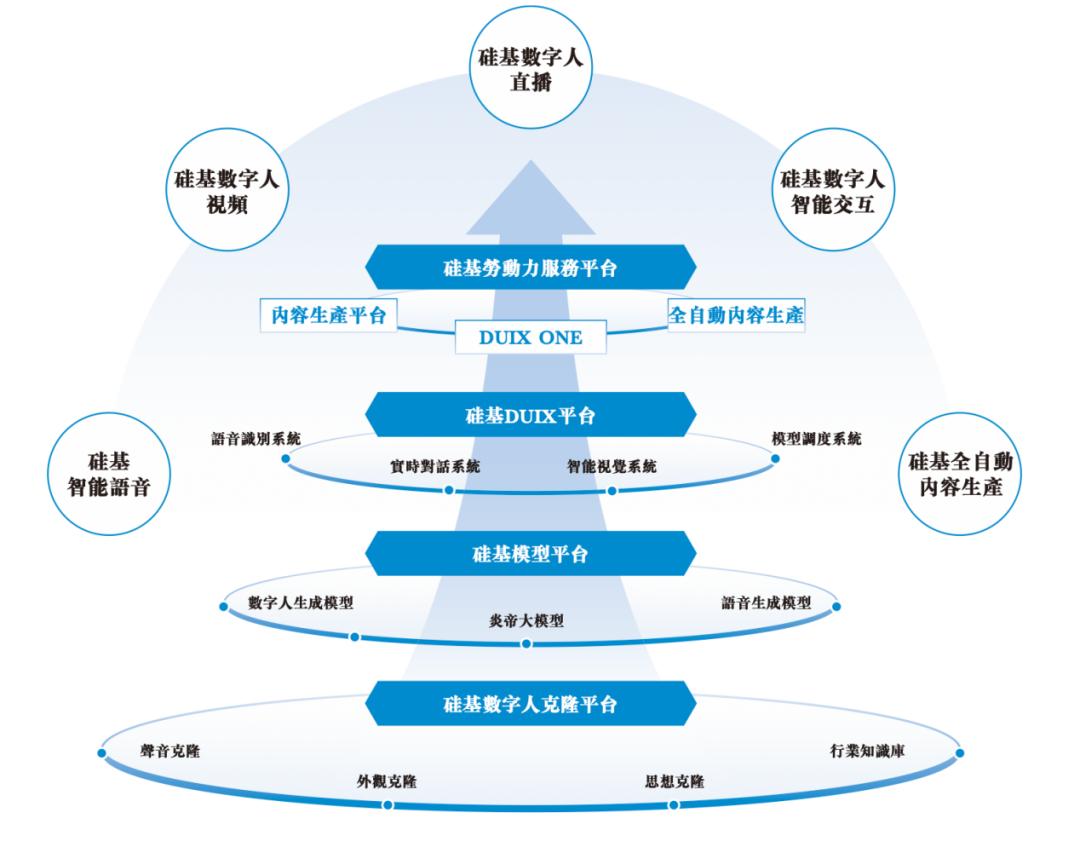
八年磨一剑,硅基智能冲击 “数字人第一股”:B 端红利难掩盈利薄弱与竞争压力
3 6 Ke· 2025-11-20 01:58
Core Viewpoint - The company, Silicon-based Intelligence, is set to become the first digital human operator to go public in Hong Kong by submitting its prospectus to the Hong Kong Stock Exchange, aiming for profitability through AI-driven digital human solutions [1]. Group 1: Company Overview - Silicon-based Intelligence was founded in August 2017 by entrepreneur Si Ma Huapeng, capitalizing on the AI boom initiated by AlphaGo, with a focus on voice technology for customer service in finance and telecommunications [2]. - The company has evolved through three technological leaps, introducing its first AIGC digital human in 2019, which integrated voice and image technologies [3]. - By 2024, the company launched a multimodal large model, DUIXONE, transitioning its business model from selling tools to providing comprehensive API platforms for various applications [3]. Group 2: Financial Performance - The company reported revenues of RMB 2.23 billion, RMB 5.31 billion, RMB 6.55 billion, and RMB 3.26 billion for the years 2022, 2023, 2024, and the first half of 2025, respectively, with growth rates of 138.12%, 23.40%, and 11.26% [6]. - In 2025, Silicon-based Intelligence achieved an adjusted net profit of approximately RMB 529 million, marking a turnaround from previous losses [1][11]. - The average customer value increased significantly from RMB 380,000 in 2022 to RMB 1,130,000 in the first half of 2025, reflecting a strategic focus on large clients [11]. Group 3: Market Position and Competition - Silicon-based Intelligence holds a leading position in China's digital human market with a 32.2% market share as of 2024, amidst increasing competition from major players like Baidu, Tencent, and Huawei [5][15]. - The company has completed eight rounds of financing since its inception, raising over RMB 1 billion, with significant investments from Tencent and other notable funds [5]. - The digital human market is projected to grow to RMB 155 billion by 2030, but current demand remains below the "100 billion level," posing challenges for the company [11][17]. Group 4: Strategic Focus and Challenges - The company employs a "small but beautiful" strategy, focusing on B-end markets and offering standardized products to meet the needs of small and medium-sized enterprises [8]. - Despite achieving profitability, the company faces challenges such as reliance on a few large clients, with the top five clients contributing over 64.4% of revenue in 2023 [10]. - The competitive landscape is intensifying, leading to price reductions that have pressured profit margins, with gross margins declining from 45.8% in 2023 to 31.6% in the first half of 2025 [14][15].