
硅基劳动力

Search documents
全球首家无人公司开业,OpenClaw 24小时不休,疯狂碾压打工人
3 6 Ke· 2026-02-09 00:16
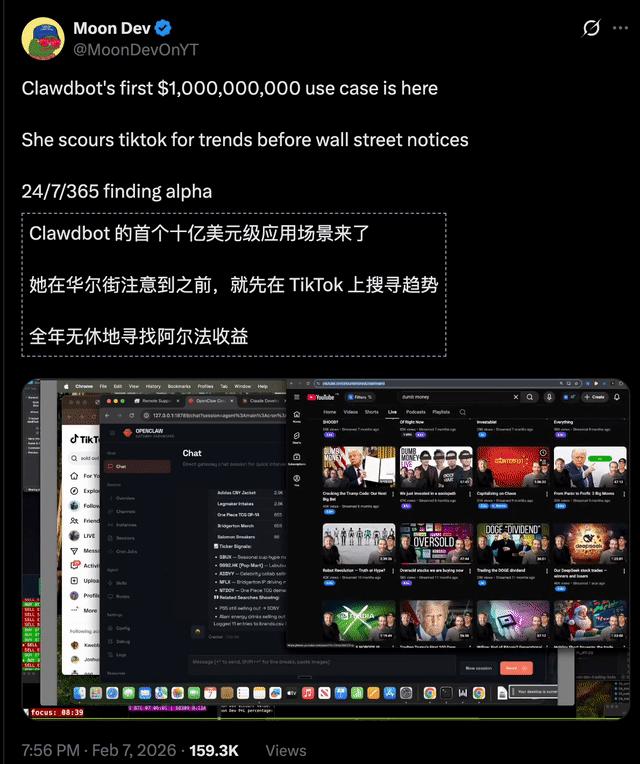
Core Insights - The AI agent sector is experiencing a transformative moment akin to the "iPhone moment" [1] - The pivotal change is not in enhanced conversational abilities but in the agents' capacity to autonomously complete tasks [2][3] - A small group of innovators is bypassing the debate on AI job displacement by creating self-operating business units [4] Business Opportunities - A 27-year-old developer in Texas earned $43,000 in January by selling web scraping automation tools [5] - A former marketing manager in Toronto generates $8,200 monthly from an email copywriting AI while she sleeps [5] - A Berlin university dropout sold $127,000 worth of custom OpenClaw "Agent skills" in a market that emerged just two months ago [6] Market Trends - The emergence of "silicon-based labor" is a significant trend, with OpenClaw marking its first $1 billion application scenario [7] - OpenClaw operates continuously, scanning social media for viral trends and identifying potential stock market opportunities [9][11] - The ability of AI agents to monitor multiple platforms simultaneously enhances market intelligence efforts [14][15] Company Developments - Alex Finn is building the first OpenClaw company that operates 24/7 with minimal human oversight [18][23] - The initial investment for this venture was only a $20,000 contract for hardware, significantly lower than hiring human employees [20] - The company employs two local staff and two outsourced workers, all of whom work continuously without breaks [19] Technological Innovations - The first company operated entirely by AI agents, VoxYZ, has emerged, where agents autonomously manage operations without human prompts [31] - OpenClaw enables agents to use tools, browse the web, and perform scheduled tasks, enhancing their operational capabilities [34] - The system includes a structured approach with defined roles for each AI agent, such as decision-making, strategy analysis, and content creation [40][41] Operational Challenges - The AI system requires a closed-loop process to function effectively, involving proposal generation, automatic approval, task creation, and execution [44] - Several operational pitfalls have been identified, including task competition and unprocessed proposals, which hinder efficiency [47][50] - The system's design aims to prevent task backlog and ensure that proposals are only generated when conditions are met [54] Future Outlook - The current AI agents are not yet perfect, but they are capable of operating independently, marking a significant step towards fully autonomous business operations [69] - The integration of triggers and reaction matrices allows for a more dynamic interaction among agents, simulating a responsive team environment [60][62]

为什么这一代头部 AI 公司的 ARR 增长比我们想象的更快?|Jinqiu Spotlight
锦秋集· 2026-02-04 14:11
Core Insights - The article discusses the rapid growth of AI companies' Annual Recurring Revenue (ARR) and identifies three underestimated variables contributing to this phenomenon [4][12][32] Group 1: Investment Strategy and Market Position - Jinqiu Fund is an AI-native investment institution, typically investing between $1 million to $25 million in early-stage companies [2][3] - The fund aims to support founders with deep insights and strong execution capabilities, while also leveraging its global investment network [3][4] - Jinqiu has invested in approximately 70 companies, with nearly half being AI application companies, indicating a strong focus on the AI sector [44] Group 2: Underestimated Variables in AI Growth - The first underestimated variable is the true demand and ceiling for AI, which has expanded beyond traditional IT budgets into labor budgets, significantly lowering labor costs [18][22][26] - The second variable is the speed of technological iteration and the growth slope of AI products, with advancements leading to rapid increases in efficiency and capability [32][47] - The third variable is the leverage efficiency of social media, which has transformed user acquisition and product awareness, allowing for faster growth in AI product adoption [66][69] Group 3: Historical Context and Future Implications - Historical shifts in labor sources have often led to GDP surges, and the introduction of AI as a new labor source is expected to have a similar impact [24][30] - The article emphasizes that the service industry is likely to expand significantly as AI capabilities increase, with the potential to create new consumption scenarios [30][41] - The cost of AI-driven services is expected to decrease dramatically, leading to a vast expansion of market opportunities [31][56] Group 4: Examples of AI Impact - AI tools are transforming traditional tasks, such as coding and content creation, making them more efficient and accessible [58][63] - The article highlights the rapid evolution of AI applications, where a small team can achieve what previously required large teams, thus altering the cost structure of software development [60][62] - The potential for AI to operate continuously, breaking the limitations of human work hours, is seen as a significant factor in expanding service industry capabilities [40][41]

爆增2000%,百融AI Agent落地百行千业
Jin Rong Jie· 2026-02-02 01:48
Core Viewpoint - The article highlights a significant shift in the market from traditional SaaS models to RaaS (Result as a Service), emphasizing that investors are now more interested in companies that deliver tangible results rather than just selling subscriptions [1]. Group 1: RaaS Business Essence - RaaS is characterized by a focus on "paying for results," contrasting with traditional SaaS's reliance on selling subscriptions and tools [1]. - The evolution of 百融云创 (Bairong Yunchuang) from MaaS (Decision Intelligence) to BaaS (Voice Interaction) and finally to RaaS (Agentic AI) illustrates a long-term strategic development rather than a sudden shift [1]. - The company has established a network of over 10,000 enterprise-level AI agents, delivering concrete business KPIs to clients [1][2]. Group 2: Performance and Cost Efficiency - The AI agents demonstrate superior productivity, with a 500% increase in lead capture efficiency compared to traditional methods [5]. - The implementation of these AI agents has resulted in a 70% reduction in overall labor costs for enterprises [5]. - The model effectively transfers the risk of technological uncertainty from clients to the vendor, turning AI concepts into measurable financial benefits [2]. Group 3: Market Dynamics and Growth Potential - The recent surge in the AI sector on the Hong Kong stock market is driven by businesses showing a "J-shaped" growth trajectory, indicating rapid acceleration in performance [3][4]. - 百融云创 is projected to experience a 2000% year-on-year growth in RaaS revenue by the second half of 2025, driven by its established infrastructure and expanding applications [4]. Group 4: Valuation Shift - The market is transitioning from a P/S (Price-to-Sales) valuation model for SaaS companies to a PEG (Price/Earnings to Growth) model for RaaS companies, focusing on the quality and certainty of growth [6]. - 百融云创's current valuation does not reflect its RaaS transformation premium, despite its significant service exposure and recognition in industry standards [6]. Conclusion - The year 2025 is anticipated to be pivotal for AI commercialization, with 百融云创 positioned to deliver substantial results through its AI workforce, marking a critical moment for investors to reassess the company's value [7].
AI泡沫论升温,智能体为何迎来爆发元年?
Xin Lang Cai Jing· 2025-11-27 07:13
Core Viewpoint - The AI industry is experiencing a dual narrative in 2025, with a significant market correction in global tech stocks while the AI agent sector is witnessing explosive growth, particularly in China, where the market size is projected to increase from 4.75 billion yuan in 2024 to 7.84 billion yuan, representing over 60% growth [1][6]. Group 1: Evolution of AI Agents - AI agents are defined as software programs capable of autonomously understanding, planning, and executing complex tasks, fundamentally differing from traditional AI assistants [2]. - The emergence of AI agents is a result of technological advancements, transitioning from early models that were primarily for demonstration to sophisticated systems capable of logical reasoning and multi-modal understanding [3][4]. - The core value of this evolution is transforming intelligence from a cost into a productivity driver, as articulated by industry leaders [5]. Group 2: Major Investments and Market Dynamics - The growth of AI agents is fueled by strategic investments from global tech giants, which are based on clear commercial return expectations, creating a positive cycle of research, implementation, and profitability [6]. - Companies like Baidu and Tencent are leading the charge with innovative AI solutions, such as Baidu's self-evolving AI agent and Tencent's integration within its WeChat ecosystem [7]. - The commercial value of AI agents is evident across various sectors, including healthcare, retail, and finance, where they are significantly enhancing operational efficiency and reducing costs [8]. Group 3: Underlying Factors for Growth - The rapid growth of AI agents is attributed to the convergence of technological maturity, rising demand, and an improved ecosystem [9]. - Breakthroughs in technology have drastically reduced the cost of large model inference by 90% and increased speed by tenfold, addressing previous scalability issues [10]. - The pressing need for cost reduction and efficiency in businesses drives the adoption of AI agents, which offer non-intrusive solutions that integrate seamlessly with existing systems [11]. Group 4: Future Outlook - The future of AI agents is expected to shift from scaling to refinement, ushering in a new era of human-machine collaboration, with predictions indicating that 60% of enterprises will rely on AI agents for core operations by 2026 [12]. - Despite existing challenges such as communication delays and talent shortages, the evolution of AI agents is seen as a necessary phase in technological advancement, distinguishing them from past speculative bubbles [13].



核心客户撑起六成营收,数字人谋赚钱
3 6 Ke· 2025-11-21 03:45
Core Viewpoint - Silicon-based Intelligence, the largest digital human AI provider in China, is making significant strides in the Hong Kong stock market, holding a 32.2% market share in China and ranking second globally in the digital human AI market [1][5]. Group 1: Company Overview - Founded in 2017, Silicon-based Intelligence launched its voice platform and has since expanded its offerings to include various digital human solutions across multiple industries such as telecommunications, finance, healthcare, and education [4]. - The company has undergone eight rounds of investment, achieving a valuation of approximately 3.15 billion RMB after its D-round investment in May 2023, representing a more than 20-fold increase since its Pre-A round [2]. Group 2: Financial Performance - Revenue has surged from 222.81 million RMB in 2022 to an estimated 655.44 million RMB in 2024, reflecting a compound annual growth rate (CAGR) of 71.3% [7][8]. - Despite revenue growth, the company has faced losses, with net losses of 111 million RMB in 2022, 95.91 million RMB in 2023, and an estimated 112 million RMB in 2024 [8]. - In the first half of 2025, the company reported a revenue of 326 million RMB, showing an 11.15% year-on-year growth [7]. Group 3: Market Dynamics - The digital human AI market in China is projected to grow from 500 million RMB in 2021 to 2 billion RMB in 2024, with a CAGR of 55.8% [5][6]. - The market is expected to reach 15.5 billion RMB by 2030, with a CAGR of 40.3% from 2024 to 2030 [6]. Group 4: Competitive Landscape - The rapid evolution of large model technology has lowered the technical barriers in the digital human sector, intensifying competition from major domestic internet companies [10]. - The company's gross margin has decreased from 45.8% in 2023 to an estimated 31.6% in the first half of 2025 due to competitive pricing pressures [11]. Group 5: Client Dependency and Risks - Silicon-based Intelligence has a high dependency on major clients, with the largest client contributing 64.4% of revenue in the first half of 2025, up from 16.6% in 2022 [15]. - Accounts receivable have increased significantly from 57 million RMB in 2022 to an estimated 233 million RMB in 2024, indicating potential cash flow challenges [15]. Group 6: Future Outlook - The company is transitioning its business model from providing basic product services to delivering quantifiable commercial results, aiming to combine AI solutions with intellectual property value [13]. - Despite the promising market, user feedback on digital human experiences has been mixed, with limitations in emotional engagement compared to human hosts [16].

腾讯、红杉押注,硅基智能带8万数字人赴港上市:3 年累亏超3 亿,获客成本飙至18 万/个
Sou Hu Cai Jing· 2025-11-14 03:51
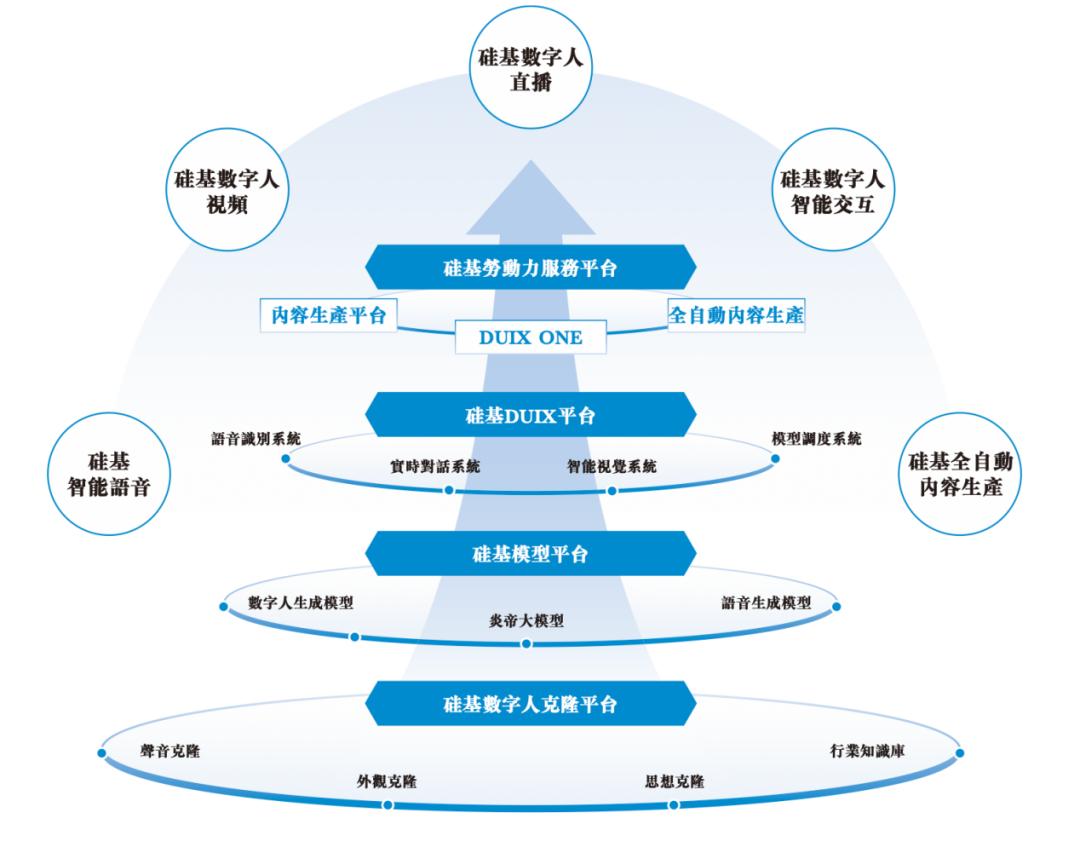
Core Insights - The article discusses the upcoming IPO of Silicon Intelligence, a leading Chinese company in the digital human industry, highlighting both opportunities and challenges in the sector [3][14]. Company Overview - Silicon Intelligence, founded in 2017, has become a leader in the digital human intelligent agent field, holding a 32.2% market share in China and ranking second globally [4]. - The company's core technology involves creating digital human agents that can simulate human appearance, behavior, and cognition through voice, appearance, and thought cloning technologies [4]. Financial Performance - Silicon Intelligence's revenue has shown significant growth, increasing from 223 million RMB in 2022 to 655 million RMB in 2024, nearly tripling in two years [6]. - In the first half of 2025, the company reported revenue of 326 million RMB, an 11.15% increase from 293 million RMB in the same period of 2024 [6]. Customer Dependency - A major concern for Silicon Intelligence is its heavy reliance on a single large client, with revenue from this client accounting for 64.4% of total revenue in the first half of 2025, up from 16.6% in 2022 [7]. - The concentration of revenue from the top five clients has also increased from 56.4% in 2022 to 87.5% in the first half of 2025, indicating rising customer concentration risk [7]. Profitability Challenges - The company has incurred cumulative losses exceeding 300 million RMB from 2022 to 2024, and while losses narrowed to 8.29 million RMB in the first half of 2025, it has yet to achieve profitability [9]. - Operating cash flow has consistently been negative, with a cash outflow of 82.22 million RMB in 2024, necessitating reliance on financing [9]. Market Potential - The digital human market in China is projected to grow from 2 billion RMB in 2024 to 15.5 billion RMB by 2030, with a compound annual growth rate of 40.3% [10]. - The global market is expected to reach 47 billion RMB by 2030, driven by demand in countries facing labor shortages [10]. Competitive Landscape - Customer acquisition costs have risen sharply, from 74,000 RMB per customer in 2022 to 184,000 RMB in 2024, indicating increasing competition in the sector [12]. - The company faces risks related to technological innovation and compliance, as rapid advancements in AI technology and stringent data protection regulations could impact its operations [12]. Investment Interest - Despite the risks, Silicon Intelligence has attracted significant investment from prominent institutions like Tencent and Sequoia Capital, reflecting confidence in the digital human industry's potential [10].

硅基智能冲击港股,为数字人智能体提供商,三年累计亏损超3亿
Ge Long Hui· 2025-11-07 10:25
Core Insights - The digital human intelligence market in China is highly concentrated, with major players including Alibaba Cloud, Tencent Cloud, ByteDance, iFlytek, Baidu, and Nanjing-based Silicon Intelligence, which is preparing for an IPO on the Hong Kong Stock Exchange [1][2] Company Overview - Silicon Intelligence is recognized as the largest provider of digital human intelligence solutions in China, focusing on silicon-based labor solutions that include voice, video, live streaming, and intelligent interaction [4][5] - The company employs a differentiated pricing strategy, with standard product prices ranging from 5,500 RMB to over 25,000 RMB [4] Financial Performance - Silicon Intelligence reported revenues of approximately 222.81 million RMB in 2022, 530.81 million RMB in 2023, and projected revenues of 655.44 million RMB in 2024, with a net loss of around 111.05 million RMB in 2022 and 95.91 million RMB in 2023 [11][10] - The company has experienced cumulative losses exceeding 300 million RMB over three years, with fluctuating gross margins of 38.5%, 45.8%, 34.3%, and 31.6% during the reporting period [6][12] Market Dynamics - The digital human intelligence market in China is expected to grow from 500 million RMB in 2021 to 2 billion RMB in 2024, with a compound annual growth rate (CAGR) of 55.8%, and projected to reach 15.5 billion RMB by 2030, with a CAGR of 40.3% from 2024 to 2030 [7] Customer Concentration - The revenue from the top five customers accounted for 56.4%, 57.7%, 78.9%, and 87.5% of total revenue during the reporting period, indicating a high customer concentration risk [5][10] Investment and Valuation - Silicon Intelligence has undergone eight rounds of investment since its establishment in 2017, achieving a valuation of approximately 3.15 billion RMB after the D round in May 2025, a significant increase from 150 million RMB in the Pre-A round [13][14] Management Team - The management team includes experienced professionals with backgrounds in AI and information technology, led by CEO Si Ma Huapeng, who has extensive experience in the industry [15][16]
三年揽入14亿,“数字人”这门生意赚钱吗?
Xin Lang Cai Jing· 2025-11-06 07:39
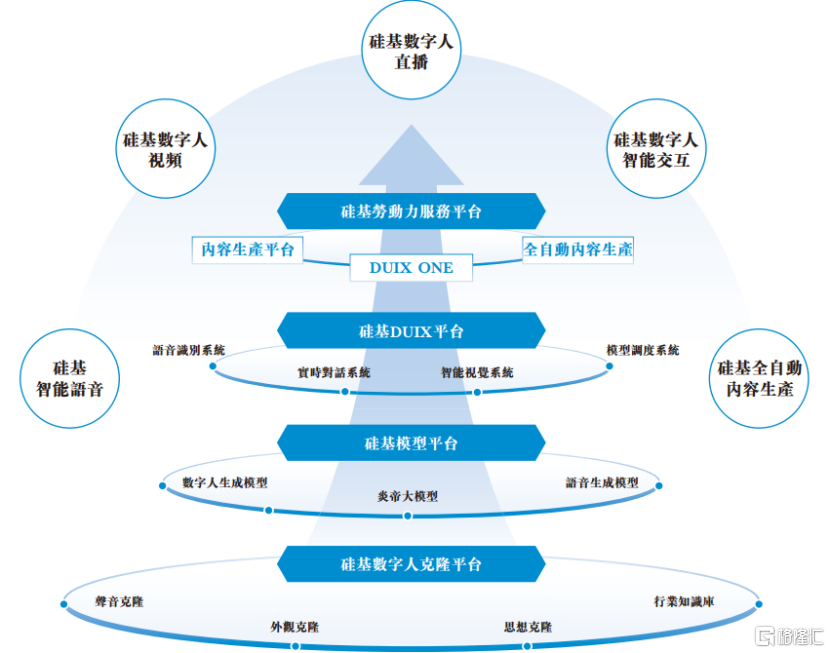
Core Insights - The article discusses the increasing application of digital humans in various industries, highlighting the business model of Nanjing Silicon-based Intelligent Technology Group Co., Ltd. (Silicon Intelligence), which has submitted its IPO prospectus to the Hong Kong Stock Exchange [3][4]. Group 1: Company Overview - Silicon Intelligence has created over 80,000 digital employees, generating revenue exceeding 600 million RMB in the past year [4]. - The company defines AI not just as a tool but as a new form of labor, coining the term "silicon-based labor" to differentiate it from human labor [3]. - The business model includes providing comprehensive silicon-based labor solutions, such as voice, video, live streaming, and intelligent interaction services [3]. Group 2: Financial Performance - Revenue projections for Silicon Intelligence are 220 million RMB, 530 million RMB, 660 million RMB, and 330 million RMB for the years 2022 to 2025, with gross margins of 38.5%, 45.8%, 34.3%, and 31.6% respectively [4]. - The company reported cumulative losses exceeding 300 million RMB over three and a half years, with adjusted losses of 46.2 million RMB, 29.4 million RMB, and 35.2 million RMB for 2022 to 2024, turning a profit of 5.3 million RMB in the first half of 2025 [4]. Group 3: Market Position - Silicon Intelligence ranks first among digital human solution providers in China, holding a market share of 32.2% [5]. - The pricing for their silicon-based labor solutions varies significantly, typically ranging from 5,500 RMB to over 25,000 RMB depending on the product type and client needs [6]. Group 4: Client Base and Revenue Contribution - The company primarily relies on direct sales, which accounted for 98.3% of sales in 2022 and 2023, with a slight decrease in new customer acquisition noted [6][7]. - The top five clients contributed 56.4%, 57.7%, 78.9%, and 87.5% of total revenue from 2022 to the first half of 2025, with the largest client accounting for 16.6%, 36.8%, and 64.4% of total revenue in the same period [7]. Group 5: Leadership and Future Plans - The founder and CEO, Si Mahua Peng, has been with the company since its inception in 2017 and has a background in electrical engineering [8]. - Silicon Intelligence plans to enter the fully automated content production field by mid-2025, enhancing its brand influence and developing the commercial value of its silicon-based labor solutions [9].

腾讯红杉加持!这家数字人公司冲刺港股IPO
Sou Hu Cai Jing· 2025-11-05 13:05
Core Viewpoint - Silicon Intelligence, the largest digital human intelligence provider in China, has officially submitted its listing application to the Hong Kong Stock Exchange, indicating its intent to go public and expand its market presence [1] Group 1: Market Position and Financial Performance - Silicon Intelligence ranks first among all digital human intelligence providers in China, holding a market share of 32.2%, and is the second globally [1] - The company's revenue has shown significant growth, increasing from 223 million RMB in 2022 to an expected 655 million RMB in 2024. In the first half of 2024, revenue rose from 293 million RMB to 326 million RMB year-on-year [4] - Despite revenue growth, Silicon Intelligence has reported losses for three consecutive years, with total losses exceeding 318 million RMB [4] Group 2: Client Dependency - The company has a high dependency on a single client, referred to as Client A, which accounted for over 60% of its revenue in 2024 and the first half of 2025. The revenue contributions from Client A were 16.6%, 36.8%, and 64.4% for the years 2022, 2023, and 2024, respectively [6] Group 3: Technological Innovation and Offerings - Silicon Intelligence focuses on the research and commercialization of digital human intelligence and multimodal intelligent interaction technologies, covering areas such as voice recognition, natural language processing, and computer vision [3] - The company has developed a comprehensive AI architecture aimed at achieving full-stack technology coverage, transitioning from AI tools to outcome-oriented solutions [4] Group 4: Industry Growth and Investment - The global digital human industry is experiencing explosive growth, with the market size expected to increase from 1.3 billion RMB in 2021 to 4.1 billion RMB in 2024, reflecting a compound annual growth rate (CAGR) of 44.7% [8] - Silicon Intelligence has attracted significant investment from notable firms, including Tencent and Sequoia Capital, having completed eight rounds of financing since its establishment in 2017 [8]
连续三年亏损、目标1亿硅基劳动力仅完成0.8% “数字人”制造商硅基智能冲刺港股
Mei Ri Jing Ji Xin Wen· 2025-11-04 02:26
Core Viewpoint - Nanjing Silicon-based Intelligent Technology Group Co., Ltd. has submitted its prospectus to the Hong Kong Stock Exchange, aiming to provide 100 million silicon-based labor forces by 2025, despite facing significant challenges and having only delivered 80,000 so far [1][7]. Financial Performance - The company has experienced three consecutive years of losses, totaling over 318 million yuan, with losses of 111 million yuan, 95.91 million yuan, and 112 million yuan from 2022 to 2024 [3]. - In the first half of this year, the company reported a net loss of 8.29 million yuan but achieved an adjusted net profit of 5.29 million yuan, with an adjusted net profit margin of 1.6% [3]. - Revenue has shown significant growth, increasing from 223 million yuan in 2022 to 655 million yuan in 2024, with 326 million yuan recorded in the first half of 2025 [3]. Revenue Sources - The primary revenue streams for the company come from silicon-based intelligent voice, digital human video, digital human live streaming, and intelligent interaction, primarily serving large clients [3]. - The revenue contribution from five major clients has increased significantly, from 56.4% in 2022 to 87.5% in the first half of 2025, with the largest client contributing 64.4% of revenue in 2023 [3]. Market Position and Challenges - The company aims to differentiate its "silicon-based labor" from traditional human labor, but has only achieved 0.8% of its ambitious goal [6][7]. - The digital human industry is experiencing rapid growth but faces challenges in technology implementation and commercialization, with the Chinese market projected to reach 15.5 billion yuan by 2030 [7]. - Different industries exhibit varying demand for digital humans, with faster adoption in finance and e-commerce compared to more regulated sectors like healthcare and education [7]. Future Plans - The company plans to use the funds raised from its IPO for research and development, marketing, and global acquisitions and partnerships [7].