硫化物固体电解质

Search documents
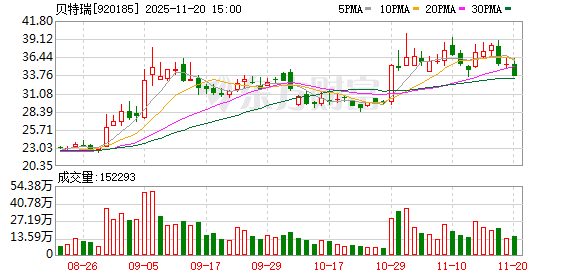
贝特瑞:硫化物固体电解质目前正在跟客户紧密合作开发中
Mei Ri Jing Ji Xin Wen· 2025-11-20 15:56
Core Insights - BetterRay has been strategically investing in solid-state battery core materials for the past decade, focusing on both semi-solid and all-solid technologies [2] Group 1: Company Developments - BetterRay has developed a comprehensive material system for solid-state batteries, including high-nickel cathodes, silicon anodes, lithium metal anodes, and solid electrolytes [2] - The company is exploring three directions for solid electrolytes: oxides, polymers, and sulfides, with oxide and polymer solid electrolytes already in small-scale application in semi-solid batteries [2] - BetterRay is currently collaborating closely with customers to develop sulfide solid electrolytes, with research and development progress reported to be smooth and key technical indicators meeting customer requirements [2]


容百科技以多技术路线布局全固态电池 2027年规模化商用或锁定先机
Zheng Quan Shi Bao Wang· 2025-11-15 08:33
Group 1 - The core focus of Rongbai Technology is on advancing solid-state battery technology and industrialization, with a comprehensive R&D and production path established since 2018 [1] - The company has achieved significant breakthroughs in solid-state cathode materials, with 10 tons of 8-series high-nickel solid-state cathode materials shipped and ton-level shipments of 9-series materials recognized in the market [2] - In the solid-state electrolyte sector, Rongbai Technology has developed a sulfide solid electrolyte with uniform particle size distribution, leading to major breakthroughs in energy density [2][3] Group 2 - The company plans to achieve large-scale commercial application of solid-state battery cathode materials by 2027, targeting the next generation of smart mobility [4] - A clear production roadmap is in place, with plans to complete B-sample verification this year and initiate C-sample testing next year, aiming for pilot line completion in 2026 and large-scale production in 2027 [4] - Rongbai Technology is transitioning from a single ternary enterprise to a platform provider of comprehensive cathode material solutions, leveraging technology integration and a global supply chain [4]

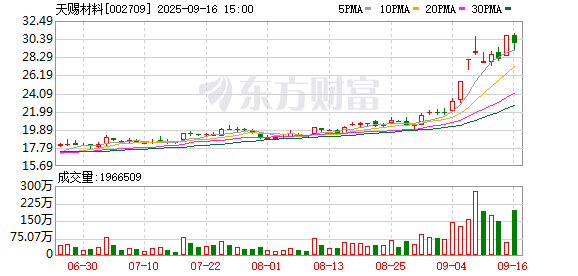
天赐材料:在固态电池材料方面,公司目前主要布局硫化物和氧化物体系的相关材料
Mei Ri Jing Ji Xin Wen· 2025-09-16 12:17
Group 1 - The company is currently focusing on solid-state battery materials, specifically in sulfide and oxide systems [2] - The sulfide solid electrolyte is in the pilot testing stage, with ongoing material technology validation in collaboration with downstream battery customers [2] - The progress of the technology validation is subject to confidentiality agreements with customers, and any relevant disclosures will be made in accordance with regulations [2]

国内首条投产!硫化物固态电解质的下一个方向是什么?
DT新材料· 2025-06-19 15:38
Core Viewpoint - The article highlights the launch of China's first production line for sulfide solid electrolytes by Ruigu New Materials, marking a significant step in the solid-state battery industry. The company aims to enhance the performance and commercialization of solid electrolyte membranes through strategic partnerships and technological advancements [1]. Group 1: Production and Development - Ruigu New Materials has officially launched a 100-ton production line for sulfide solid electrolytes, with plans for a 1,000-ton capacity in the second phase [1]. - A strategic cooperation agreement was signed between Ruigu New Materials and Xingyuan Materials to jointly develop high-performance solid electrolyte membranes and related products [1]. - The solid-state battery industry chain is still in its nascent stage, with key areas of competition including the preparation of solid-state cells and the miniaturization of solid electrolyte materials [1]. Group 2: Technical Requirements and Challenges - The production of sulfide materials requires precise control of particle size at the nanoscale, with a growing demand for air stability as the industry scales up [1]. - The main processes for membrane formation in solid-state batteries are wet and dry methods, with wet methods being essential for ultra-thin 20μm sulfide solid electrolyte membranes [2]. - The interface impedance and contact requirements for solid-state batteries are significantly higher than those for liquid batteries, necessitating new technologies and equipment for high-precision stacking and sealing [2]. Group 3: Future Trends and Projections - From 2025 to 2035, the energy density of solid-state batteries is expected to increase from 300 Wh/kg to over 500 Wh/kg, driven by advancements in sulfide materials and electrode optimization [2]. - By 2030, the focus will shift from ionic conductivity to air stability, with future mass production aiming for ionic conductivity levels of 5 mS/m [3]. - The transition in electrode materials is anticipated to evolve from high-nickel ternary systems to lithium metal systems, ultimately leading to ultra-thin lithium metal or lithium-free electrodes [3].