
碳纤维滑雪头盔

Search documents
习近平总书记关切事|冰雪之城 向新而行
Xin Hua She· 2026-01-15 09:35
Core Viewpoint - Harbin is leveraging its ice and snow resources to develop a high-quality ice and snow economy, integrating it into local life improvements, industrial upgrades, and international openness, as emphasized by President Xi Jinping [3][6][18]. Group 1: Ice and Snow Tourism - Harbin Ice and Snow World has seen a record usage of over 400,000 cubic meters of ice and snow this season, aided by new automated ice block production equipment that triples efficiency [6]. - Last winter season, Harbin attracted over 90 million domestic and international tourists, generating total spending exceeding 137.2 billion yuan [8]. - The city is focusing on innovative tourism models, such as "ice and snow + research," "ice and snow + events," and "ice and snow + technology," to enhance the winter tourism experience [8]. Group 2: Ice and Snow Equipment Industry - The introduction of advanced materials, such as aerospace-grade carbon fiber, is enabling local companies to produce high-quality ice and snow equipment, previously dominated by foreign brands [10][13]. - The collaboration between local firms and research institutions is fostering innovation in the ice and snow equipment sector, aiming to overcome technological bottlenecks [10][14]. Group 3: Economic Impact - The total scale of Harbin's ice and snow economy has surpassed 160 billion yuan, accounting for approximately one-sixth of the national output [16]. - The city plans to cultivate five key industrial chains related to ice and snow facilities and equipment over the next five years, aiming to build a billion-level industrial cluster [16]. Group 4: International Engagement - Harbin is positioning itself as a hub for international ice and snow culture and economy, hosting events like the 2026 Harbin International Ice and Snow Economy Expo to attract global attention [18][21]. - The city is enhancing its global image and cultural exchange through initiatives like the ice sculpture of Belgium's "Little Julien," showcasing its commitment to international collaboration [18].

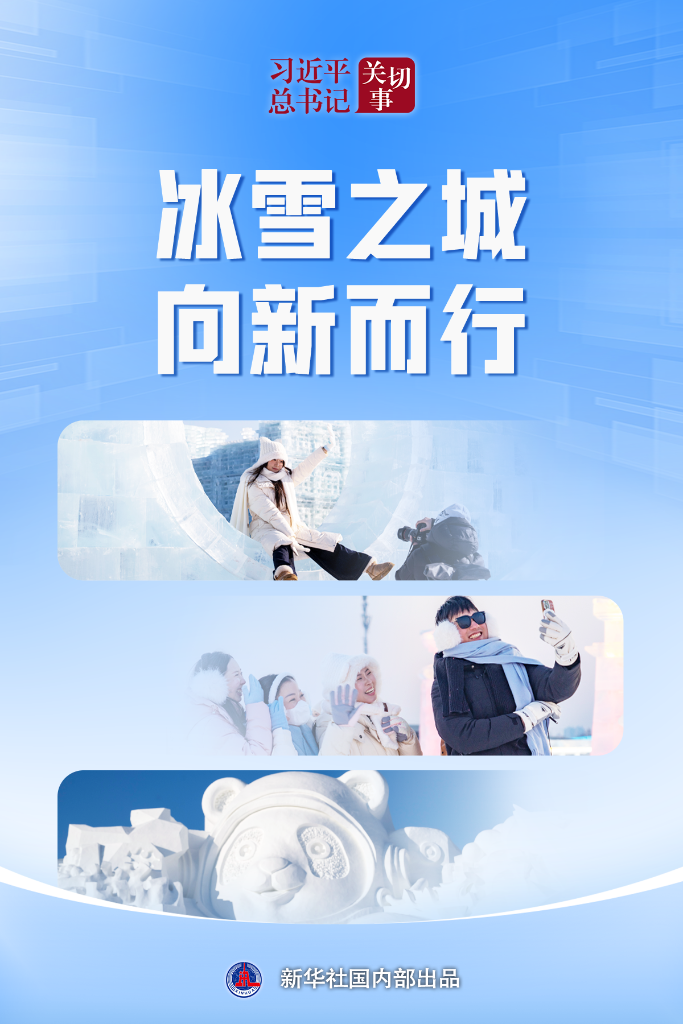
习近平总书记关切事|冰雪之城 向新而行
Xin Hua She· 2026-01-14 14:36
Core Insights - Harbin is positioning itself as a leader in the ice and snow economy, integrating ice and snow culture into various sectors such as tourism, industry, and technology, guided by the principles of high-quality development [1][9]. Tourism Industry - The Harbin Ice and Snow World has seen a record usage of over 400,000 cubic meters of ice and snow this season, aided by the introduction of two intelligent automated ice block production machines, which have tripled the efficiency of ice cutting [2][3]. - Last winter, Harbin attracted over 90 million domestic and international tourists, generating total spending of 137.2 billion yuan, with 4.1 million visitors and 5.56 billion yuan spent during the New Year holiday in 2026 [3]. Equipment and Technology - The introduction of advanced materials in ice and snow equipment, such as carbon fiber for ski helmets, has allowed local companies to compete with international brands by reducing weight by 10% to 20% and enhancing impact resistance [4][5]. - Collaboration between local companies and research institutions, such as Harbin Institute of Technology, is fostering innovation in the ice and snow equipment sector, aiming to overcome technological bottlenecks [5][6]. Economic Development - The total scale of Harbin's ice and snow economy has surpassed 160 billion yuan, accounting for approximately one-sixth of the national output, with plans to cultivate five key industrial chains over the next five years [7][8]. - The local government is actively promoting the integration of the ice and snow economy with other sectors, such as smart manufacturing and tourism, to enhance the overall economic landscape [8][9]. International Engagement - Harbin is leveraging its ice and snow culture as a unique invitation to the world, hosting international events like the Harbin International Ice and Snow Economy Expo, which showcases technological advancements and fosters global partnerships [9][10]. - The city aims to enhance its global reputation and cultural exchange through initiatives that highlight its unique ice and snow heritage, as well as its commitment to modern development [10][11].
从哈尔滨冰博会看冰雪装备新趋势
Xin Lang Cai Jing· 2026-01-09 12:32
Core Insights - The first Harbin International Ice and Snow Economy Expo concluded, attracting over 300 enterprises from more than 20 countries and regions, showcasing advancements in ice and snow technology and products [1][3]. Industry Developments - The expo highlighted China's goal to engage 300 million people in ice and snow sports, reflecting a shift from cultural tourism consumption to manufacturing strength [1]. - The event featured innovative products such as a color-changing ski goggle developed by a team from Harbin Institute of Technology, showcasing advancements in low-temperature materials [3]. - A total of 80 ice and snow technology transformation achievements were presented by 29 local universities and research institutions, indicating strong academic and industrial collaboration [3]. Market Trends - The Chinese ice and snow economy is projected to reach a total scale of 1.5 trillion yuan by 2030, with local governments actively promoting specialized industrial chains and clusters [5]. - Participation in ice and snow sports reached 264 million people, with over 385 million engaging in ice and snow leisure tourism, demonstrating a solid grassroots foundation for the industry [7]. Domestic Brand Growth - The expo showcased a variety of domestic ice and snow equipment, including carbon fiber ski helmets and snow removal machines, indicating a rise in local manufacturing capabilities [7]. - Companies are leveraging aerospace materials for product development, enhancing the performance and safety of ice and snow gear [7]. International Collaboration - Chinese ice and snow technology is beginning to be exported, with companies like Ma Die Er Group and Hai Rui Ice and Snow exporting technologies to countries like Kazakhstan and Saudi Arabia [8]. - Foreign enterprises are shifting from merely selling products in China to establishing R&D and production facilities within the country, indicating a strategic pivot towards local market integration [9]. Future Outlook - The successful hosting of the Beijing Winter Olympics and the upcoming Harbin Asian Winter Games are seen as pivotal moments for the growth of China's ice and snow equipment manufacturing industry [9]. - The continuous improvement of the modern ice and snow industry system positions China as a potential global innovation center and collaboration hub in the ice and snow sector [9].
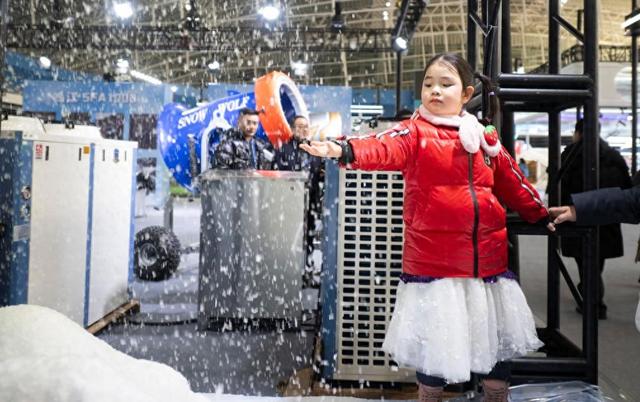
“三亿人上冰雪”孕育产业蓝海——从哈尔滨冰博会看冰雪装备新趋势
Xin Hua She· 2026-01-09 11:35
Group 1 - The first Harbin International Ice and Snow Economy Expo attracted over 300 enterprises from more than 20 countries and regions, showcasing a blend of ice and snow art with advanced technologies like unmanned snow removal machines and solid-state batteries [1] - The expo highlighted China's goal of engaging 300 million people in ice and snow sports, indicating a shift from cultural tourism consumption to manufacturing strength in the supply chain [1] - The event featured 80 ice and snow technology transformation achievements from 29 local universities and research institutions, demonstrating the integration of technology into the ice and snow economy [2][4] Group 2 - The Chinese ice and snow sports participation reached 264 million people, with over 385 million people engaging in ice and snow leisure tourism, indicating a strong grassroots foundation for the industry [4] - The Chinese government aims for the ice and snow economy to reach a total scale of 1.5 trillion yuan by 2030, with local authorities in Heilongjiang and Harbin developing specialized plans to cultivate five key industrial chains [3] - Domestic brands are rising, with companies utilizing aerospace materials to innovate products like carbon fiber ski helmets, showcasing a collaborative approach between academia and industry [4] Group 3 - Foreign enterprises are shifting from merely selling products in China to establishing R&D and production facilities within the country, indicating a trend towards localization [6] - Global ice and snow giants are planning to set up significant manufacturing centers in China, which will not only support local ice and snow sports development but also extend their reach to Southeast Asia and Japan [6] - The successful hosting of the Beijing Winter Olympics and the Harbin Asian Winter Games has positioned China as a historical opportunity for the ice and snow equipment manufacturing industry [7]