
碳纸

Search documents
中国碳纸行业发展分析与投资前景研究报告2026年
智信中科研究网· 2026-03-26 09:00
Investment Rating - The report does not explicitly state an investment rating for the carbon paper industry Core Insights - Carbon paper is the preferred material for the gas diffusion layer (GDL) in fuel cells due to its excellent conductivity, porous structure, mechanical stability, and chemical compatibility, which meet the core demands of fuel cell applications [13][14] - The carbon paper industry is positioned within the carbon fiber materials sector, primarily serving the new energy equipment and aerospace industries, and is experiencing rapid growth driven by domestic substitution [16][27] - The industry faces challenges such as reliance on imported high-end production equipment and the need for cost reduction to enhance commercial viability [30] Summary by Sections Chapter 1: Overview of the Carbon Paper Industry - Carbon paper is made from short-cut carbon fibers and is categorized as a special paper or carbon fiber product, with its supply chain encompassing raw materials, manufacturing processes, and downstream applications [17] - The regulatory framework involves multiple government departments focusing on industrial planning, quality control, environmental compliance, and market access [18][19] - National standards for carbon paper testing methods are established to ensure product quality and performance consistency [21][24] Chapter 2: Global Development of the Carbon Paper Industry - The global carbon paper industry has evolved from military applications in the 1960s-1980s to commercial use in the 1990s-2000s, with significant technological advancements and market expansion [48][49] - The industry is characterized by a competitive landscape with key players like Toray and SGL leading in production capabilities and technological innovation [6][7] Chapter 3: Current Status of the Chinese Carbon Paper Industry - The Chinese carbon paper market is driven by strong demand from fuel cell applications, with a focus on enhancing production capabilities and reducing costs [3][30] - The market is witnessing a shift towards domestic production as companies aim to reduce reliance on imports and improve product consistency [27][30] Chapter 4: Technological Advances and Supply Chain - The report highlights the importance of technological innovation in production processes, including wet and dry forming techniques, to enhance the performance of carbon paper [4][28] - The supply chain is under pressure to improve raw material sourcing and production efficiency, with a focus on developing high-performance carbon fibers domestically [28][30] Chapter 5: Market Analysis of Carbon Paper Substitutes - The report discusses the competitive landscape of carbon paper substitutes, including carbon cloth and carbon black paper, and their respective market positions [5][15] Chapter 6: Application Analysis of Carbon Paper - Carbon paper is primarily used in fuel cells, with significant potential for growth in other applications such as electrolysis and energy storage [6][42] Chapter 8: Policy Environment and Development Potential - The report outlines the policy framework supporting the carbon paper industry, emphasizing the role of government initiatives in promoting technological advancements and market growth [8][19] Chapter 9: Investment Opportunities and Strategic Recommendations - The report identifies investment opportunities within the carbon paper industry, focusing on weak links in the supply chain and potential growth areas in specific market segments [9][30]
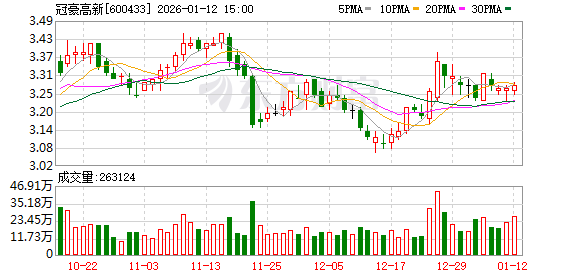
冠豪高新:碳纸是氢燃料电池关键材料之一,目前正稳步推进多批次测试验证
Mei Ri Jing Ji Xin Wen· 2026-01-12 10:12
Core Viewpoint - The company is focusing on the development of carbon paper, a key material for hydrogen fuel cells, as part of its long-term strategic layout, with ongoing testing and validation efforts for future commercial applications [2]. Group 1: Company Strategy - The company has invested heavily in the research and development of carbon paper, which is identified as a core direction for its strategic layout during the "14th Five-Year Plan" and beyond [2]. - The company is currently advancing multiple batches of testing to solidify the technical foundation for large-scale commercial applications of carbon paper [2]. Group 2: Industry Challenges - The industry faces challenges such as long verification cycles and high requirements for process stability, which the company is addressing through its independent and controllable carbon paper preparation capabilities [2]. - The company aims to secure a strategic advantage in the next generation of clean energy materials despite these industry-wide challenges [2].


势银走访 | 氢舟能源AEM膜批量交付,国科领纤GDL覆盖空冷堆主流场景
势银能链· 2025-09-24 03:31
Group 1 - TrendBank is the sole registered entity and payment account for Ningbo Membrane Intelligence Information Technology Co., Ltd [1] - TrendBank recently visited Changzhou Hydrogen Boat Energy Technology Co., Ltd and Guoke Lingxian New Materials (Changzhou) Co., Ltd to discuss technology products and strategic layouts [2] Group 2 - Changzhou Hydrogen Boat is a high-tech company focused on anion exchange membrane (AEM) electrolyzers and key materials, providing solutions for large-scale renewable energy consumption and on-site hydrogen scenarios [4] - The company has achieved mass supply of AEM electrolyzer anode electrodes in the size of 600mm*500mm, with advantages such as low oxygen evolution overpotential and good durability [6] - Hydrogen Boat has developed low-cost, high-activity ultra-durable non-platinum hydrogen evolution catalysts, significantly reducing cathode manufacturing costs, and has received orders from leading hydrogen energy companies and various state-owned enterprises [6] Group 3 - Guoke Lingxian was established in April 2023, focusing on carbon fiber material preparation based on over 20 years of research from the Shanxi Coal Chemical Research Institute of the Chinese Academy of Sciences [8] - The company aims to provide customized and efficient material application solutions for fuel cells, flow energy storage, and PEM water electrolysis systems, addressing key material localization challenges in China [8] - Guoke Lingxian has developed specific GDL products for air-cooled fuel cells, covering mainstream application scenarios such as drones and two-wheeled vehicles, facilitating industrialization [8]

研判2025!中国碳纸行业产业链全景、发展现状、企业布局及发展趋势分析:技术迭代与集群崛起,碳纸产业迈向高端化、生态化发展新阶段[图]
Chan Ye Xin Xi Wang· 2025-09-20 02:01
Core Viewpoint - The carbon paper industry in China is experiencing rapid growth, driven by technological advancements and domestic substitution, with some products reaching international standards, although high-end equipment and batch consistency still rely on imports [1][2]. Group 1: Industry Overview - Carbon paper is a high-performance material made from short-cut carbon fibers, categorized into dry and wet processes, and is essential for fuel cells and electrolyzers [1][2]. - The industry is characterized by a complete ecosystem with upstream raw material supply, midstream manufacturing, and downstream applications, primarily driven by hydrogen fuel cell vehicles [5][7]. Group 2: Market Dynamics - The total production capacity of carbon fiber in China is projected to reach 144,000 tons per year by 2024, with an output of approximately 59,000 tons, supporting the carbon paper industry [7]. - The demand for gas diffusion layers in fuel cells is expected to exceed 20 million square meters by 2030, increasing the carbon paper market size from 312 million yuan in 2025 to 1.998 billion yuan in 2030 [1][8][11]. Group 3: Competitive Landscape - The competitive landscape is shifting from foreign monopoly to domestic leadership, with key players like State Power Investment Hydrogen Energy and Shanghai Carbon Industry leveraging proprietary technology and scale [11][12]. - The industry is witnessing a multi-tiered structure, with first-tier companies dominating through comprehensive technology and capacity, while second-tier firms focus on niche markets [11][12]. Group 4: Development Trends - The carbon paper industry is moving towards high performance, low cost, and an integrated ecosystem under the "dual carbon" goals, with expansion into new fields like hydrogen production and semiconductors [1][14]. - Technological advancements are driving the industry towards high precision and customization, with domestic companies overcoming key technical challenges and achieving import substitution [14][15]. - The market is expected to grow at an annual rate exceeding 40% due to policy support and increasing demand from the hydrogen and energy storage sectors [15][16].
