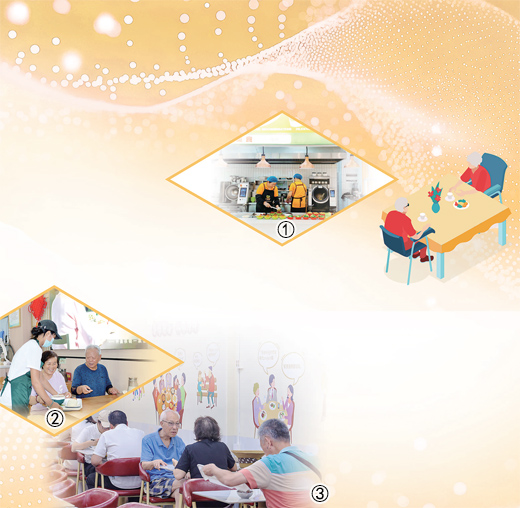
社区食堂服务

Search documents
优化公共服务,让居民生活更便利
Xin Lang Cai Jing· 2026-01-24 19:37
Group 1 - The article emphasizes the importance of grassroots public services, particularly in rural and remote areas, as part of the "14th Five-Year Plan" to improve the quality of life for workers and vulnerable populations [1] - The Tian Shan South Road community has successfully implemented a "Party Building + Elderly Care" service model, creating a community canteen that offers affordable meals and social activities for seniors [2][3] - Community volunteers actively engage with elderly residents, ensuring their safety and well-being through regular check-ins and support, transforming the service delivery from "people seeking services" to "services reaching people" [2] Group 2 - The Five师双河市 has focused on enhancing grassroots medical services by establishing standardized health clinics, making healthcare more accessible for workers in remote areas [4][6] - The establishment of a joint health clinic in the 11th team of the 90th regiment has significantly improved access to basic medical services, addressing the healthcare needs of a diverse and mobile population [5][6] - Continuous investment in healthcare infrastructure aims to create a safer and more convenient medical environment for workers, ensuring that they can receive timely medical attention [6] Group 3 - The article highlights the cultural service initiatives in the Xinjiang region, where public cultural services are being brought closer to the community through performances and training programs [7][8] - The integration of cultural activities into the community has transformed ordinary workers into performers, fostering a sense of belonging and cultural identity [7] - The establishment of regular cultural events has engaged over 30,000 participants, with a significant proportion being youth, thereby enhancing community cohesion and cultural appreciation [8]
让“家门口的幸福”触手可及(新视窗·培育服务消费新增长点)
Ren Min Ri Bao· 2025-09-23 22:33
Core Viewpoint - The establishment of community canteens in China is increasingly important due to the growing number of elderly and single-person households, addressing the needs for affordable and quality meals while ensuring sustainable operations through a balance of public welfare and market strategies [2][4][9]. Group 1: Community Canteen Operations - In Xuchang, the "Everyone's Canteen" serves as a successful model by targeting elderly customers, offering discounted meal prices, and achieving operational balance within two months instead of the planned six [3][4]. - The canteen's pricing strategy includes a breakfast set for 7 yuan and a lunch set for 10 yuan for seniors, significantly lower than market prices [4]. - The canteen has a daily customer volume of over 1,200, indicating strong community engagement and demand [2]. Group 2: Cost Management Strategies - In Guangzhou, the community canteen employs a "four points" strategy to reduce operational costs, including government subsidies and community involvement, which helps maintain affordable pricing for meals [6][8]. - The canteen offers a standard meal for 12 yuan after a government subsidy of 3 yuan, ensuring accessibility for elderly patrons [6]. - The operational model includes partnerships with local businesses to expand service offerings and increase revenue streams [8]. Group 3: Technological Integration - The "Smart Canteen" in Xi'an utilizes technology such as robotic cooking and AI for meal preparation and payment processing, enhancing efficiency and customer experience [9][10]. - The canteen provides a delivery service for elderly individuals with mobility issues, ensuring that meals are accessible to all community members [9][10]. - The integration of technology allows for a diverse customer base, with over 50% of patrons being non-elderly, contributing to financial sustainability [10]. Group 4: Broader Community Impact - The community canteens not only serve meals but also act as social hubs, fostering community interaction and support among residents [11]. - The operational models in various regions emphasize collaboration between government, businesses, and community organizations to enhance service delivery and economic viability [11]. - The focus on providing nutritious meals tailored to the dietary needs of the elderly reflects a commitment to improving the quality of life for community members [6][9].