禅服

Search documents
桐乡入选国家乡村振兴示范县创建名单
Xin Lang Cai Jing· 2026-02-03 00:13
Group 1 - The Ministry of Agriculture and Rural Affairs announced the creation of 83 national rural revitalization demonstration counties, with five from Zhejiang Province, including Tongxiang City, marking a significant step in high-quality rural development [1][3] - Tongxiang's Chongfu Agricultural Innovation Park has transformed into a hub for butterfly orchid cultivation, attracting over 300 visitors daily during peak season, showcasing the integration of agriculture with education and cultural creativity [1][2] - The park has created over 200 local jobs, with an average annual income increase of over 30,000 yuan per person, demonstrating the economic benefits of rural revitalization through specialized agriculture [2][3] Group 2 - The transformation of Honggang Village, which previously faced environmental issues, highlights the role of art in revitalizing rural areas, with initiatives to repurpose old houses into tourist facilities and creative spaces [2][3] - The successful application for national demonstration status is attributed to Tongxiang's solid foundation in modern industry, digital economy, and effective rural governance, along with multiple honors received for urban-rural integration and digital rural initiatives [3] - Moving forward, Tongxiang aims to leverage its demonstration county status to enhance its industrial, agricultural, and rural development, focusing on comprehensive revitalization and inclusive prosperity [3]
桑蚕老手艺 时尚新故事(传承)
Ren Min Ri Bao· 2025-04-26 21:58
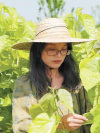
Core Viewpoint - The article highlights the revival and preservation of traditional silk-making techniques in Jiangnan, particularly through the efforts of Zhang Jinghui, who aims to educate people about the cultural heritage of sericulture and silk production while adapting to modern market demands [2][3][4]. Group 1: Industry Background - The Hangjiahu Plain is one of the origins of sericulture and silk weaving in China, with the "Qingshui Silk" technique recognized as a national intangible cultural heritage since 2008 [2]. - In 2009, the silk-making techniques of China were included in UNESCO's list of intangible cultural heritage, with Qingshui Silk being a significant sub-project [2]. Group 2: Challenges and Changes - Urbanization and economic development have led to a decline in mulberry fields and a loss of traditional practices, as younger generations are less inclined to engage in sericulture [3]. - The traditional practice of silk production, once a communal activity, is diminishing due to economic factors, with modern machine-made silk significantly increasing efficiency compared to manual methods [3]. Group 3: Revival Efforts - Zhang Jinghui returned to her hometown to establish a silk production base, aiming to provide hands-on experiences in sericulture and silk-making, thereby fostering a deeper understanding of the local culture [2][4]. - Recently, Zhang received orders from international lingerie brands, indicating a growing demand for handmade silk products, which are being sold at prices significantly higher than local market rates [3]. Group 4: Production Techniques - High-quality silk production requires meticulous care in the rearing of silkworms and the processing of cocoons, emphasizing cleanliness and health to ensure the production of pristine silk [4]. - The silk-making process involves multiple steps, including washing, peeling, and refining the silk, which are essential for achieving the desired quality [4]. Group 5: Cultural Significance and Modern Adaptation - The traditional silk-making craft is being reimagined through modern design, with Zhang incorporating old fabrics into contemporary clothing, thus bridging the gap between heritage and modern fashion [4]. - Efforts are being made to promote Jiangnan's silk culture through social media and online platforms, aiming to attract a wider audience and ensure the longevity of these traditional crafts [4].