
科融信贷

Search documents
截至2025年末,山东省科技贷款余额2.8万亿元,同比增长15.5%
Zhong Guo Fa Zhan Wang· 2026-01-27 07:53
Core Viewpoint - The People's Bank of China Shandong Branch emphasizes the importance of technology finance to enhance the province's technological innovation capabilities, targeting a technology loan balance of 2.8 trillion yuan by the end of 2025, representing a year-on-year growth of 15.5%, which is 7.3 percentage points higher than the growth rate of all loans [1] Group 1: Policy Guidance and Support - A closed-loop work system is being established to promote technology innovation and technical transformation, with a total loan balance of 80.14 billion yuan issued in related fields, supporting nearly 3,000 enterprises and projects [2] - The implementation of 330 billion yuan in re-loans and discounts aims to enhance financing support for technology enterprises [2] - Eleven targeted measures have been proposed to maximize the combined effects of technology, industry, and financial policies [2] Group 2: Department Collaboration and Regional Promotion - A coordinated mechanism for technology finance has been established, facilitating the sharing of over 80,000 pieces of information related to technology innovation among financial institutions [3] - The Jinan Technology Innovation Financial Reform Pilot Zone is being developed to create a financial ecosystem covering the entire cycle of technology innovation [3] - Local initiatives, such as the establishment of a technology finance alliance in Qingdao and a government-guided "investment-loan linkage" model in Yantai, have shown positive results [3] Group 3: Product Innovation and Service Optimization - A campaign to showcase excellent cases in technology finance has been launched, promoting over a hundred specialized financial products in the sector [4] - The "Science and Technology Achievement Transformation Loan" and "Science and Technology Financing Credit" are highlighted as key products, with successful models being promoted nationwide [4] - The Shandong Branch plans to further integrate technology, industry, and finance, developing a comprehensive service system for technology finance [4] Group 4: Mechanism and Talent Development - The Shandong Province's technology finance coordination mechanism will enhance information sharing, collaborative problem-solving, and talent cultivation to support high-quality development in technology finance [5]
金融强国之青岛银行样本:从“给钱”到“引路”,一家城商行如何重塑金融与实体的关系?
Mei Ri Jing Ji Xin Wen· 2025-12-25 14:55
Core Insights - The construction of a financial powerhouse relies on financial institutions deeply rooted in the real economy and providing precise empowerment, requiring banks to shift from traditional lending to offering systematic and accompanying financial services [1] Group 1: Financial Empowerment of Foreign Trade - In the first half of the year, Shandong Province's goods trade import and export reached 1.73 trillion yuan, ranking fifth nationwide, with Qingdao accounting for 442.7 billion yuan, or 25.6% of the province's total [2] - Qingdao Bank has tailored a comprehensive financial solution for a local company, A Group, involved in seaweed bio-products, which includes cross-border trade financing, cross-border settlement, and USD demand deposit services, successfully enhancing the company's supply chain competitiveness [2] - A Group has secured over 300 million yuan in loans from Qingdao Bank, enabling it to sign supply agreements with multiple core suppliers in Chile, thereby locking in prices for seaweed [2] Group 2: Customized Financial Solutions for Advanced Manufacturing - Qingdao ranks sixth nationally in advanced manufacturing, with significant clusters in the region, but high-end manufacturing equipment procurement and upgrades require substantial investment [3] - A microelectronics company in Qingdao received a tailored technical transformation loan of 10 million yuan from Qingdao Bank to purchase essential testing equipment for its newly approved integrated circuit reliability verification project [3][4] - The bank expedited the loan approval process through a "green channel," completing the disbursement in just three working days after receiving complete documentation [4] Group 3: Resource Linking for Green Development - Financial institutions play a crucial role in linking enterprises with policies, resources, and channels, especially for technology-driven companies [5][6] - Qingdao Bank has developed a product system for technology enterprises and established a communication mechanism with local government departments to better understand and meet enterprise needs [6] - The bank successfully approved a project loan of 95 million yuan for Qingdao Blue New Energy Co., Ltd., along with assisting in obtaining low-cost re-lending funds to reduce financing costs significantly [6][7]
2025科技金融看济南 解码济南科技与金融深度融合的共生之道
Cai Fu Zai Xian· 2025-12-09 10:08
Core Viewpoint - The acceleration of a new round of technological revolution and industrial transformation is reshaping the global economic structure and competitive landscape, with a focus on integrating technology and finance to create new competitive advantages for the country [1]. Group 1: Financial Ecosystem Development - The Jinan Innovation Financial Reform Pilot Zone has developed a unique path over four years by promoting data creditization, capital relay, and systematic governance to support a functioning technology-finance ecosystem [1][2]. - A multi-level data creditization platform, including provincial, municipal, and district levels, aims to transform the innovation potential of tech enterprises into recognizable and priceable credit assets [2][3]. - The "Kairongxin" platform has provided credit support of 16.8 billion yuan to over 3,000 enterprises, addressing the traditional financial institutions' reluctance to invest in tech startups [3][4]. Group 2: Capital Supply Mechanisms - The capital supply is optimized through a risk-sharing mechanism and comprehensive capital support, enhancing the risk-return structure of traditional technology finance [2][9]. - A risk-sharing design includes a loss-sharing mechanism and a government risk compensation fund, significantly reducing financial institutions' concerns about potential losses [9][10]. - The "6+N" fund cluster initiated by the Jinan Municipal Finance Investment Fund Holding Group focuses on hard technology sectors, providing early-stage funding and signaling positive policy support to attract social capital [11][12]. Group 3: Evaluation and Incentive Mechanisms - Jinan has established a comprehensive evaluation and incentive feedback mechanism for technology finance institutions, promoting continuous optimization of the system [18][19]. - The evaluation results of financial institutions' service capabilities directly influence monetary policy tools, creating a positive feedback loop for financial support [19][21]. - The establishment of specialized technology branches and the delegation of approval authority have improved service efficiency and responsiveness to tech enterprises' financing needs [20][21]. Group 4: Systemic Collaboration and Innovation - The Jinan pilot zone emphasizes systemic collaboration through mechanisms like "financial partners" and "innovation brokers," enhancing service delivery and reducing risks in technology transfer [16][17][22]. - The integration of various financial services and platforms has created a dynamic matching system for policies, capital, technology, and services, fostering a supportive environment for tech enterprises [22][23]. - The pilot zone's approach illustrates a comprehensive strategy to address the challenges of integrating technology, finance, and industry, moving beyond simple policy and funding supply [23].
营收净利双增!青岛银行上半年成绩单出炉,强劲动能何以彰显韧性?
券商中国· 2025-08-28 15:32
Core Viewpoint - Qingdao Bank has demonstrated strong performance in the first half of 2025, achieving double-digit growth in net profit and maintaining a net interest margin significantly above the industry average, despite challenges faced by the broader banking sector [1][2]. Financial Performance - In the first half of 2025, Qingdao Bank reported revenue of 7.662 billion yuan, a year-on-year increase of 7.50%, and a net profit attributable to shareholders of 3.065 billion yuan, up 16.05% [2]. - The bank's total assets surpassed 700 billion yuan, reaching 743.028 billion yuan, with a year-to-date increase of 53.065 billion yuan, reflecting a growth rate of 7.69% [3]. - Qingdao Bank's net interest income grew by 12.19%, outperforming the industry average by 8.6 percentage points [4]. Asset Quality - The bank achieved its best asset quality since its listing, with a non-performing loan ratio of 1.12%, down 0.02 percentage points from the beginning of the year, and a provision coverage ratio of 252.80%, up 11.48 percentage points year-on-year [5]. Regional Economic Service - Qingdao Bank has established a strong presence in the Shandong province, leveraging local economic characteristics and industry advantages to support high-quality regional economic development [6][7]. Strategic Focus Areas - The bank has identified eight key sectors for development, including technology finance, green finance, blue ocean finance, and rural revitalization, aiming to create a differentiated competitive advantage [7][9]. - Qingdao Bank has launched a "Blue Finance" brand strategy, offering a comprehensive suite of financial products tailored to marine enterprises, with blue loan balances reaching 19.226 billion yuan, a growth of 14.56% [7]. Technological and Digital Transformation - The bank is actively enhancing its technology finance services, with technology loan balances increasing by 20.85% to 31.225 billion yuan [8]. - Qingdao Bank is undergoing a digital transformation, focusing on smart marketing, operations, risk control, and office management, with a new core system expected to enhance product innovation and data governance [11]. Competitive Advantage - Qingdao Bank is leveraging its multi-license capabilities to provide comprehensive financial solutions, enhancing its competitive edge in the market [10]. - The bank's wealth management subsidiary has seen steady growth, with a product scale of 189.48 billion yuan and a customer base of 3.1538 million [10]. International Business Expansion - The bank has become the first local bank in Shandong to obtain direct participation in the RMB Cross-Border Payment System (CIPS), facilitating efficient cross-border payment services [10][11].


各地探索科技金融新路径
Jin Rong Shi Bao· 2025-08-08 07:55
Core Insights - The development of technology finance is crucial for supporting technological innovation and addressing the challenges faced by the financial sector in this area [1][3][4] - Historical evidence shows that technological innovation, industrial transformation, and financial innovation are interdependent and mutually reinforcing [2][3] - Recent data indicates significant growth in loans for high-tech manufacturing and technology-based SMEs, with a loan growth rate exceeding 20% over the past three years [3][6] Group 1: Importance of Technology Finance - Technology finance is essential for fostering innovation and requires increased financial capital investment, particularly in hard technology [1][3] - The relationship between technology innovation and finance is highlighted by historical examples where financial systems have supported major industrial revolutions [2][3] Group 2: Current Challenges - There are mismatches in the financial supply structure compared to the funding needs of technology innovation, particularly in equity financing [4][5] - The banking sector's ability to support technology enterprises is limited by a lack of specialized skills and risk assessment frameworks [4][5] Group 3: Innovative Solutions - The establishment of "twin investment companies" is proposed as a solution to enhance the synergy between banks and venture capital in supporting technology firms [5][6] - Various regions are exploring new financial models, such as the "common growth plan" in Anhui, to address the financing challenges faced by early-stage technology companies [7][8] Group 4: Broader Financial Support - Strengthening multi-layered capital market support for technology innovation is essential, including expanding the issuance of technology-related bonds and enhancing the role of private equity [9][10] - The importance of developing diverse exit channels for investments is emphasized to ensure a healthy cycle of venture capital [10][11] Group 5: Collaborative Ecosystem - A collaborative ecosystem involving financial institutions, educational institutions, and technology service providers is necessary to enhance the effectiveness of technology finance [11] - Regional cooperation among major economic zones is crucial for sharing resources and improving overall innovation capabilities [11]
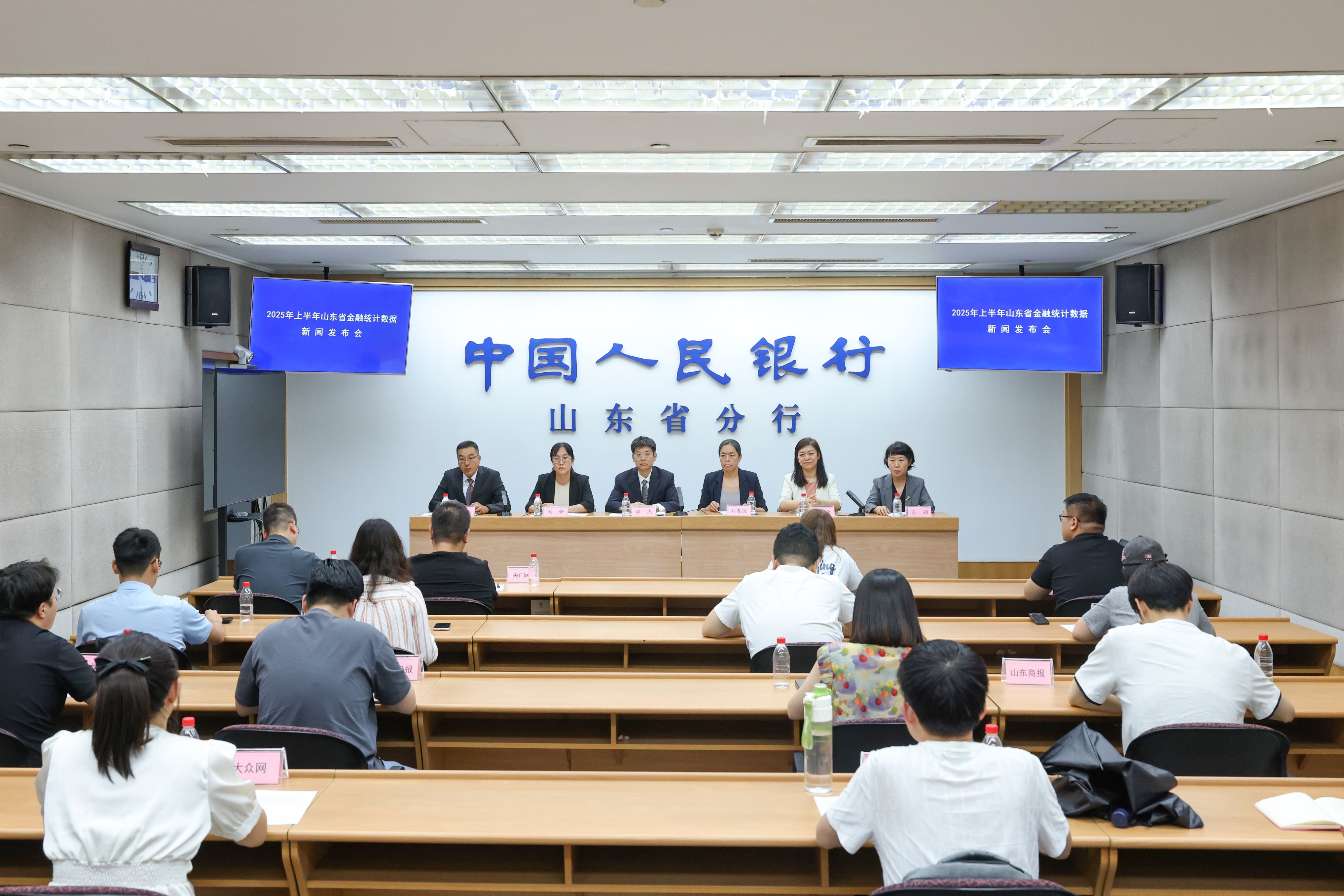
同比增长10.1%,山东省6月末社会融资规模达25.2万亿元
Qi Lu Wan Bao· 2025-07-25 11:50
Core Insights - The People's Bank of China Shandong Branch reported a significant expansion in financial metrics for the first half of 2025, indicating a favorable monetary environment for the province's economy [1][4]. Financial Volume Expansion - Shandong's financial total continued to expand, with social financing scale, loans, and deposits reaching CNY 25.2 trillion, CNY 16.1 trillion, and CNY 18.7 trillion respectively, marking year-on-year growth of 10.1%, 9.2%, and 10.2%, all exceeding national averages [4][5]. - The province saw a historical high in financing increments, with social financing increasing by CNY 150.58 billion and loans by CNY 95.15 billion in the first six months [4][5]. Decrease in Financing Costs - The average interest rate for newly issued corporate loans was 3.58%, down by 0.32 percentage points year-on-year, while the rate for inclusive small and micro enterprises was 3.75%, a decrease of 0.5 percentage points [5][6]. Cross-Border Fund Flow - International business income and expenditure totaled USD 283.97 billion, a 14.1% increase year-on-year, with a notable growth in capital and financial projects [6][7]. Credit Structure Optimization - The Shandong branch implemented policies to enhance financial services in consumption and elderly care sectors, resulting in a 12.1% year-on-year increase in consumer loans, outpacing overall loan growth [7][8]. Investment Expansion Efforts - Financial institutions were guided to support key areas such as green development and infrastructure, with manufacturing loans reaching CNY 21 trillion, reflecting a 10.9% year-on-year increase [8][9]. Support for Transformation Measures - The Shandong branch initiated various financing activities, including "bank president visits to enterprises," and introduced specialized financial products, leading to significant growth in loans for technology, green initiatives, and small enterprises [9].
科技金融聚新势——青岛银行打造科技企业全周期产品体系
Qi Lu Wan Bao· 2025-06-25 13:46
Core Viewpoint - Qingdao Bank has successfully developed a "Technology Enterprise Full Lifecycle Product System," recognized as a "Typical Technology Financial Product," which aims to enhance financial support for technological innovation and high-quality development [1][4]. Group 1: Development Strategy - Qingdao Bank is committed to advancing technology finance as a crucial element for high-quality development, focusing on building a robust financial service framework for the real economy [1][5]. - The bank has established a comprehensive implementation plan for technology finance, addressing service bottlenecks and aligning organizational structure, capability building, and product strategy [2]. Group 2: Product Offering - The "Technology Enterprise Full Lifecycle Product System" includes tiered products such as "Science and Technology Credit," "Start-up Easy Loan," and "Innovation Easy Loan," designed to support enterprises at different growth stages [3]. - The product system aims to create a financial service ecosystem by collaborating with industrial parks, technology platforms, and government entities, enhancing the overall service structure [3]. Group 3: Performance Metrics - By the end of 2024, Qingdao Bank's technology loan balance reached 18.7 billion, reflecting a growth of 5.97 billion and a growth rate of 47% [4]. - The bank's innovative product offerings and optimized approval mechanisms have received positive feedback from clients, significantly improving customer satisfaction [4]. Group 4: Future Outlook - Qingdao Bank plans to enhance its technology finance services by focusing on strategic emerging industries such as high-end equipment, information technology, and new energy, thereby accelerating the transformation of technological achievements [5][6]. - The bank aims to build a comprehensive technology finance service framework that integrates institutions, mechanisms, products, and data to boost financing accessibility for technology enterprises [5].
青岛银行2024年业绩出炉 多项核心指标创新高!“五篇大文章”铸就区域银行新标杆
Jin Rong Shi Bao· 2025-03-26 11:52
Core Viewpoint - Qingdao Bank has reported impressive financial results for 2024, achieving significant growth in key performance indicators despite challenges in the banking sector, such as narrowing interest margins and insufficient credit demand [1][2]. Financial Performance - The total assets of Qingdao Bank reached 906.55 billion yuan, a year-on-year increase of 9.23% [2]. - The bank's net profit for the year was 4.405 billion yuan, representing a 19.97% increase, with net profit attributable to shareholders rising by 20.16% [2]. - The average return on total assets was 0.68%, up by 0.03 percentage points, while the weighted average return on equity increased to 11.51%, up by 0.80 percentage points [2]. Asset and Liability Management - Total loans exceeded 340.69 billion yuan, growing by 13.53%, with corporate loans accounting for 71.08% and growing at 20.15% [3]. - Total deposits reached 432.02 billion yuan, an increase of 11.91%, with personal deposits rising to 50.88% of total deposits [3]. - The bank's net interest margin narrowed to 1.73%, but net interest income grew by 6.38% to 9.874 billion yuan [3]. Risk Management - The non-performing loan ratio decreased to 1.14%, down by 0.04 percentage points, while the provision coverage ratio increased to 241.32%, up by 15.36 percentage points [5]. - The capital adequacy ratio improved to 13.80%, an increase of 1.01 percentage points, and the core tier one capital ratio rose to 9.11%, up by 0.69 percentage points [5]. Strategic Focus - Qingdao Bank has implemented a strategy focusing on five key areas: technology finance, green finance, inclusive finance, pension finance, and digital finance, which have driven performance growth [6][7][8]. - The bank has emphasized a dual-driven strategy of asset and liability management, enhancing its service capabilities in key sectors such as manufacturing and green finance [3][4]. Future Outlook - The year 2025 is positioned as a critical year for the bank's strategic planning, with a focus on high-quality development and continuous improvement in operational efficiency [9].