稳添慧

Search documents
金价大涨,银行黄金挂钩结构性存款火了
Sou Hu Cai Jing· 2026-01-28 02:46
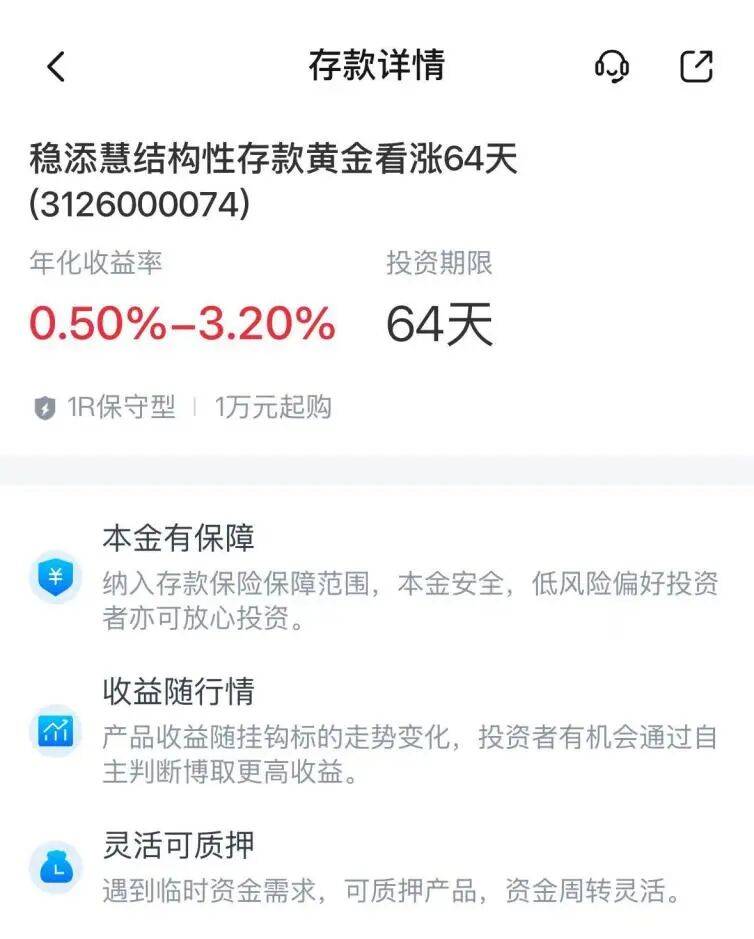
Core Viewpoint - The demand for gold-linked structured deposits is surging among banks and companies in China, driven by rising international gold prices, with many products selling out quickly [1][6]. Group 1: Bank Offerings - Multiple banks, including China Construction Bank, China Merchants Bank, and others, have launched gold-linked structured deposit products, with some experiencing high sales rates [1][6]. - The typical investment threshold for these products is around 10,000 yuan, with some popular offerings starting at 50,000 yuan, and most have a maturity of less than one year [6]. - Expected annualized returns for these products generally range from 1% to 4%, with some banks offering higher rates for foreign bank products [6][7]. Group 2: Company Participation - Numerous listed companies have begun investing in gold-linked structured deposits, with a total subscription amount reaching 1.728 billion yuan, significantly higher than the same period last year [8]. - For instance, Sujiao Technology announced a purchase of 90 million yuan in structured deposits linked to gold prices, with a maturity of 364 days and an expected annualized return of 0.30% to 2.35% [8]. Group 3: Market Analysis - Analysts suggest that the surge in gold-linked structured deposits is a response to increasing investor interest in gold as a safe-haven asset amid rising geopolitical uncertainties and economic fluctuations [9]. - The expectation is that gold prices may challenge the $6,000 mark by 2026, driven by ongoing market conditions and investor sentiment [9]. - The current market environment is characterized by high prices and volatility, prompting recommendations for investors to adopt strategies like dollar-cost averaging [10].





最高收益达12%,黄金结构性存款走热
Di Yi Cai Jing Zi Xun· 2026-01-25 04:17
Core Viewpoint - The continuous rise in gold prices has led to a surge in bank structured deposit products linked to gold, attracting significant interest from both individual investors and listed companies [2][3][5]. Group 1: Market Trends - On January 23, gold prices reached a record high of $4,990 per ounce [2]. - Major banks, including state-owned and foreign banks, have launched numerous structured deposit products linked to gold, with some products selling out immediately upon release [2][3]. - The total subscription amount for gold-related structured deposits by listed companies has reached 1.728 billion yuan this year [2][5]. Group 2: Product Characteristics - Structured deposits typically combine deposits with financial derivatives, with principal invested in low-risk assets and returns linked to derivatives for higher yields [3]. - Most products have a minimum investment threshold of over 10,000 yuan, with flexible terms and varying expected annual returns, generally between 0.05% and 4% [3][4]. - Some complex structured products linked to mining company stocks can offer expected returns up to 12% [2][3]. Group 3: Investor Behavior - Investors are increasingly interested in gold-linked structured deposits, particularly as traditional fixed-term deposits mature and gold prices are expected to remain strong [4][5]. - A notable increase in inquiries about gold structured deposits has been reported, driven by the rising gold prices and positive word-of-mouth from early adopters [4]. Group 4: Company Participation - Listed companies have actively participated in gold structured deposits, with 29 disclosures related to such products since 2026, significantly higher than the previous year [5]. - Companies like Guangli Technology and Wufangzhai have invested over 100 million yuan in these products, with expected returns exceeding current one-year fixed deposit rates [5]. Group 5: Product Complexity and Risks - The design of structured deposits varies significantly, affecting the likelihood of achieving high returns [8][18]. - Products linked to gold prices typically offer lower guaranteed returns but have the potential for higher returns compared to regular deposits [8]. - More complex products, such as those linked to indices or derivatives, can offer greater potential returns but come with increased risk and complexity [9][15].