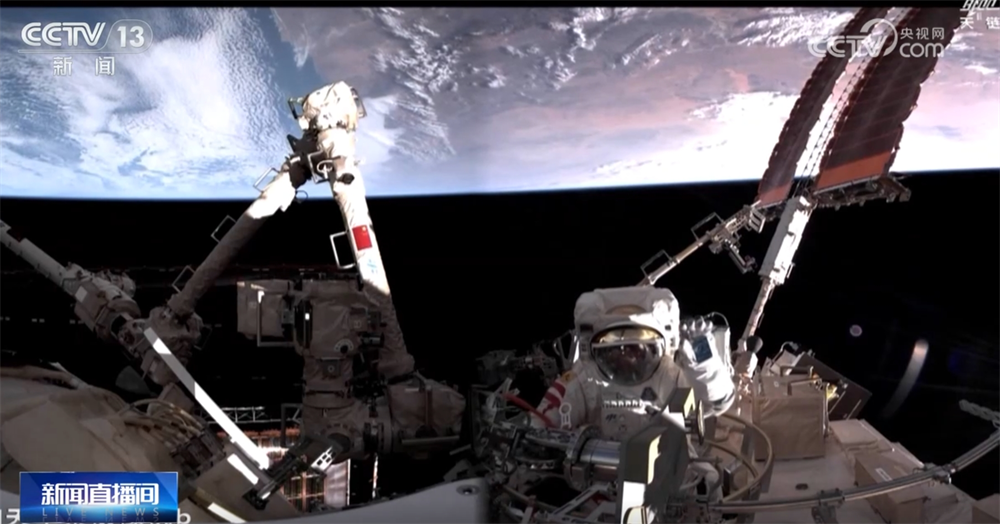
空间站空间碎片防护装置

Search documents
神舟二十一号乘组首次出舱任务不一般
Xin Hua She· 2025-12-10 07:39
Core Viewpoint - The Shenzhou 21 mission successfully completed several key tasks in a spacewalk, demonstrating effective collaboration between astronauts and ground support teams [2]. Group 1 - The Shenzhou 21 crew, consisting of astronauts Zhang Lu, Wu Fei, and Zhang Hongzhang, conducted an 8-hour extravehicular activity [2]. - Key tasks included inspecting and photographing the return capsule's porthole, installing a space debris protection device on the space station, and replacing the multi-layer cover of the temperature control adapter [2].

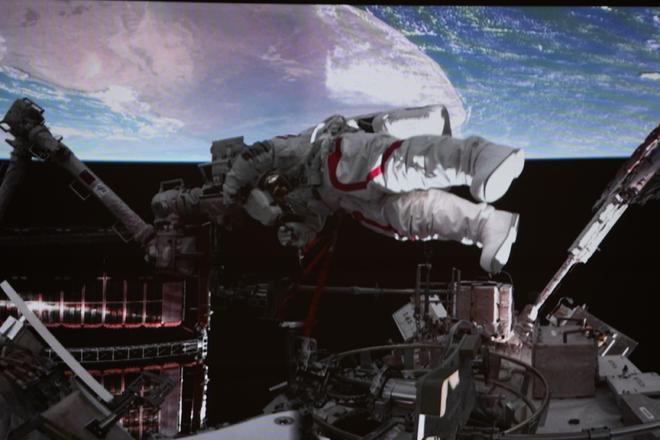
视频丨这次出舱不一般 又拍照又安装
Yang Shi Xin Wen Ke Hu Duan· 2025-12-09 23:48
Core Insights - The Shenzhou 21 crew successfully completed their first extravehicular activity (EVA) lasting approximately 8 hours, which included unique tasks not performed in previous EVAs [4][5] - The primary objectives were to inspect the Shenzhou 20 spacecraft's window and outer body, and to install protective devices on the Tianhe core module to enhance the space station's defense against space debris [4][6] Task Summaries - The first task involved the crew using a high-definition camera to photograph the Shenzhou 20's window and outer body for status confirmation by ground personnel, ensuring there were no further anomalies [5] - The second task focused on installing protective devices on the Tianhe core module, which had been previously addressed in earlier EVAs but required multiple outings due to the scale of the work [6] - The installation aimed to improve the space station's capability to withstand space debris impacts, addressing vulnerabilities in exposed pipelines and cables [6] - The EVA faced challenges due to the docking of two crewed spacecraft, necessitating a re-planning of the route, which was supported by simulations conducted by the ground team [6]
神舟二十号解锁第四次出舱,本次任务有哪些突出亮点?
Yang Guang Wang· 2025-09-26 07:40
Core Points - The successful completion of the fourth extravehicular activity (EVA) by the Shenzhou 20 crew marks a significant achievement for China's space station program, showcasing the collaboration between astronauts and ground support teams [1][4][5] - This mission involved the installation of a space debris protection device, which is a critical component for the safety and longevity of the space station [6][7] - The Shenzhou 20 crew has now completed four EVAs, making them one of the most active astronaut teams in China's history [5][6] Summary by Sections Mission Overview - The EVA took place on September 26, 2023, with astronauts Chen Dong, Chen Zhongrui, and Wang Jie participating in the operation, which lasted approximately six hours [1][4] - This mission is notable as it is the first time two astronauts from the third batch have worked together on an EVA [5][6] Key Activities - During the EVA, astronauts Chen Zhongrui and Wang Jie successfully installed the space debris protection device and conducted inspections of external equipment [5][6] - The mission utilized a new mechanical arm adapter for the first time, which allowed for improved efficiency and safety during the operation [6] Future Plans - The Shenzhou 20 crew has been in orbit for over 150 days and is expected to continue conducting scientific experiments and technical tests [7] - The crew will celebrate the upcoming National Day and Mid-Autumn Festival in space, and they are preparing for the arrival of the Shenzhou 21 crew [7]
神舟二十号航天员乘组第二次出舱任务干了点啥?快来一起“涨知识”→
Yang Shi Wang· 2025-06-27 02:11
Core Points - The Shenzhou-20 astronaut team successfully completed their second extravehicular activity (EVA) lasting approximately 6.5 hours [1][9] - The installation of an automatic foot limit adapter and interface connector was a key task, which is expected to reduce future EVA times by about 40 minutes [5][7] - The team also installed a space debris protection device and conducted inspections of external equipment during the EVA [9][16] Group 1 - The Shenzhou-20 mission has been ongoing for over two months, focusing on various space science experiments [13] - The space debris issue has become increasingly prominent due to the rise in human space activities, posing risks to the space station [14][16] - The Chinese space station has improved its collision warning and avoidance processes to enhance its ability to prevent collisions [16][18] Group 2 - The Shenzhou-20 mission has completed a total of seven installations of space debris protection devices, providing reinforcement for critical components of the space station [16] - The research team has developed a monitoring and positioning system for potential leaks due to impacts, increasing the astronauts' response time to emergencies [18] - International cooperation has been established to share information and maintain the safety of spacecraft in orbit [18]