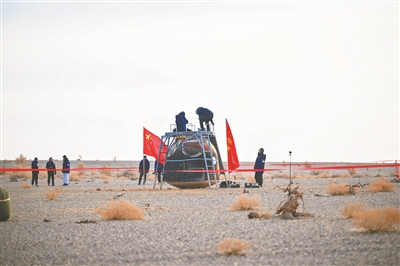
神舟二十号飞船

Search documents
从5圈返回到3圈自主快速返回 神二十乘组这样“换乘”回家
Huan Qiu Wang Zi Xun· 2026-02-16 00:28
Core Viewpoint - The article discusses the emergency response initiated by China's manned space program following an anomaly with the Shenzhou-20 spacecraft, leading to the crew's transfer to Shenzhou-21 for their return to Earth and the launch of Shenzhou-22 for an emergency mission. Group 1: Emergency Response - On November 10, 2025, the Chinese manned space program officially activated an emergency plan due to an anomaly with Shenzhou-20, deciding to transfer the three astronauts to Shenzhou-21 for their return to Earth [1] - The Shenzhou-21 spacecraft will utilize a "3-circle autonomous rapid return" method, which was originally planned for the 2026 mission, but is now being implemented early due to the emergency situation [3] Group 2: Training and Preparation - The crew had to relearn procedures due to the change from a 5-circle return to a 3-circle return, which shortens the return time by three hours [5] - The astronauts engaged in multiple training sessions and discussions to familiarize themselves with the new manual and procedures for the return [8] Group 3: Emotional Aspects - The astronauts expressed feelings of reluctance and attachment to the space station after spending 204 days there, describing it as a home and a companion [10] - The farewell moment was filled with emotions, as the astronauts felt a deep connection to the space station [10] Group 4: Successful Return - On November 14, 2025, the Shenzhou-21 spacecraft successfully separated its orbital module from the return module, marking the beginning of the return journey for the astronauts [12] - The return process was noted to be well-prepared and executed, with the crew closely monitoring instrument parameters during the descent [14] - The new return method allowed for a smoother and quicker return, reducing the time from leaving the space station to landing on Earth by over three hours [16] Group 5: Record Achievement - The mission set a new record for the longest single crew stay in orbit for Chinese astronauts, with a total of 204 days [23] - Following the crew's return, Shenzhou-22 was launched on November 25, 2025, marking China's first emergency launch in manned spaceflight history [23]


神二十一乘组工作Vlog“上新” 中国空间站“周记”都发生了啥?
Yang Shi Wang· 2026-01-25 04:31
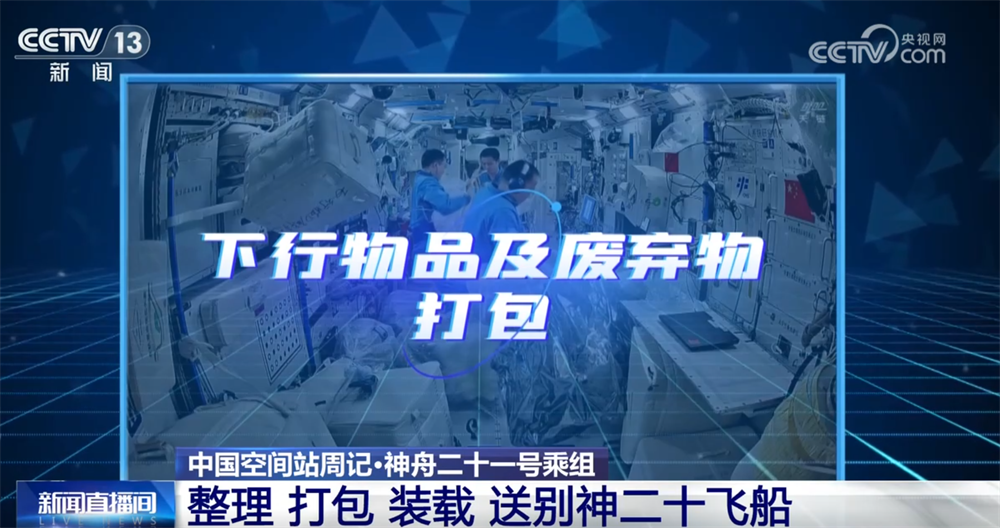
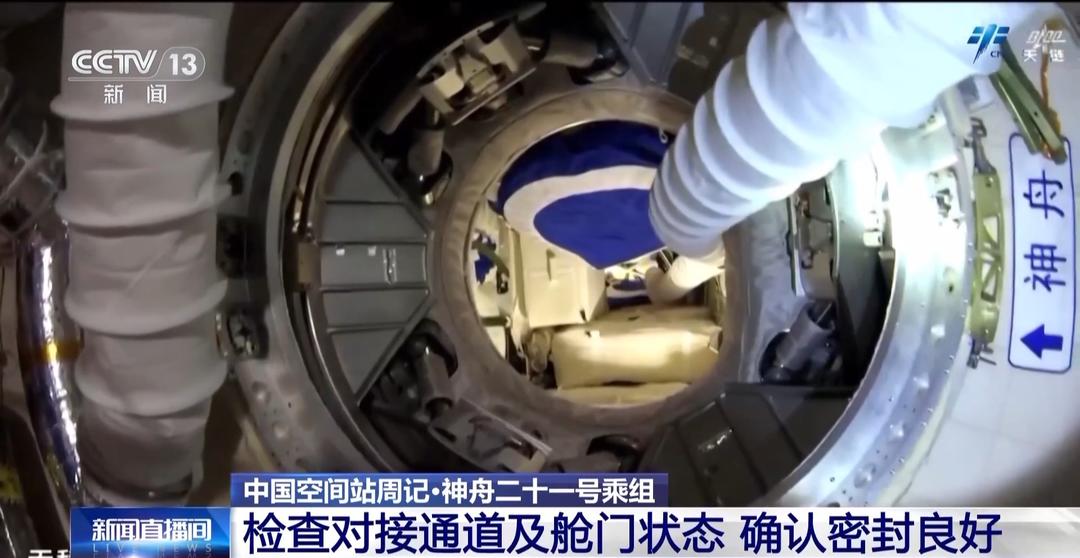
Core Points - The Shenzhou-20 spacecraft successfully returned to Earth on January 19, 2026, marking a significant achievement for China's space program [1] - The return involved meticulous preparations by the Shenzhou-21 crew, including the organization and packing of downlink items and waste [3] - The Shenzhou-20 spacecraft returned in an unmanned state, with the amount of downlink materials reaching a historical high [5] - The crew conducted detailed inspections of the docking passage and hatch to ensure proper sealing performance [7] - Prior to its return, the spacecraft's window was suspected to have been hit by small space debris, but post-return assessments confirmed the overall normal condition of the spacecraft [10] Summary by Categories Mission Success - The Shenzhou-20 spacecraft completed its mission successfully, with the return capsule in good condition [10] - The spacecraft's return marked a significant milestone in China's ongoing space exploration efforts [1] Preparations and Inspections - The Shenzhou-21 crew engaged in systematic organization and packing of downlink items, including retired space suits and large payloads [3] - A thorough inspection of the docking passage and hatch was performed to confirm the integrity of the spacecraft's sealing [7] Material Management - The return of the Shenzhou-20 spacecraft involved the highest volume of downlink materials recorded to date, emphasizing the mission's logistical success [5]
神二十飞船返回前 航天员做了哪些准备工作?
Yang Shi Xin Wen· 2026-01-25 04:21
Core Points - The Shenzhou-20 spacecraft successfully landed at the Dongfeng landing site on January 19, 2026, marking a significant achievement in China's space exploration efforts [1] - The Shenzhou-21 crew, consisting of astronauts Zhang Lu, Wu Fei, and Zhang Hongzhang, undertook various preparatory tasks before the return of the Shenzhou-20 spacecraft [1] Group 1: Preparatory Work - The astronauts organized and packed downlink items and waste, including retired extravehicular spacesuits and several large payloads from space application systems [1] - The downlink items and waste were loaded onto the spacecraft, with the amount of downlink materials reaching a historical high. The astronauts ensured proper mass balancing during the transfer and fixation of materials to maintain the spacecraft's stability during return [1] Group 2: Technical Checks - The crew conducted a detailed inspection of the docking passage and hatch status, confirming that the hatch sealing performance was good [3] Group 3: Departure from Space Station - On January 19, the spacecraft successfully detached from the space station assembly and began its journey back to Earth [4]
人类成功应对过哪些太空紧急事件?
Xin Lang Cai Jing· 2026-01-21 19:36
Core Viewpoint - The article discusses the challenges and protocols related to astronaut health in space, highlighting a recent medical evacuation from the International Space Station (ISS) and the historical context of similar incidents in space exploration [4][7]. Group 1: Medical Protocols and Training - All astronauts undergo professional medical training to perform basic medical procedures in emergencies, such as suturing wounds and administering injections [4][5]. - NASA has a dedicated ground team of medical professionals who monitor astronauts' health throughout their missions, ensuring they are prepared for potential medical issues [5][6]. - The ISS is equipped with a pharmacy and medical equipment to address various health issues, but serious emergencies may require astronauts to return to Earth for advanced care [5][6]. Group 2: Historical Context of Medical Emergencies - The article notes that the recent medical evacuation is the first of its kind since the ISS began hosting rotating crews in November 2000, marking a significant event in spaceflight history [4]. - Historical incidents, such as the Soviet "Soyuz" missions and the Apollo 13 crisis, illustrate the risks astronauts face, including health emergencies and spacecraft malfunctions [7][8]. - Recent events, including the Russian "Soyuz MS-22" coolant leak and the Boeing "Starliner" delays, further emphasize the ongoing challenges in ensuring astronaut safety during missions [9].
焦点访谈|是“考验”更是“机会” 看中国航天在突发状况下创造奇迹
Yang Shi Wang· 2026-01-20 13:32
Core Viewpoint - The Shenzhou-20 spacecraft successfully returned to Earth after an extended stay in space, marking a significant milestone in China's manned space program, particularly as it was the longest duration for a Shenzhou spacecraft in orbit at 9 months [1][3][15]. Group 1: Mission Details - The Shenzhou-20 spacecraft was originally scheduled to return in early November but was delayed due to a crack found in the spacecraft's window [5][9]. - The decision was made to prioritize the safety of the astronauts, leading to the crew returning on the Shenzhou-21 spacecraft instead [1][13]. - The Shenzhou-20 spacecraft remained in a stable condition and was able to continue its mission in space for an additional three months [11][15]. Group 2: Technical Aspects - The spacecraft's ability to remain in orbit for 9 months was validated through ground experiments, and this mission provided real-time data on the effects of prolonged space exposure on the spacecraft's systems [17][26]. - The return of the Shenzhou-20 allowed for the transport of larger cargo, including a new generation of space suits and other equipment, which would aid in the development of future space missions [19][22]. Group 3: Future Implications - The successful return of the Shenzhou-20 spacecraft contributes valuable data for the development of next-generation manned spacecraft, enhancing the understanding of long-duration spaceflight [26]. - The mission's completion signifies a successful emergency response capability for China's space program, reinforcing the importance of adaptability in space exploration [26].

神二十飞船舷窗裂纹维修,细节披露!
证券时报· 2026-01-20 07:36
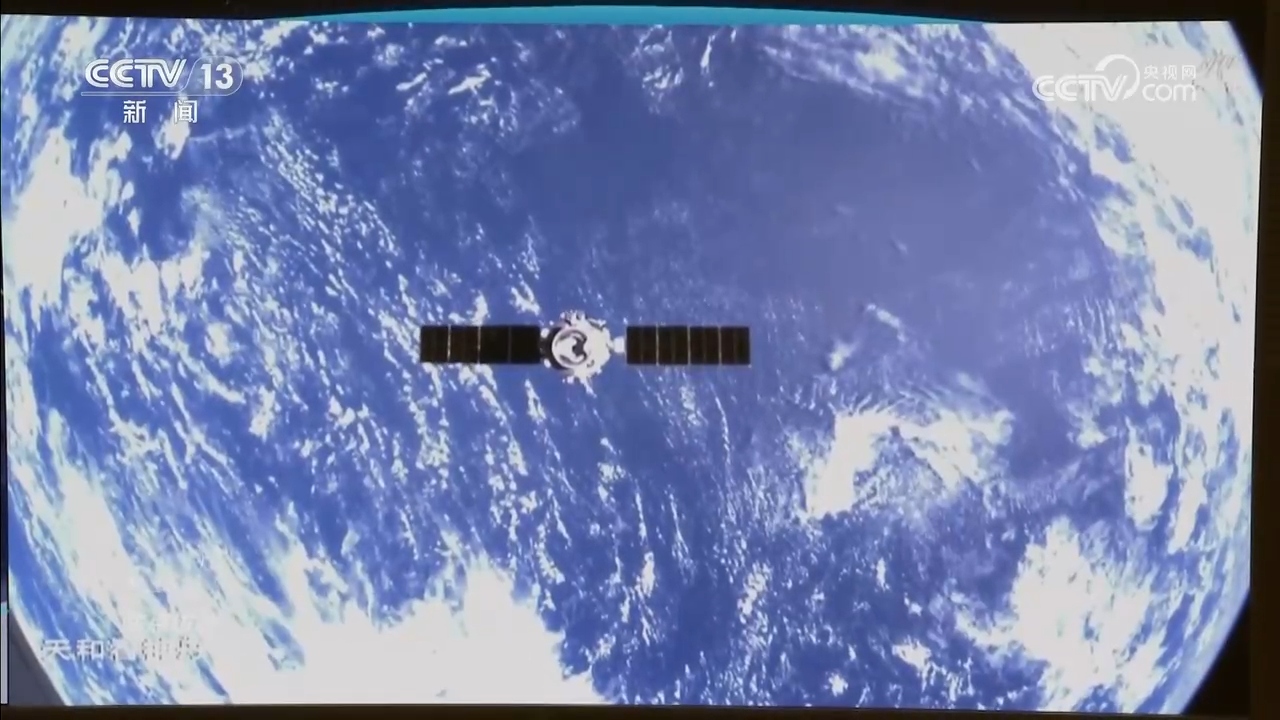
Core Viewpoint - The Shenzhou 20 spacecraft experienced a delay in its return due to a crack in the window caused by suspected impact from small space debris, leading to a series of tests and a subsequent unmanned return to Earth [1][4]. Group 1: Unmanned Return vs. Manned Return - The Shenzhou 20 spacecraft utilized an unmanned return process, relying entirely on ground commands, eliminating the need for manual operation by astronauts [4]. - This marks the first unmanned spacecraft return during the space station phase, with a focus on ensuring the spacecraft's stability through careful mass balance during material transfer [4]. - The search and recovery operation for the return capsule incorporated drones and unmanned ground vehicles, emphasizing resource efficiency and coordination between manned and unmanned efforts [4]. Group 2: Window Repair and Safety Measures - The window of the Shenzhou spacecraft consists of a three-layer composite glass structure, with the outer layer designed to withstand temperatures exceeding 1000 degrees Celsius during re-entry [6]. - A penetrating crack was discovered, prompting the crew to switch to Shenzhou 21 for return. Repairs were conducted from inside the capsule, enhancing thermal and sealing capabilities [6]. - Future improvements will focus on enhancing the window structure to better resist impacts from space debris, with monitoring of small debris being a priority [6]. Group 3: Cargo Returned by Shenzhou 20 - The Shenzhou 20 spacecraft returned with a record amount of cargo due to the absence of three astronauts, including an extended-use extravehicular suit and several large components for space applications [11]. - The extravehicular suit, which has been used by 11 astronauts across 8 missions, is expected to contribute to lunar suit research and may be publicly displayed after its scientific mission [11].

神二十返回背后发生了什么?
Xin Lang Cai Jing· 2026-01-20 04:32
Core Viewpoint - The article discusses China's first emergency action in manned spaceflight, triggered by a small piece of space debris that struck the Shenzhou 20 spacecraft, leading to a significant mobilization of resources across various locations in China [1] Group 1: Incident Overview - A tiny piece of space debris, smaller than a grain of rice, unexpectedly hit the window edge of the Shenzhou 20 spacecraft's return capsule, resulting in a crack in the outer glass layer [1] - This incident caused a pause in the return process of the Shenzhou 20 spacecraft, highlighting the risks associated with space debris [1] Group 2: Response and Mobilization - The event prompted a large-scale response involving thousands of aerospace personnel from major Chinese space engineering systems located in Beijing, Jiuquan, Shanghai, and Sichuan [1] - The mobilization was described as a "space assembly call," indicating the urgency and seriousness of the situation [1]
神20舷窗裂纹维修方式披露:从舱内实施加固,后续将加强舷窗结构,能硬扛空间碎片
Yang Shi Xin Wen· 2026-01-20 02:50
Group 1 - The Shenzhou-20 spacecraft successfully landed at the Dongfeng landing site, confirming the overall normal condition of the capsule and the good status of items inside, marking a successful return mission [1] - The main concern during the return mission was the window crack on the Shenzhou-20 spacecraft, which led to the installation of a window crack treatment device by astronauts, providing valuable experience for China's space program in dealing with space debris impacts [2][4] - The window of the Shenzhou spacecraft is made of a three-layer composite glass structure, with the outer layer designed to withstand temperatures exceeding 1000 degrees Celsius during atmospheric re-entry. A penetrating crack was found, prompting the decision for the crew to return via the Shenzhou-21 spacecraft [2][4] Group 2 - Due to the infeasibility of external repairs, the team opted for an internal reinforcement solution, which was successfully installed by astronauts in the Shenzhou-20 capsule, enhancing thermal protection and sealing capabilities during the return process [4] - The window serves critical functions, including allowing astronauts to observe the landing environment and ensuring safety during emergency situations, making it an indispensable part of the spacecraft [11][9] - The window also acts as a backup for attitude determination, enabling astronauts to manually control the spacecraft's stability in case of automatic control system failure [11]
神二十飞船舷窗裂纹维修,细节披露
财联社· 2026-01-20 02:14
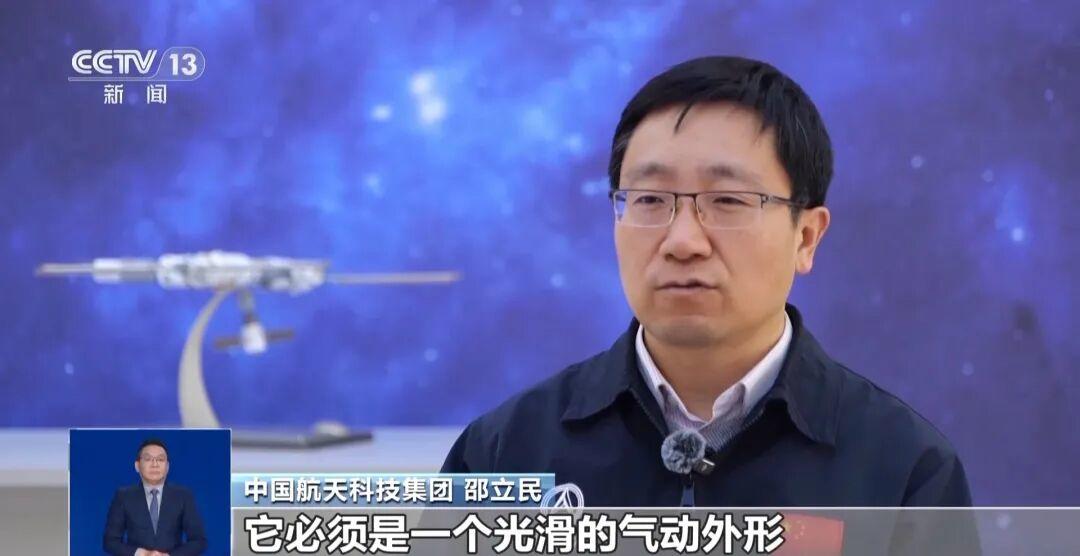
Core Viewpoint - The Shenzhou 20 spacecraft experienced a delay in its return due to a crack in the window caused by suspected impact from small space debris, leading to a series of tests in orbit before its eventual return in an unmanned state [1][2]. Group 1: Unmanned Return vs. Manned Return - The Shenzhou 20 spacecraft's return was conducted in an unmanned mode, relying entirely on ground commands, unlike previous manned returns which involved astronaut manual operations [3]. - The Beijing Aerospace Flight Control Center re-evaluated all flight control plans for the unmanned return, ensuring the spacecraft's stability and conducting thorough inspections before the return [3]. Group 2: Window Repair Process - The window of the Shenzhou spacecraft consists of a three-layer composite glass structure, with the outer layer designed to withstand temperatures exceeding 1000 degrees Celsius during re-entry [5]. - After discovering a penetrating crack in the outer layer, the crew switched to Shenzhou 21 for return, and an internal reinforcement plan was implemented to enhance safety [5]. - The Shenzhou 22 spacecraft delivered a specialized device to the space station to improve the thermal and sealing capabilities of the Shenzhou 20 return capsule, which successfully landed with its exterior intact and cargo undamaged [5]. Group 3: Importance of Windows - The windows on the spacecraft serve critical functions beyond observation, including ensuring astronaut safety during emergencies and acting as a backup for attitude determination in case of system failures [6][10]. Group 4: Returned Cargo - The Shenzhou 20 spacecraft returned with a record amount of cargo due to the absence of three astronauts, including an over-aged extravehicular spacesuit and several large items from the space application system [9]. - The extravehicular suit, which has been used by 11 astronauts across 8 missions, is expected to contribute to lunar suit research and may be publicly displayed after fulfilling its scientific mission [9].
神舟二十号飞船安全顺利返回
Xin Hua She· 2026-01-20 00:12
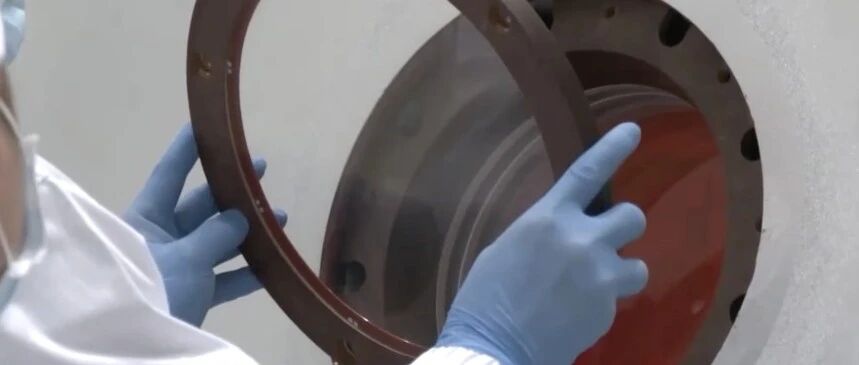
Core Viewpoint - The successful return of the Shenzhou-20 spacecraft marks the completion of the main tasks for China's space station emergency operations [2] Group 1 - The Shenzhou-20 spacecraft safely returned to the Dongfeng landing site on January 19 [2] - This event signifies a significant milestone in China's space exploration efforts [2] - The completion of the emergency operation tasks enhances the operational capabilities of the Chinese space station [2]