笙竽

Search documents
武王墩墓:见证中国古代音乐的一次转型
Xin Lang Cai Jing· 2026-01-17 20:47
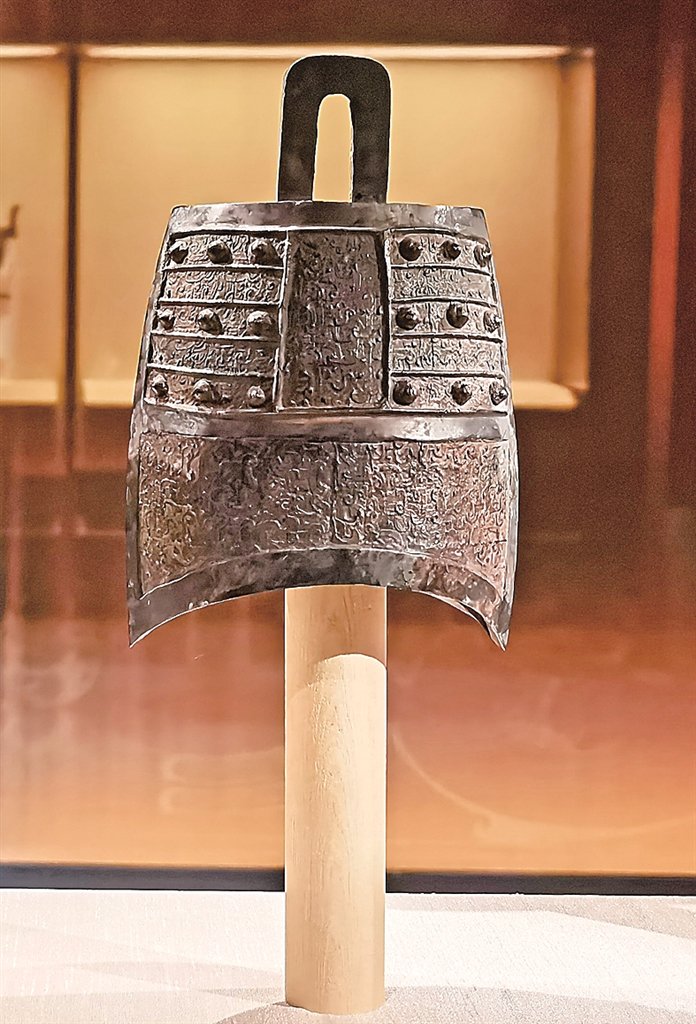
Core Viewpoint - The archaeological discovery of the Wuwangdun Tomb in Huainan, Anhui, has confirmed the tomb owner as King Kaolie of the late Warring States period, providing valuable insights into the music and ritual systems of the time, particularly during the transition from the Warring States to the Qin and Han dynasties [1][3]. Group 1: Tomb Structure and Significance - The Wuwangdun Tomb features a main burial chamber surrounded by eight auxiliary rooms, reflecting a highly institutionalized layout for funerary rituals [3]. - The combination of bronze ritual vessels and musical instruments found in the tomb indicates the tomb owner was the highest ruler of the Chu state, showcasing the unique cultural and political identity of the Chu people [3][4]. Group 2: Evolution of Music and Rituals - The tomb reveals a shift in the function of music from ancestral worship to court banquets, as evidenced by the increase in silk and bamboo instruments compared to bronze ones [4][9]. - The presence of inscriptions such as "Yuefu" and "Zhongyuefu" suggests the establishment of a music management system similar to later court music institutions, indicating a blend of tradition and new elements in the late Chu music system [5][10]. Group 3: Technological Advancements in Music Instruments - The Wuwangdun Tomb fills a critical gap in the evolution of musical bells from the late Warring States to the early Western Han period, showcasing advancements in bell-making techniques [6][8]. - The discovery of the earliest examples of the "chisel method" for tuning bells in the tomb indicates a significant technological transition in ancient Chinese music [7][8]. Group 4: Broader Implications for Early Chinese Music History - The findings from the Wuwangdun Tomb are part of a larger narrative of transformation in early Chinese music history, with a notable shift in musical focus from ritualistic to entertainment purposes during the transition to the Han dynasty [9][10]. - The tomb's musical artifacts reflect a continuity of ritual practices while also embracing new cultural elements, illustrating the resilience and adaptability of Chinese musical traditions over time [10].

武王墩大墓惊现“乐器天团”
Xin Lang Cai Jing· 2025-12-22 18:17
Core Viewpoint - The archaeological excavation of the Wuwangdun tomb has revealed a significant number of musical instruments, indicating a major transformation in music culture during the Warring States period in China, with a particular focus on the discovery of the largest known "se" and various "sheng" and "yu" instruments [6][12]. Group 1: Instrument Discoveries - The excavation uncovered over 10,000 artifacts, with more than 50 "se" and over 20 "sheng" and "yu" instruments, including the largest "se" measuring approximately 2.1 meters [6][11]. - The findings include a variety of musical instruments that reflect the grandeur of musical performances described in ancient texts, such as the "Chuci" [6][12]. - The "yu" instruments, which had been largely lost after the Tang dynasty, have been identified among the artifacts, providing new insights into their historical significance [7][9]. Group 2: Cultural Significance - The large number of musical instruments found at the Wuwangdun site suggests a shift from a focus on metal and stone instruments to string and wind instruments, marking a significant cultural transition in ancient Chinese music [11][12]. - The discovery of two sets of chime bells, which show signs of use, indicates their practical application in musical performances, further supporting the idea of a vibrant musical culture during the Warring States period [10][11]. - The artifacts, including a bamboo ruler and oracle bones, provide a broader context for understanding the cultural and social practices of the Chu state, highlighting the continuity of Chinese civilization [13]. Group 3: Future Research and Exhibitions - The archaeological team plans to develop a specialized protection and research plan for the musical instruments, aiming to replicate playable versions to recreate the musical scenes of the Warring States period [12]. - The findings will be exhibited at the National Museum, allowing the public to engage with the rich cultural heritage revealed through these discoveries [13].