编磬

Search documents
武王墩墓:见证中国古代音乐的一次转型
Xin Lang Cai Jing· 2026-01-17 20:47
Core Viewpoint - The archaeological discovery of the Wuwangdun Tomb in Huainan, Anhui, has confirmed the tomb owner as King Kaolie of the late Warring States period, providing valuable insights into the music and ritual systems of the time, particularly during the transition from the Warring States to the Qin and Han dynasties [1][3]. Group 1: Tomb Structure and Significance - The Wuwangdun Tomb features a main burial chamber surrounded by eight auxiliary rooms, reflecting a highly institutionalized layout for funerary rituals [3]. - The combination of bronze ritual vessels and musical instruments found in the tomb indicates the tomb owner was the highest ruler of the Chu state, showcasing the unique cultural and political identity of the Chu people [3][4]. Group 2: Evolution of Music and Rituals - The tomb reveals a shift in the function of music from ancestral worship to court banquets, as evidenced by the increase in silk and bamboo instruments compared to bronze ones [4][9]. - The presence of inscriptions such as "Yuefu" and "Zhongyuefu" suggests the establishment of a music management system similar to later court music institutions, indicating a blend of tradition and new elements in the late Chu music system [5][10]. Group 3: Technological Advancements in Music Instruments - The Wuwangdun Tomb fills a critical gap in the evolution of musical bells from the late Warring States to the early Western Han period, showcasing advancements in bell-making techniques [6][8]. - The discovery of the earliest examples of the "chisel method" for tuning bells in the tomb indicates a significant technological transition in ancient Chinese music [7][8]. Group 4: Broader Implications for Early Chinese Music History - The findings from the Wuwangdun Tomb are part of a larger narrative of transformation in early Chinese music history, with a notable shift in musical focus from ritualistic to entertainment purposes during the transition to the Han dynasty [9][10]. - The tomb's musical artifacts reflect a continuity of ritual practices while also embracing new cultural elements, illustrating the resilience and adaptability of Chinese musical traditions over time [10].

冬季看展:挖出一座历史博物馆—武王墩墓展
Jing Ji Guan Cha Bao· 2025-12-07 01:04
Core Insights - The Wuwangdun Tomb exhibition will open on December 26, 2024, at the National Museum of China, showcasing significant archaeological findings from one of the six major discoveries in China for 2024 [1] Group 1: Archaeological Significance - The Wuwangdun Tomb is the first scientifically excavated royal tomb from the Warring States period, providing crucial data for understanding the historical culture and institutional practices of the Chu state after its eastward migration [2] Group 2: Artifacts and Findings - Over 10,000 artifacts have been unearthed, including 44 bronze tripods as ritual vessels, two sets of chime bells, one set of stone chimes, more than 280 wooden figurines, a large quantity of lacquered wooden items, jade artifacts, oracle bones, and gold items [3]
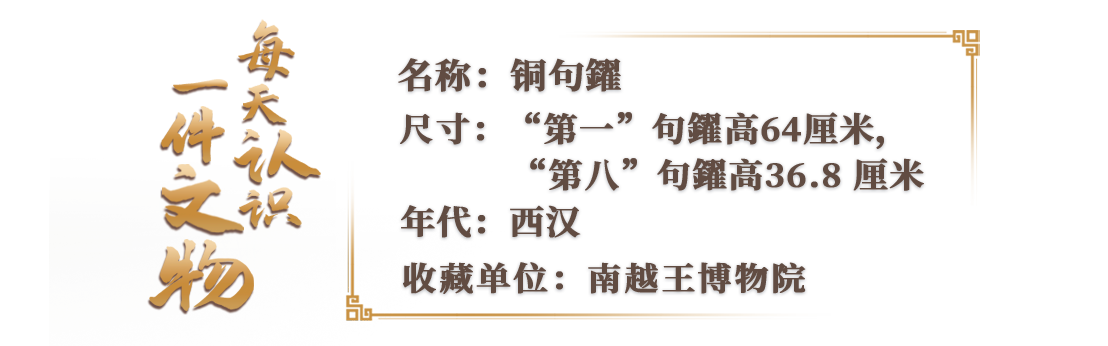
文博日历丨亮相全运会开幕式 重量级青铜乐团来自南越国
Yang Shi Xin Wen· 2025-11-10 01:57
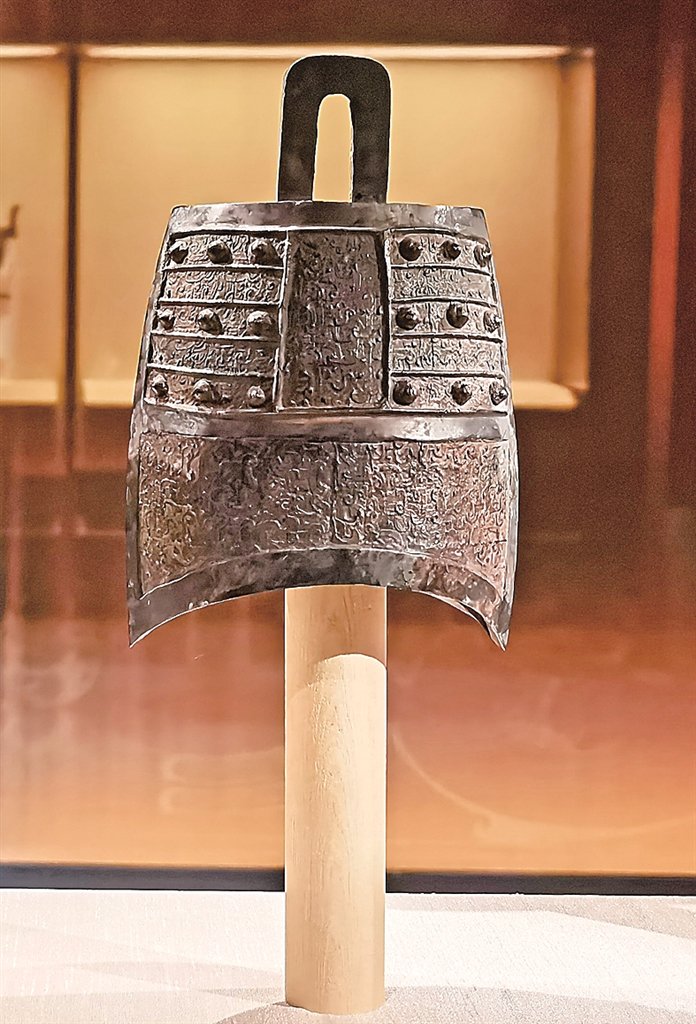
Core Viewpoint - The unveiling of the bronze musical instrument "Jùzhǐ" at the National Games opening ceremony highlights the cultural significance and historical craftsmanship of ancient Chinese music, particularly from the Nanyue Kingdom during the Western Han Dynasty [2][12]. Group 1: Instrument Overview - The "Jùzhǐ" is a type of bronze percussion instrument, weighing a total of 191 kilograms, and is part of a complete bronze orchestra consisting of eight members [6][4]. - Unlike commonly seen hanging instruments, the "Jùzhǐ" requires a separate base for stability and is played by striking with mallets [8]. Group 2: Historical Context - The "Jùzhǐ" was crafted in the ninth year of Emperor Wen's reign (129 BC) and reflects the influence of Central Plains culture on the Nanyue Kingdom, which established its own music institution, the "Yuefu" [14][15]. - The inscriptions on the instruments serve as historical evidence of the Nanyue Kingdom's cultural practices and its emulation of the Han Dynasty's ceremonial music [14][15]. Group 3: Cultural Significance - The "Jùzhǐ" was typically used in significant events such as sacrifices and banquets, indicating its importance in royal ceremonies [12]. - The Nanyue King Zhao Mo was known for his extensive collection of musical instruments, which included over 50 items found in his tomb, showcasing a rich musical heritage [18][20]. Group 4: Museum and Exhibition - The Nanyue King Museum, located in Guangzhou, houses the largest known Western Han gold seal, "Wen Di Xing Xi," and offers a comprehensive collection of ancient musical instruments [22][20]. - The museum provides an immersive experience for visitors during the National Games, emphasizing the historical and cultural richness of the Nanyue Kingdom [26].