
絮用纤维制品

Search documents
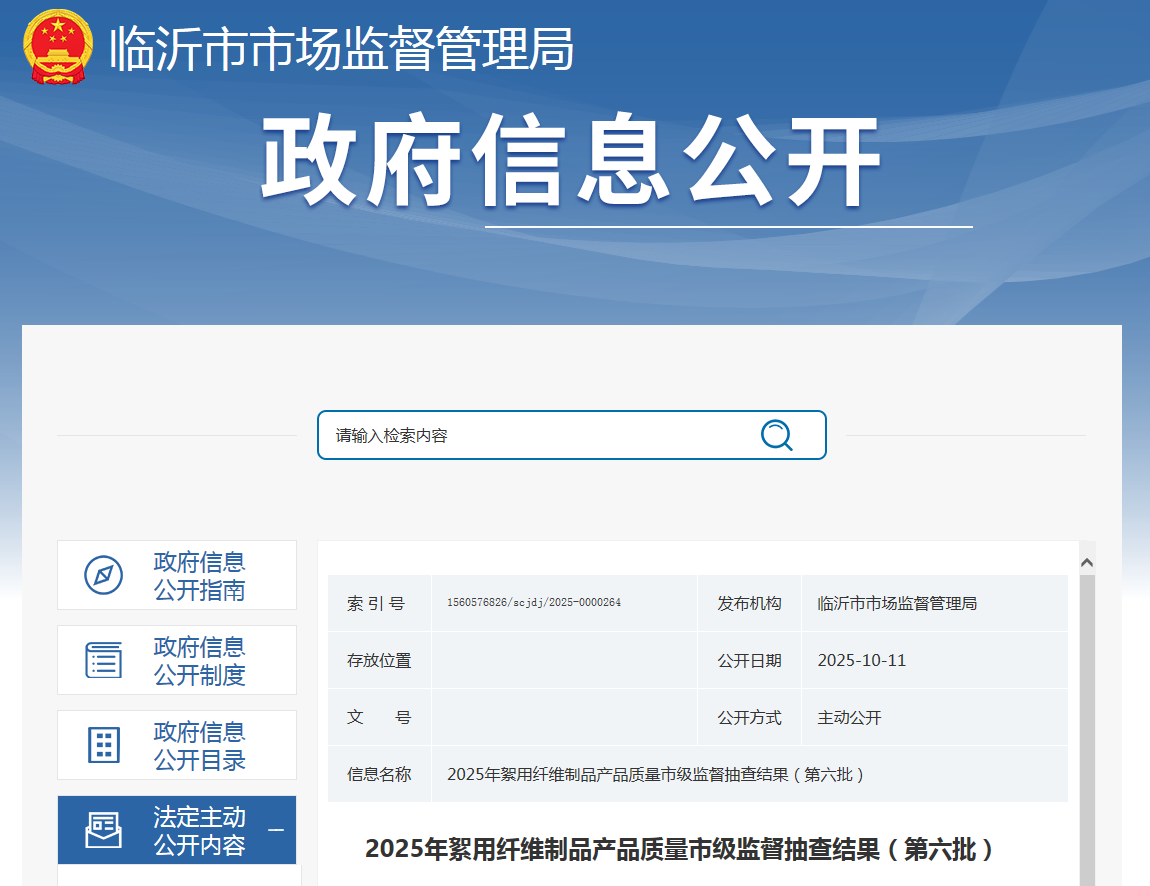
山东省临沂市市场监督管理局公布2025年絮用纤维制品产品质量市级监督抽查结果(第六批)
Zhong Guo Zhi Liang Xin Wen Wang· 2026-02-05 04:54
Core Viewpoint - The quality inspection results for bedding fiber products in Linyi City, Shandong Province, indicate that all tested samples met the required safety standards, with no non-compliant items found [1]. Group 1: Inspection Results - A total of 8 batches of bedding fiber products were sampled, including 2 from the production stage and 6 from the sales stage [1]. - The inspection was conducted based on several national standards, including GB 18401-2010, GB/T 22796-2021, and GB 18383-2007, focusing on various quality parameters such as formaldehyde content, pH value, and color fastness [1]. - All tested items passed the quality inspection, confirming compliance with the relevant safety standards [1]. Group 2: Product Details - The inspected products included various bedding items from different manufacturers, such as Shandong Jiuzhou Commercial Group and Shenzhen Fuanna Home Furnishing Co., Ltd [2][3]. - Specific product dimensions were noted, including sizes like 150cm x 205cm and 200cm x 230cm, indicating a range of offerings in the bedding fiber market [2][3]. - The inspection results reflect positively on the manufacturers, suggesting a commitment to quality and safety in the production of bedding fiber products [1].

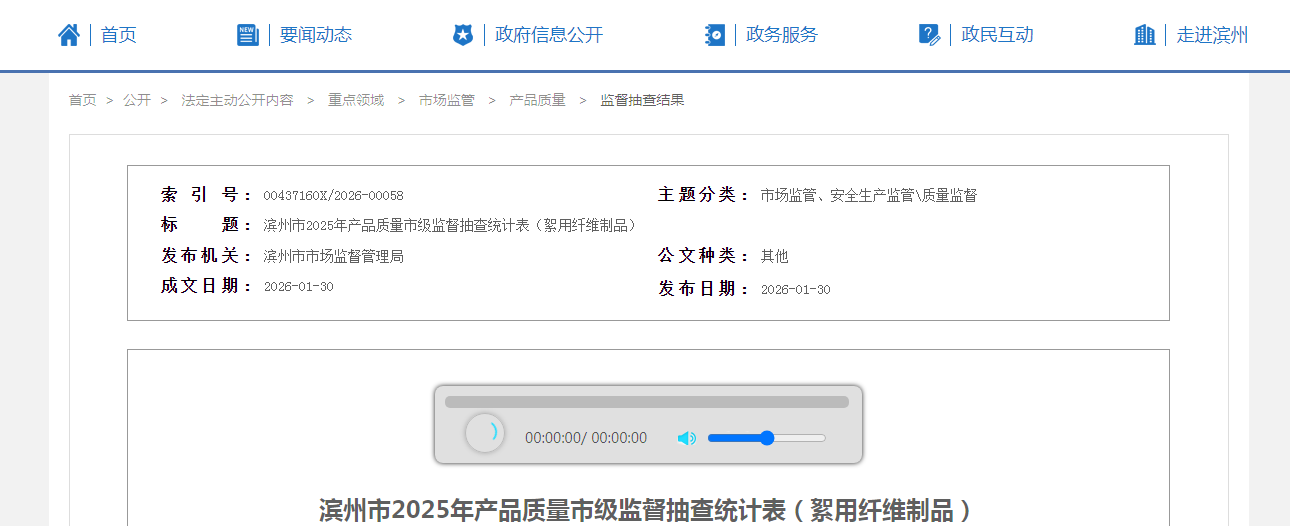
山东省滨州市市场监督管理局发布2025年产品质量市级监督抽查统计表(絮用纤维制品)
Zhong Guo Zhi Liang Xin Wen Wang· 2026-02-04 08:45
Core Viewpoint - The Binzhou Municipal Market Supervision Administration has released the 2025 product quality supervision sampling statistics for bedding fiber products, indicating ongoing regulatory efforts in product quality oversight in the region [3]. Group 1: Company Information - The report includes details of various inspected companies, such as Binzhou Yufeng Bedding Co., Ltd., Shandong Wuyue Home Textile Co., Ltd., and Shandong Weiqiao Jia Jia Home Textile Co., Ltd., among others [4]. - Each company is identified by its unified social credit code and is categorized under the bedding fiber products sector [4]. Group 2: Sampling and Inspection Data - The sampling information includes product specifications, such as dimensions and material compositions, for various bedding products, indicating a focus on quality control [4]. - Inspection reports show that several products were found to be compliant with quality standards, while others were marked as non-compliant, highlighting the importance of quality assurance in the industry [4].
事关婴幼儿、学生群体!明确原料禁限用底线
Yang Shi Xin Wen· 2026-01-20 03:54
Core Viewpoint - The newly revised "Regulations on Quality Supervision of Fiber Products" has been officially released, focusing on strict supervision of four categories of products, including infant fiber products and student uniforms [1] Group 1: Key Regulations - The revised regulations prohibit the use of medical fiber waste, used funeral fiber products, and recycled fibers for the production of fiber products [2] - It is forbidden to use recycled materials to produce underwear and infant fiber products [2] - The regulations impose strict labeling requirements for fiber products, mandating the indication of fiber composition, content, and safety categories for student uniforms and infant fiber products [4][5] Group 2: Quality Control Measures - Student uniforms must be tested and certified by legally qualified inspection agencies before sale [5] - The regulations require producers to establish and implement a system for checking and recording the acceptance of raw materials [10] - The market supervision authority will adopt a "zero tolerance" approach to violations in the fiber product production and sales sector, utilizing various monitoring and enforcement methods [10][12] Group 3: New National Standards - A new mandatory national standard, "General Technical Requirements for Fiber Products" (GB 18383—2025), will also take effect on July 1 of this year [8] - The new standard specifies that, except for recycled polyester fibers, other recycled chemical fibers should not be used as filling or padding materials for fiber products intended for infants aged 36 months and below [9] - The standard aims to prevent substandard products and false labeling by regulating the impurity rates and tolerances for different types of fiber products [9] Group 4: Monitoring and Risk Assessment - The market supervision authority will enhance monitoring across both online and offline channels to assess quality risks associated with fiber products [10] - A data-driven approach will be employed to target monitoring of key products and high-risk areas, particularly in the recycling of used textiles and emerging functional fiber materials [12]
婴幼儿纤维制品禁止使用再加工纤维原料
Ren Min Ri Bao· 2026-01-14 22:15
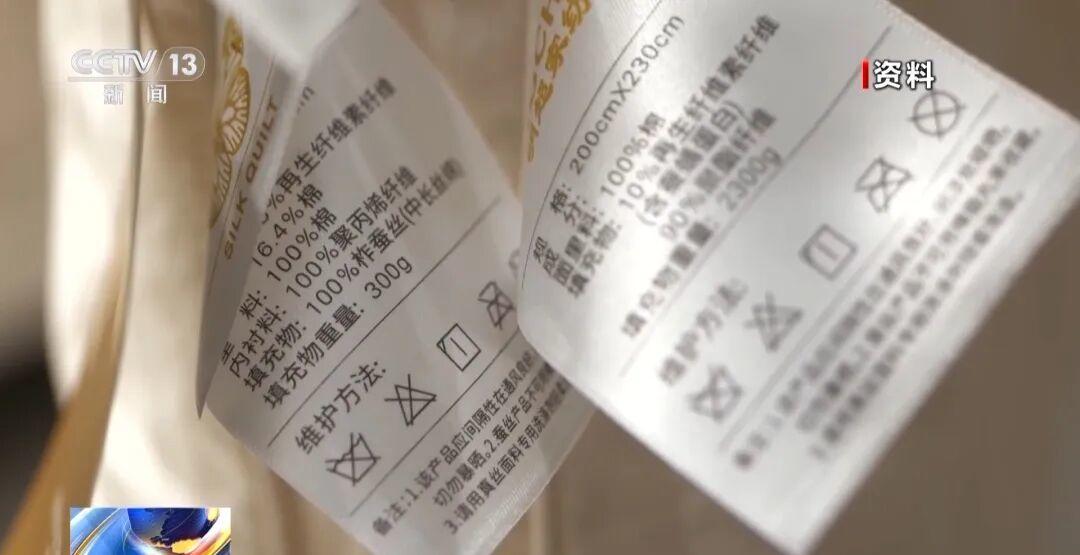
Core Viewpoint - The newly implemented "Regulations on Quality Supervision and Management of Fiber Products" focuses on key regulatory targets such as infant fiber products, school uniforms, underwear, and bedding fiber products, emphasizing strict control over raw materials, production, and labeling [1] Group 1: Raw Material Management - Strict management of raw materials is enforced, with differentiated prohibitions based on product risk levels. For key products like infant fiber products and underwear, the regulations tighten requirements beyond mandatory national standards, explicitly banning the use of recycled fibers as raw materials [1] Group 2: Production Control - Manufacturers and sellers of fiber products are required to establish and implement a purchasing inspection and acceptance system to ensure traceability of quality responsibility. For products like school uniforms, which are characterized by centralized procurement and uniform use, a strict pre-delivery inspection system is mandated to ensure that each batch of products is tested and approved before delivery [1] Group 3: Information Labeling - Products such as school uniforms, underwear, and infant fiber products must include labels that specify fiber composition, content, and safety technical categories. For non-living bedding fiber products, a prominent label indicating "non-living products" must be displayed [1] Implementation Date - The "Regulations on Quality Supervision and Management of Fiber Products" will take effect on July 1 of this year [1]
纤维制品监管新规出台 重点监管婴幼儿纺织品、校服等产品
Yang Shi Xin Wen Ke Hu Duan· 2026-01-14 22:04
Core Viewpoint - The newly revised "Quality Supervision and Management Measures for Fiber Products" emphasizes strict regulation of fiber products related to infants, students, and other vulnerable groups, aiming to enhance safety standards and consumer protection [1][2][3]. Group 1: Regulatory Changes - The revised measures prohibit the use of medical fiber waste and used funeral fiber products in the manufacturing of fiber products [1]. - It is forbidden to use recycled fibers for producing underwear and infant fiber products [1]. - The new regulations will take effect on July 1 of this year [2]. Group 2: Product Labeling Requirements - Fiber products such as student uniforms and infant items must clearly label fiber composition, content, and safety categories [2]. - Products made from recycled materials must disclose the types of materials used to protect consumer rights [2]. - Student uniforms must pass inspection by legally qualified testing institutions before being sold [2]. Group 3: Standards for Filling Materials - The new measures specify that used or contaminated fibers, as well as recycled fibers, cannot be used as filling materials for household fiber products like quilts [3]. - The new national standard "General Technical Requirements for Fiber Products" will also be implemented on July 1 [3]. - The standard restricts the use of recycled chemical fibers, except for recycled polyester, in products for infants aged 36 months and below [3][4]. Group 4: Quality Monitoring and Enforcement - The regulatory authority will adopt a "zero tolerance" approach towards violations in the fiber product manufacturing and sales sector [6]. - Producers are required to establish and maintain records for incoming materials to ensure traceability and accountability [6]. - The regulatory body will enhance monitoring across online and offline channels to assess quality risks in fiber products [6][7].
纤维制品监管“扩围”
Ren Min Ri Bao Hai Wai Ban· 2026-01-14 07:27
Core Viewpoint - The National Market Supervision Administration has revised the "Quality Supervision and Management Measures for Fiber Products" and the mandatory national standard for "General Technical Requirements for Fiber Products for Filling," which will come into effect on July 1, 2026, aiming to enhance the quality and safety of fiber products in the market [1][2][3] Group 1: Regulatory Changes - The revised measures expand the scope of regulation to include all daily-use fiber products and non-daily-use filling fiber products, while excluding certain special-purpose fiber products [1] - The new regulations implement differentiated management for various fiber product categories and recycled raw materials, prohibiting the use of certain waste materials in production [2] Group 2: Labeling and Safety Standards - The regulations require clear labeling of products made from recycled materials, including fiber composition and safety categories for specific items like student uniforms and infant products [2] - The new standards enhance key technical indicators and hygiene safety requirements for filling fiber products, aiming to improve product quality and safety [3] Group 3: Monitoring and Compliance - The administration plans to strengthen monitoring across both online and offline channels, particularly in response to the complexities introduced by new sales platforms [3] - The implementation of these measures and standards aims to establish a comprehensive and precise modern quality safety regulatory system for fiber products [3]
市场监管总局出台两项新规 全面加强纤维制品质量安全监管
Ke Ji Ri Bao· 2026-01-14 04:53
Core Viewpoint - The Market Supervision Administration has announced the revision of the "Quality Supervision and Management Measures for Fiber Products" and the mandatory national standard "General Technical Requirements for Fiber Products for Bedding," which will take effect on July 1, 2026, aiming to enhance quality safety supervision of fiber products and promote the upgrading of the textile industry while ensuring consumer health and rights [1][2]. Group 1: Regulatory Enhancements - The revised measures focus on three main areas: comprehensive coverage of all life-use fiber products, strict control at the source, and clear restrictions on raw materials [2]. - A full-chain regulatory system will be established, covering raw materials, production, sales, and service operations, with a focus on products for infants, school uniforms, underwear, and bedding fiber products [2]. - The use of hazardous materials, such as medical waste, in the production of fiber products is strictly prohibited, especially for products intended for vulnerable groups like infants [2]. Group 2: Labeling and Consumer Rights - The new regulations require that fiber products made from recycled materials must clearly indicate the source of the materials [2]. - School uniforms, underwear, and infant products must label fiber composition, content, and safety categories, while non-living bedding fiber products must carry a "non-living product" durability label to prevent misuse [2]. Group 3: National Standards Adjustments - The new mandatory national standard allows for the use of recycled chemical fibers in the production of living bedding fiber products, provided that they meet hygiene standards [3]. - Reprocessed fibers can be used for fabric production under specific sterilization conditions, but their use in filling materials remains prohibited to ensure safety [3]. - The new standard emphasizes the need for clear labeling of products made from recycled materials to protect consumer rights and choices [3].
学生服等纳入重点监管!纤维制品监管新规来了
Xin Hua She· 2026-01-14 02:23
Core Viewpoint - The recent revisions to the "Quality Supervision and Management Measures for Fiber Products" and the mandatory national standard "General Technical Requirements for Fiber Products Used for Filling" by the State Administration for Market Regulation (SAMR) aim to enhance quality safety supervision with high standards and strict requirements. Group 1: Regulatory Changes - The revised management measures expand the scope from three categories (filling fiber products, student uniforms, and fabrics) to all daily fiber products and non-daily filling fiber products [1] - The measures prohibit the use of certain raw materials, including medical fiber waste and used funeral fiber products, in the production of fiber products [1][2] - Specific regulations are established for labeling fiber products, requiring clear indications of recycled materials used and safety classifications for products like student uniforms and infant fiber products [1] Group 2: Focus on Key Products - The revised measures identify infant fiber products, student uniforms, underwear, and filling fiber products as key regulatory targets, implementing differentiated raw material prohibitions based on risk levels [2] - Manufacturers and sellers of fiber products are required to establish and execute a procurement inspection and acceptance system to ensure traceability of quality responsibility [2] - A strict pre-inspection system is mandated for products like student uniforms that are subject to centralized procurement and uniform use, ensuring that only inspected and qualified batches are delivered [2] Group 3: Quality Monitoring and Standards - The SAMR plans to conduct quality monitoring of fiber products, establishing a dynamic risk assessment and early warning model for quality safety [2] - Special monitoring modules will be created for potential risk areas, including the recycling of used textiles and new functional fiber materials [2] - The new national standard adjusts the application requirements for recycled materials in daily filling fiber products, setting clear technical boundaries and usage norms to promote better classification and higher-level recycling of waste textiles [3]
学生服等纳入重点监管!纤维制品新规来了
Xin Hua She· 2026-01-14 00:19
Core Viewpoint - The recent revisions to the "Quality Supervision and Management Measures for Fiber Products" and the mandatory national standard "General Technical Requirements for Fiber Products" aim to enhance quality safety supervision in the fiber products industry, with stricter regulations and higher standards for various fiber products used in daily life [1][2]. Group 1: Regulatory Changes - The revised management measures expand the scope from three categories (bedding fiber products, student uniforms, and fabrics) to all life-use fiber products and non-life-use fiber products [1]. - The new regulations prohibit the use of certain raw materials, including medical fiber waste and used funeral fiber products, in the production of fiber products [1][2]. - Specific labeling requirements are established, such as indicating the use of recycled materials and detailing fiber composition and safety categories for products like student uniforms and infant fiber products [1]. Group 2: Focus on Key Products - The revised measures emphasize the regulation of key products, including infant fiber products, student uniforms, and non-life-use fiber products, focusing on raw materials, production, and labeling [2]. - A differentiated management approach for raw material bans is implemented based on the risk levels of different products [2]. - Manufacturers and sellers of fiber products are required to establish and execute a procurement inspection and acceptance system to ensure traceability of quality responsibility [2]. Group 3: Quality Monitoring and Standards - The management measures include the establishment of a dynamic risk assessment and early warning model for fiber product quality safety, targeting high-risk areas and new materials [2][3]. - A special monitoring module will be created for the recycling of used textiles and new functional fiber materials to address potential risks [2]. - The new national standard adjusts the application requirements for recycled materials in life-use fiber products, setting clear technical boundaries and usage norms to promote better classification and processing of waste textiles [3].
筑牢产品安全防线 推动市场公开透明——提升纤维制品质量监管效能
Jing Ji Ri Bao· 2026-01-13 22:07
Core Viewpoint - The recent revisions to the "Quality Supervision and Management Measures for Fiber Products" and the "General Technical Requirements for Filling Fiber Products" aim to enhance the quality and safety of fiber products in response to increasing consumer demands and the evolving market landscape [1][2]. Group 1: Regulatory Framework - The new regulations will take effect on July 1, 2026, focusing on key products such as infant fiber products, school uniforms, underwear, and filling fiber products [2]. - The regulations emphasize strict management of raw materials, particularly prohibiting the use of reprocessed fibers in infant and intimate apparel to eliminate safety risks from the source [2][3]. - A rigorous inspection system will be implemented for school uniforms, ensuring that products are tested and certified before delivery, thereby reinforcing corporate responsibility [2]. Group 2: Quality Control Measures - The regulatory body will adopt a "zero tolerance" approach towards violations, establishing a closed-loop supervision system that includes prevention, management, risk control, and punishment for illegal activities [3]. - Enhanced quality monitoring will be conducted through random checks, quality assessments, and enforcement inspections, with severe penalties for companies that violate safety standards [3]. - The new standards for filling fiber products will set clear technical guidelines and usage norms, ensuring quality throughout the product lifecycle and promoting the recycling of used textiles [4]. Group 3: Market Adaptation - The regulations are designed to address challenges posed by the rapid growth of e-commerce and new fiber materials, necessitating a more complex regulatory approach [4]. - An integrated monitoring mechanism will be established to assess quality risks associated with online sales channels, ensuring that e-commerce platforms fulfill their quality safety responsibilities [4]. - The introduction of intelligent monitoring systems and comprehensive regulatory frameworks aims to enhance the effectiveness and scientific basis of fiber product quality monitoring [4].