内衣

Search documents
申洲国际(02313):营收稳健增长,净利受多因素影响短期承压
Soochow Securities· 2026-03-31 08:32
Investment Rating - The investment rating for the company is "Buy" (maintained) [1] Core Insights - The company reported a revenue of 30.99 billion yuan for 2025, representing an 8.1% year-over-year increase, while the net profit was 5.83 billion yuan, reflecting a 6.7% decline year-over-year [8] - The decline in net profit is attributed to several factors including increased employee wages, tariff burdens from U.S. clients, and the appreciation of the RMB [8] - The company anticipates a stable growth in orders due to the efficiency improvements in existing factories and the addition of workers in new facilities [8] Financial Performance Summary - Revenue projections for 2024A to 2028E are as follows: 28.66 billion yuan (2024A), 30.99 billion yuan (2025A), 32.32 billion yuan (2026E), 34.79 billion yuan (2027E), and 37.33 billion yuan (2028E), with growth rates of 14.79%, 8.13%, 4.27%, 7.65%, and 7.30% respectively [1] - Net profit projections are: 6.24 billion yuan (2024A), 5.83 billion yuan (2025A), 6.01 billion yuan (2026E), 6.59 billion yuan (2027E), and 7.10 billion yuan (2028E), with growth rates of 36.94%, -6.66%, 3.15%, 9.70%, and 7.65% respectively [1] - The latest diluted EPS is projected to be 4.15 yuan (2024A), 3.88 yuan (2025A), 4.00 yuan (2026E), 4.38 yuan (2027E), and 4.72 yuan (2028E) [1] Market Data - The closing price is 48.04 HKD, with a market capitalization of approximately 63.77 billion HKD [6] - The company has a price-to-earnings (P/E) ratio of 10.18 for 2024A, increasing to 10.91 for 2025A, and projected to decrease to 8.96 by 2028E [1][6]
晶苑国际(02232):大型国际制衣商,多元扩品筑根基、垂直一体增利润
Shenwan Hongyuan Securities· 2026-03-30 11:21
Investment Rating - The report initiates coverage with a rating of "Buy" for Crystal International [3][8]. Core Insights - Crystal International has evolved into a diversified international garment manufacturer over 56 years, transitioning from a global OEM to a vertically integrated manufacturing platform, focusing on high-growth categories, efficiency improvements, and capital empowerment [7][19][21]. - The company benefits from a robust order growth driven by its multi-category layout, one-stop procurement advantages, and strong demand from key clients like Uniqlo, Nike, and Adidas [7][8]. - Profit margins are expected to improve due to optimized capacity layout, automation upgrades, and vertical integration strategies [7][8]. Financial Data and Profit Forecast - Revenue projections for Crystal International are as follows: - 2024: $2.47 billion - 2025: $2.64 billion (YoY growth of 6.9%) - 2026: $2.89 billion (YoY growth of 9.3%) - 2027: $3.13 billion (YoY growth of 8.4%) - 2028: $3.36 billion (YoY growth of 7.4%) [6]. - Net profit attributable to shareholders is forecasted to be: - 2024: $200 million - 2025: $225 million (YoY growth of 12.0%) - 2026: $249 million (YoY growth of 10.8%) - 2027: $276 million (YoY growth of 11.0%) - 2028: $304 million (YoY growth of 10.0%) [6]. - The expected PE ratios for 2026-2028 are 9, 8, and 7 respectively [8]. Business Model and Strategy - The company has established a global production network across five countries, including Vietnam, Bangladesh, Cambodia, and Sri Lanka, to mitigate trade barriers and reduce costs [7][19]. - Crystal International's vertical integration strategy includes acquiring fabric factories in Vietnam and Bangladesh, with a target of achieving a fabric self-supply rate of approximately 20% by 2025 [7][8]. - The company is also expanding its low-cost production capacity in Egypt, which is expected to enhance its competitive edge in the European market [10][19]. Market Position and Customer Base - Crystal International has a strong foothold in the casual wear and sports apparel segments, with significant contributions from major clients like Uniqlo, which accounts for approximately 35-40% of its revenue [7][8]. - The company is well-positioned to capitalize on the growing demand in the sports and outdoor apparel market, which is expected to outpace traditional clothing segments [7][8]. Growth Catalysts - Key growth drivers include exceeding expectations from core clients, advancements in vertical integration, and successful acquisition of new customer orders [11].
纺织服装行业周报20260323:本周发布春季策略,看好上游涨价品种-20260323
Shenwan Hongyuan Securities· 2026-03-23 10:35
Core Insights - The report indicates a favorable outlook for the textile and apparel industry, particularly focusing on upstream price increases, midstream pressures, and downstream differentiation in 2026 [3][10][15] - The textile and apparel sector underperformed the market recently, with the SW textile and apparel index declining by 5.4% from March 16 to March 20, 2026, lagging behind the SW All A index by 1.3 percentage points [4][10] Industry Overview - Recent industry data shows that the retail sales of consumer goods in China reached 8.6 trillion yuan in January-February 2026, growing by 2.8% year-on-year. The retail sales of clothing, shoes, hats, and textiles totaled 283.1 billion yuan, with a year-on-year increase of 10.4% [33] - Exports of textiles and apparel from China amounted to 504.5 billion USD in January-February 2026, reflecting a year-on-year growth of 17.6%. In February alone, the export value was 224.4 billion USD, up 73.4% year-on-year [37] Upstream Market Dynamics - The report highlights a significant price increase in Australian wool, which has risen by 55% since the end of August 2025, driven by supply reductions and recovering demand. The Australian wool index was reported at 1246 cents per kilogram as of March 18, 2026 [10][45] - Domestic cotton prices showed a slight decline, with the national cotton price B index at 16,638 yuan per ton, down 0.7% for the week ending March 20, 2026. In contrast, international cotton prices increased, with the M index at 77 cents per pound, up 3.3% [42] Midstream and Downstream Insights - The midstream sports manufacturing sector is currently under pressure due to geopolitical uncertainties and demand fluctuations, but it is expected to experience new growth in the medium to long term. Key players like Nike are anticipated to initiate a new innovation cycle, benefiting the entire supply chain [11][16] - Li Ning's 2025 annual report showed a revenue increase of 3.2% to 29.6 billion yuan, driven by strong performance in professional categories. The company expects high single-digit revenue growth in 2026, with improved gross margins [12][19] Investment Recommendations - The report recommends focusing on upstream price-increasing products and the recovery of sports manufacturing. Companies such as Baolong Oriental and Shenzhou International are highlighted as potential investment opportunities [10][16] - In the apparel segment, there is a call to explore high-performance outdoor brands and social apparel, with recommendations for companies like Li Ning, Anta Sports, and Bosideng [17][19]

晶苑国际(02232):业绩稳健增长,全球化布局开启新篇章
Xinda Securities· 2026-03-23 09:09
Investment Rating - The investment rating for the company is maintained at "Buy" based on its strong performance and growth prospects [2]. Core Insights - The company reported a revenue of $264.1 million and a net profit of $22.5 million for the year 2025, reflecting a year-on-year growth of 6.95% and 12.05% respectively [2]. - The second half of 2025 saw a revenue of $141.2 million and a net profit of $12.7 million, with growth rates of 2.60% and 8.50%, indicating a slowdown compared to the first half due to uncertainties in U.S. tariff policies and increased competition in the Vietnamese labor market [2]. - The company declared a total dividend of 40.8 Hong Kong cents per share for 2025, up from 38.3 Hong Kong cents in 2024, maintaining a high dividend payout ratio of approximately 66% [2]. Revenue and Profit Analysis - The largest customer of the company experienced an 8.4% increase in revenue, reaching $97.4 million, which accounted for 37% of total revenue, an increase of 0.5 percentage points [3]. - Revenue by product category for 2025 was as follows: casual wear at $74.4 million (up 7.15%), sportswear at $59.9 million (up 8%), denim at $54.0 million (up 4.06%), underwear at $46.6 million (up 7.24%), and sweaters at $29.2 million (up 9.36%), with sweaters being the fastest-growing category [3]. - Revenue growth by region showed the Asia-Pacific market leading with $106.0 million (up 7.95%), followed by the U.S. at $98.8 million (up 4.84%), Europe at $51.2 million (up 6.56%), and other regions at $8.1 million (up 25.18%) [3]. Margin and Cash Flow - The company's gross margin for 2025 was 19.9%, a year-on-year increase of 0.2 percentage points, primarily due to improvements in production efficiency from automation upgrades, despite some negative impacts from U.S. tariffs [4]. - The net profit margin for 2025 was 8.51%, up 0.39 percentage points, with a decrease in management expense ratio by 0.39 percentage points [4]. - Operating cash flow significantly improved to $266 million, a year-on-year increase of 150.94%, with a positive net cash position of $38.2 million at year-end, indicating a robust financial condition [4]. Global Expansion and Capital Expenditure - The company initiated a global expansion strategy by reserving a 800,000 square meter plot in Egypt for $30.4 million, aiming to diversify geopolitical risks and provide flexible production solutions for European clients [4]. - A self-built fabric factory in Vietnam is expected to commence production by the end of 2026, enhancing the supply capacity for casual and sportswear fabrics [4]. - Capital expenditures for 2026 are projected to be significantly higher than in 2025, primarily due to the one-time costs associated with the land acquisition in Egypt, while continuing to focus on automation upgrades and garment production capacity expansion [4]. Profit Forecast - The forecasted net profits for the company for the fiscal years 2026 to 2028 are $25.4 million, $28.2 million, and $30.7 million respectively, with corresponding price-to-earnings ratios of 9.02X, 8.15X, and 7.47X [5].
Victoria's Secret & Co. (NYSE:VSCO) Analyst Update and Financial Overview
Financial Modeling Prep· 2026-03-06 20:05
Core Viewpoint - Victoria's Secret & Co. is experiencing stock volatility but has a positive price target set by UBS, indicating potential for future growth despite recent declines in stock price [1][3][5] Financial Performance - The company recently held its Q4 2025 earnings call, which likely included important financial metrics such as revenue and profit margins, essential for assessing strategic direction and growth potential [2][5] - The current stock price of VSCO is $48.52, reflecting a decrease of 7.95% or $4.19 from previous levels, indicating market concerns [3][5] Market Activity - VSCO's stock has fluctuated between $47.85 and $56.40 on the trading day, showcasing market volatility [3] - Over the past year, the stock has reached a high of $66.89 and a low of $13.76, demonstrating significant price swings [4] - The company's market capitalization is approximately $3.89 billion, indicating its size and influence in the retail sector [4] - The trading volume on the NYSE is 733,889 shares, reflecting strong investor interest [4] Analyst Insights - UBS has set a price target of $58 for VSCO, suggesting a potential increase of 19.64% from the current trading price [1][5]


全球运动鞋服份额获取或已达瓶颈,服饰大融合时代到来
Haitong Securities International· 2026-03-03 14:01
Investment Rating - The report assigns an "Outperform" rating to several companies including Nike, Anta Sports, Li Ning, and Crystal International, while Lululemon is rated as "Neutral" [1]. Core Insights - The global athletic footwear and apparel market may have reached a saturation point in gaining market share from casualwear, particularly in North America. The share of athletic footwear and apparel rose from 14.1% to 18.5% over the past decade, but the growth gap between athletic and casual segments has narrowed significantly post-pandemic [4][66]. - In China, casualwear still dominates with over 70% market share, indicating potential for athletic brands to continue gaining ground [67]. - The resurgence of casual apparel since 2022, driven by a return to millennial aesthetics, has positively impacted brands like GAP, Victoria's Secret, and Levi's, which have all seen growth in recent years [68]. Summary by Sections Global Athletic Footwear and Apparel Market - The global athletic footwear and apparel market's share from casualwear has plateaued, with only minor gains expected moving forward. In 2025, the market share for athletic footwear and apparel is projected to increase by just 0.2% and 0.1% from casualwear and casual footwear, respectively [4][66]. - The North American market shows a similar trend, with a mere 0.1% increase in athletic footwear and apparel share in 2025 [12]. China Market Dynamics - China's casualwear market share is projected at 70.6% in 2025, leaving room for athletic brands to capture more market share from casualwear. The trend of athletic brands gaining share from casualwear is expected to continue, although the casual footwear segment is nearing saturation [13][67]. Brand Performance and Trends - GAP and Old Navy have experienced sustained same-store sales growth since mid-2023, attributed to a brand reset under new leadership [68]. - Victoria's Secret has returned to growth by focusing on comfortable and casual lingerie and loungewear, while Levi's has maintained steady growth as a leader in the denim market, benefiting from the resurgence of Y2K fashion trends [68]. Competitive Landscape - The report highlights that athleisure is becoming a new battleground for sports brands, with Adidas successfully revitalizing its brand through lifestyle segments and Lululemon expanding into casual and workwear categories [69]. - Stock picks include Crystal International, which benefits from the trend of apparel convergence, and Chinese athletic brands like Li Ning and Anta Sports, which still have room for market share growth [70].
巨亏19亿,关店2000家!曾经的“内衣大王”,如今靠卖房续命?
Sou Hu Cai Jing· 2026-02-24 14:53
Core Viewpoint - The article discusses the decline of Urban Beauty, once a leading lingerie brand in China, highlighting its rapid fall from grace due to market competition, failure to adapt to consumer preferences, and operational mismanagement [1][13][19]. Group 1: Historical Success - Urban Beauty was founded in 1998 by Zheng Yaonan, who introduced a one-stop shopping model for intimate apparel, which quickly attracted a large customer base [3][5]. - During the SARS outbreak in 2003, while many retailers closed, Zheng expanded the number of stores from a few to fifty, capitalizing on reduced rental costs, which led to significant post-crisis sales growth [5][7]. - The brand continued to thrive, reaching a peak in 2018 with revenues of 5.096 billion yuan, and became the first Chinese lingerie stock listed in Hong Kong, with a market value exceeding 18.5 billion HKD [11][13]. Group 2: Challenges and Decline - The rise of e-commerce significantly impacted Urban Beauty, as consumers shifted to online shopping, leading to a decline in foot traffic and sales [13][16]. - By 2021, Urban Beauty reported a net loss of 1.298 billion yuan, marking its first annual loss since going public, and accumulated losses exceeded 1.9 billion yuan over three years [16][17]. - The brand's failure to innovate and adapt to changing consumer preferences, particularly among younger generations, contributed to its decline, as it remained focused on traditional styles rather than modern, comfortable options [17][19]. Group 3: Attempts at Recovery - In 2021, Zheng Yaonan returned to lead the company, implementing significant reforms, including layoffs and store closures, particularly in high-rent areas [21][23]. - The company shifted its focus to lower-tier markets and introduced budget-friendly products to attract consumers [23][30]. - Urban Beauty reported a slight recovery in 2022, achieving a net profit of 14 million yuan, and further improved to 46 million yuan in 2023, aided by asset sales [24][25][30]. Group 4: Future Outlook - Urban Beauty is attempting to integrate online and offline sales through a new retail model and has engaged younger celebrities for marketing [30][32]. - The company's future remains uncertain as it strives to keep pace with evolving market trends and consumer demands [32].

花花公子卖了中国业务50%股权
21世纪经济报道· 2026-02-13 01:17
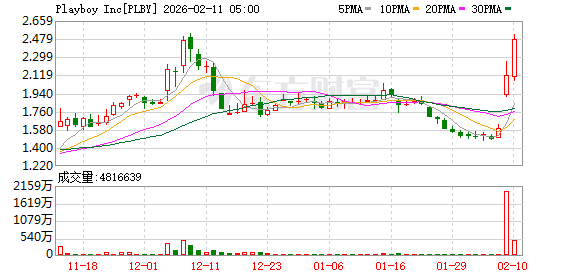
Core Viewpoint - Playboy, Inc. has signed a final agreement to sell 50% of its business in China to United Trademark Group (UTG) for a total cash amount of $122 million, aiming to address brand dilution issues and enhance operational management in the region [1][2]. Group 1: Transaction Details - The transaction consists of three parts: $45 million paid over two years for the acquisition of the 50% stake, $67 million as a minimum guaranteed dividend over eight years, and an additional $10 million for brand support over the next three years [1]. - After the transaction, UTG will take over product development, channel expansion, and brand operations in China, while Playboy retains a 50% stake and benefits from guaranteed dividends and additional revenue sharing [1]. Group 2: Background on UTG - UTG, headquartered in Shanghai, manages over 10 international brands, including Jeep and several Italian brands, and has been the exclusive agent for Playboy in mainland China [2]. - This acquisition marks a shift for UTG from being a brand agent to a co-owner of the Playboy brand in China [2]. Group 3: Brand Management Challenges - Playboy's aggressive brand licensing strategy in China has led to brand value dilution, with the company relying heavily on licensing for revenue, which constitutes nearly half of its total income [2][3]. - As of 2023, the brand's revenue share from China has significantly decreased to 9.51%, down from approximately 27% in 2021, indicating a decline in market presence [4].


花花公子卖中国业务50%股权
Di Yi Cai Jing Zi Xun· 2026-02-11 20:12
Core Viewpoint - Playboy is restructuring its business in China after years of rapid growth, selling a 50% stake in its Chinese operations to UTG Group for $122 million, which includes all operational rights in mainland China, Hong Kong, and Macau [2] Group 1: Business Strategy and Changes - The sale to UTG Group aims to address issues stemming from excessive brand licensing and management challenges that have led to a decline in brand image and quality [3][4] - Playboy's brand management center was established in China in 2020 to tackle historical issues and improve brand perception, indicating a recognition of the need for better control over its brand [2][3] Group 2: Market Challenges - The brand has faced significant challenges, including the proliferation of counterfeit products and a blurred line between genuine and fake merchandise, leading to consumer confusion [3] - Quality issues have arisen from licensed manufacturers prioritizing sales over product quality, resulting in a tarnished brand reputation [3][4] - The rise of domestic brands and changing consumer preferences among younger generations have further pressured Playboy's market share [4] Group 3: Future Prospects - UTG Group's experience with international brands and understanding of the Chinese market may help in consolidating fragmented licensing and combating counterfeiting [4] - The transition from merely licensing the brand to actively managing it will require time and effort to prove effective in revitalizing Playboy's presence in China [4]
“品牌稀释”之后,花花公子转让中国业务50%股权
2 1 Shi Ji Jing Ji Bao Dao· 2026-02-11 09:59
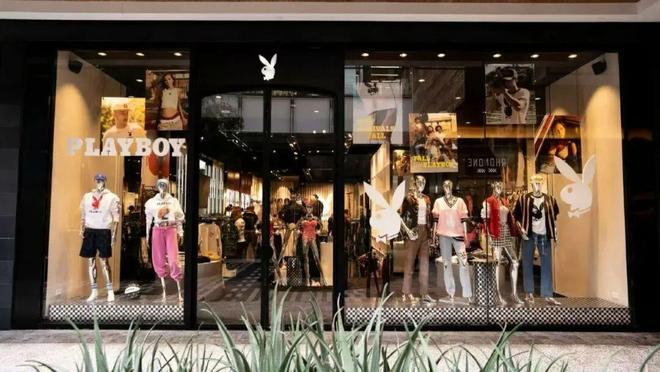
Core Viewpoint - Playboy, Inc. has signed a final agreement to sell a 50% stake in its Chinese business to United Trademark Group (UTG) for a total of $122 million, aiming to address brand dilution issues and enhance operational management in the region [2][4]. Group 1: Transaction Details - The agreement includes three payment components: $45 million paid over two years for the stake, $67 million as a minimum guaranteed dividend over eight years, and an additional $10 million for brand support over the next three years [2]. - After the transaction, UTG will take over product development, channel expansion, and brand operations in China, while Playboy retains a 50% stake and guaranteed dividends [2]. Group 2: UTG's Background - UTG, headquartered in Shanghai, is a global consumer brand management group that manages over 10 international brands, including Jeep and several Italian brands [3]. - Previously, UTG was the exclusive agent for the Playboy brand in mainland China and is now transitioning from a brand agent to a co-owner [3]. Group 3: Brand Management Issues - Playboy's aggressive brand licensing strategy in China has led to brand value dilution, with the company relying heavily on licensing for revenue, which constitutes nearly half of its total income [4]. - The brand has been licensed to multiple local companies for over 30 years, covering various product categories, which has contributed to the dilution of its brand value [4][6]. Group 4: Financial Performance - In 2021, the Chinese market accounted for 27% of Playboy's total revenue, second only to the U.S. market at 52%, with approximately 2,500 physical stores and 1,000 online stores in China [5]. - However, by fiscal year 2024, revenue from the Chinese market dropped to $11.04 million, representing only 9.51% of total revenue, indicating a significant decline from its previous high [7].