红外理疗仪

Search documents
老人花20万买保健品不敢往家拿
Xin Lang Cai Jing· 2026-02-07 07:22
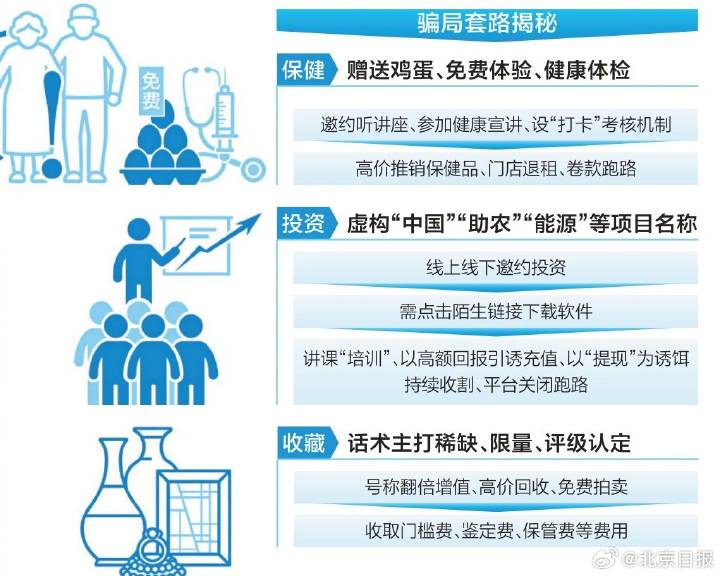
Core Viewpoint - The article highlights the increasing prevalence of marketing scams and investment fraud targeting the elderly, especially as the Spring Festival approaches, urging families to remain vigilant and take action if they fall victim to such schemes [1] Group 1: Health Products Scams - Elderly individuals are being lured into purchasing expensive health products, such as bee glue, through deceptive marketing tactics that exploit their health concerns and loneliness [3][4] - A case is presented where an elderly woman spent 5,000 yuan on health products after being drawn in by a free experience at a local store, which used a rewards system to encourage repeat visits [3][4] - The store staff engage in friendly conversation to assess the financial situation of the elderly customers, making it easier to manipulate them into making purchases [4] Group 2: Investment Scams - Elderly individuals are being misled into investing in fraudulent projects disguised as charitable initiatives, such as a supposed "assist the disabled" investment scheme, which has been disavowed by the China Disabled Persons' Federation [5][6] - The fraudulent scheme encourages elderly participants to invest in various projects through a software platform that promises high returns, but ultimately leads to financial loss and difficulty in withdrawing funds [6] Group 3: Collectibles and Auction Scams - Elderly individuals are falling prey to scams involving collectibles, where they are convinced to purchase items based on exaggerated claims of value appreciation, often through social media influencers [7] - The article describes a case where an elderly man has spent nearly 20,000 yuan on collectibles, driven by the belief that these items will significantly increase in value [7] Group 4: Prevention and Awareness - Experts suggest that the elderly and their families should recognize the lack of free offers and avoid blindly trusting others, while also collecting evidence if they suspect fraud [8] - It is recommended that families stay informed about the daily lives and social interactions of elderly relatives to identify potential scams early [8]

各种夸大功效的“养老神器”瞄准老年人钱包
Xin Lang Cai Jing· 2025-12-26 19:01
Core Viewpoint - The increasing elderly population in China, projected to exceed 310 million by the end of 2024, has led to a growing market for elder care products, but it has also attracted fraudulent activities targeting this demographic through misleading advertising and consumption traps [1] Group 1: Elderly Population and Market Dynamics - By the end of 2024, the elderly population aged 60 and above in China is expected to surpass 310 million, accounting for 22% of the total population [1] - The expansion of the elderly consumer market has resulted in a rise in fraudulent products and services aimed at this demographic, exploiting their limited information access and urgent health needs [1] Group 2: Examples of Fraudulent Practices - A case in Guangdong highlighted an elderly woman purchasing a "health silver comb" for 888 yuan, influenced by exaggerated claims of its health benefits during a live-stream promotion [1] - In Jiangsu, an elderly couple was misled into acquiring a water purifier under the pretense of a free giveaway, only to face unexpected installation fees totaling over 3000 yuan [2] - A cancer patient in Guangdong spent nearly 10,000 yuan on a "red infrared therapy device" based on false claims of its efficacy, which ultimately hindered his access to proper medical treatment [4] Group 3: Marketing Tactics Targeting the Elderly - The marketing strategies employed by fraudsters are designed to exploit the psychological vulnerabilities of the elderly, such as their desire for health and companionship [5] - Tactics include offering free gifts and engaging in friendly conversations to build trust before promoting questionable health products, often backed by misleading claims of scientific authority [5] - The urgency created by limited-time offers and the presence of "testimonials" from supposed beneficiaries further manipulate elderly consumers into making impulsive purchases [5]