红宝石礼盒

Search documents
国货美妆2026,在港股抢滩登陆
3 6 Ke· 2026-01-28 12:52
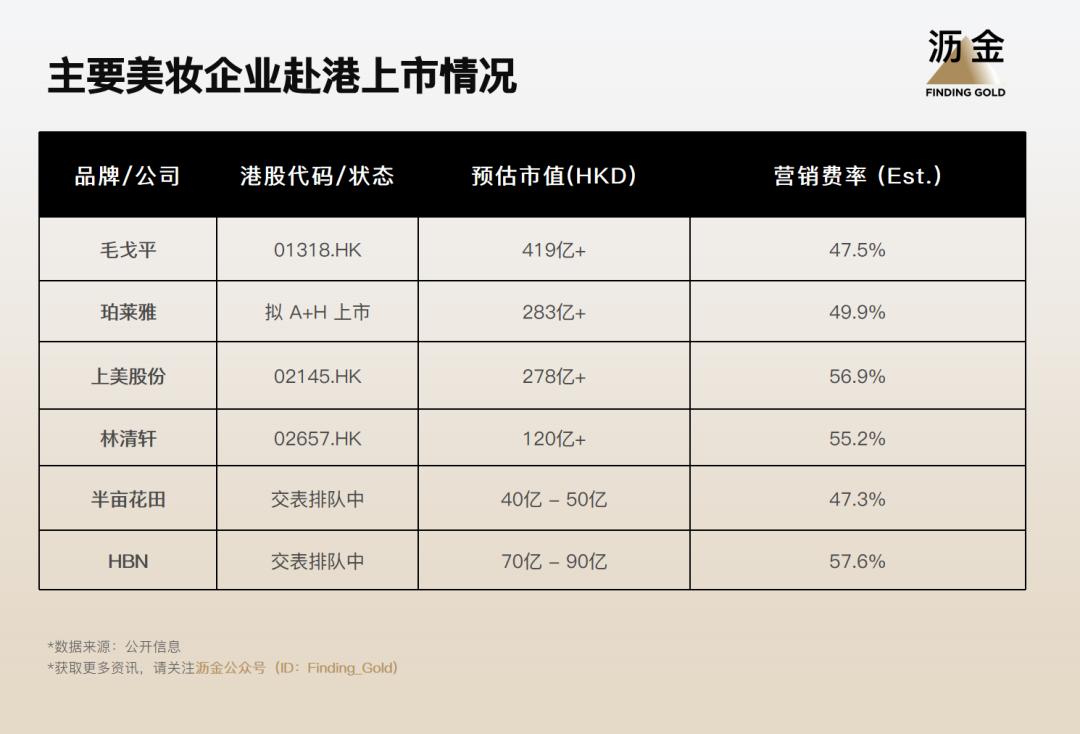
Core Viewpoint - The Chinese beauty industry is experiencing a significant shift as domestic brands rush to list on the Hong Kong Stock Exchange, driven by a near closure of IPO opportunities in the A-share market. This trend is not merely a celebration but signals a harsh beginning of industry differentiation and value reassessment [1][5]. Group 1: Market Dynamics - The successful listings of brands like Lin Qingxuan and the planned secondary listing of Proya highlight Hong Kong as a new haven for domestic beauty brands [1]. - The high price-to-earnings (PE) ratio of over 30 for Mao Geping is misleading, as it reflects a unique business model rather than a general trend in the domestic beauty sector [4]. - The market is expected to shift focus from the narrative of domestic brand growth to a stringent evaluation of business fundamentals [5]. Group 2: Brand Performance and Strategy - HBN and Banmu Huatian rely on traditional consumer goods models, heavily investing in marketing to drive growth, contrasting with Mao Geping's unique model that minimizes external marketing dependency [6][8]. - HBN's financials show a significant profit growth rate of 232.5% and 190.3% for 2024 and the first nine months of 2025, respectively, despite a marketing expense ratio of 57.6% [8]. - The key for HBN post-listing is to demonstrate that it can achieve higher brand premiums and customer lifetime value with the same marketing investment compared to competitors [10]. Group 3: Liquidity and Market Pressure - The liquidity risk in the Hong Kong market is severe, with top-tier companies absorbing most capital, leaving mid-tier brands vulnerable to becoming illiquid [12]. - The pressure of performance guarantees for many domestic brands in 2024-2025 may lead to unsustainable practices, risking significant stock price drops if growth slows post-2026 [13]. Group 4: Competitive Landscape - The competition in the beauty industry is evolving from ingredient concentration to structural competition, with brands needing to lower marketing costs while maintaining revenue [15]. - Unique raw materials are becoming essential for brand differentiation and valuation in the market, as seen with successful brands like Juzhibio and Lin Qingxuan [18]. - The necessity for international expansion is increasing, as domestic market growth is plateauing, making overseas markets critical for future success [20]. Group 5: Future Outlook - The Hong Kong market is becoming increasingly discerning, seeking brands that can demonstrate efficiency and long-term viability rather than just rapid growth [22][23]. - Brands that can effectively manage their desires, respect market realities, and commit to long-term strategies will be better positioned for success in the evolving landscape [23].