
估值重构

Search documents
代码、国防与文化铁律:Anthropic如何成为AI时代的风向标公司
美股研究社· 2026-03-05 13:50
Core Viewpoint - The article emphasizes a significant valuation restructuring in the capital markets driven by the rapid growth of AI companies, particularly highlighted by Anthropic's revenue surge from approximately $100 million to $19 billion in just two years, challenging traditional valuation models [1][5]. Group 1: AI Growth and Valuation - The growth of AI is not merely a numerical increase but signifies a paradigm shift, indicating a critical point where some companies will be revalued as foundational infrastructure while others may become obsolete [3][4]. - The traditional linear understanding of growth in capital markets is flawed; AI's growth resembles a compound explosion rather than a gradual process, driven by a feedback loop of model capabilities, computational power, and developer ecosystems [7][8]. - Amodei suggests that while positive effects are reflected in current prices, externalities such as employment impacts and regulatory challenges have not yet been fully priced in [8][9]. Group 2: Code as a Breakthrough - Code has emerged as a surprising breakthrough application for AI, driven by high developer acceptance, verifiable results, and cumulative benefits, leading to a recursive production structure where software generates more software [12][13]. - The ability of AI to write, debug, and optimize code redefines organizational capabilities, shifting the focus from hiring engineers to effectively managing AI teams [14]. - The commercialization of AI in the code sector will lead to increased demand for computational power and fundamentally alter profit margins in the software industry, impacting both AI and traditional software companies [15]. Group 3: Strategic Positioning and Organizational Culture - AI companies are becoming national assets through strategic ties with defense sectors, which provide stable orders and policy protection but also introduce higher political risks [18]. - The emphasis on organizational culture and talent retention is crucial, as the cost of disorganization during rapid growth can outweigh technological disadvantages [19]. - The transition from "genius-driven" to "organization-driven" AI companies highlights the importance of stable operations under regulatory pressures and the need for diverse chip supply chains to mitigate systemic risks [19]. Group 4: Market Implications - The article conveys that while the market may have priced in growth, it has not yet accounted for structural reconfigurations within the industry, which are critical for future valuations [22][23]. - The true indicators of value lie not in revenue fluctuations but in who controls the accelerators of growth, suggesting that identifying and investing in these accelerators will be a key investment theme for the next decade [24][26].


当 FSD 变成订阅,市场该如何重新定价特斯拉?
美股研究社· 2026-02-17 04:25
Core Viewpoint - Tesla's shift from a one-time purchase model for Full Self-Driving (FSD) to a subscription model is perceived as a "price reduction," but it signifies a fundamental transformation in its business model and strategic intent [1][2][16]. Group 1: Business Model Transformation - The transition to a subscription model indicates that FSD is no longer an "add-on" feature but a continuously evolving software service, which necessitates a redefinition of Tesla's valuation model [2][4]. - This change from a one-time payment to a subscription service alters the nature of the product, moving from a "future promise" to a "current experience," thereby reducing user risk and increasing accessibility [5][6]. - The subscription model compels Tesla to maintain high levels of research and development to retain subscribers, as user retention will directly impact financial performance [5][10]. Group 2: Financial Implications - The subscription model allows Tesla to create a recurring revenue stream that is less dependent on new car sales, thus providing a more stable cash flow [8][9]. - As the global fleet grows, even a small percentage of users subscribing could generate significant monthly revenue, enhancing financial predictability and reducing volatility in earnings [9][10]. - The shift to a subscription model aligns Tesla's revenue structure with that of software-as-a-service (SaaS) companies, which typically enjoy higher valuation multiples compared to traditional automotive companies [12][13]. Group 3: Market Revaluation - The market's perception of Tesla may shift from viewing it as merely an automotive company to recognizing it as a technology company, which could lead to a higher valuation based on software metrics rather than vehicle sales [12][14]. - The introduction of subscription services will provide new valuation anchors for analysts, focusing on software gross margins and user engagement metrics [13][14]. - This transformation could redefine Tesla's market position, moving it away from traditional manufacturing metrics to a model that emphasizes software and service delivery [14][16]. Group 4: Strategic Vision - Tesla's move to a subscription model is not just about increasing FSD users but about establishing a predictable cash flow model that scales with the fleet size [7][8]. - The subscription model opens avenues for future services, such as robotaxi networks and in-car entertainment, creating a comprehensive ecosystem around Tesla's software offerings [14][16]. - Ultimately, the success of this model hinges on Tesla's ability to continuously deliver value that justifies the subscription fee, marking a significant challenge for the company [16].


国货美妆2026,在港股抢滩登陆
3 6 Ke· 2026-01-28 12:52
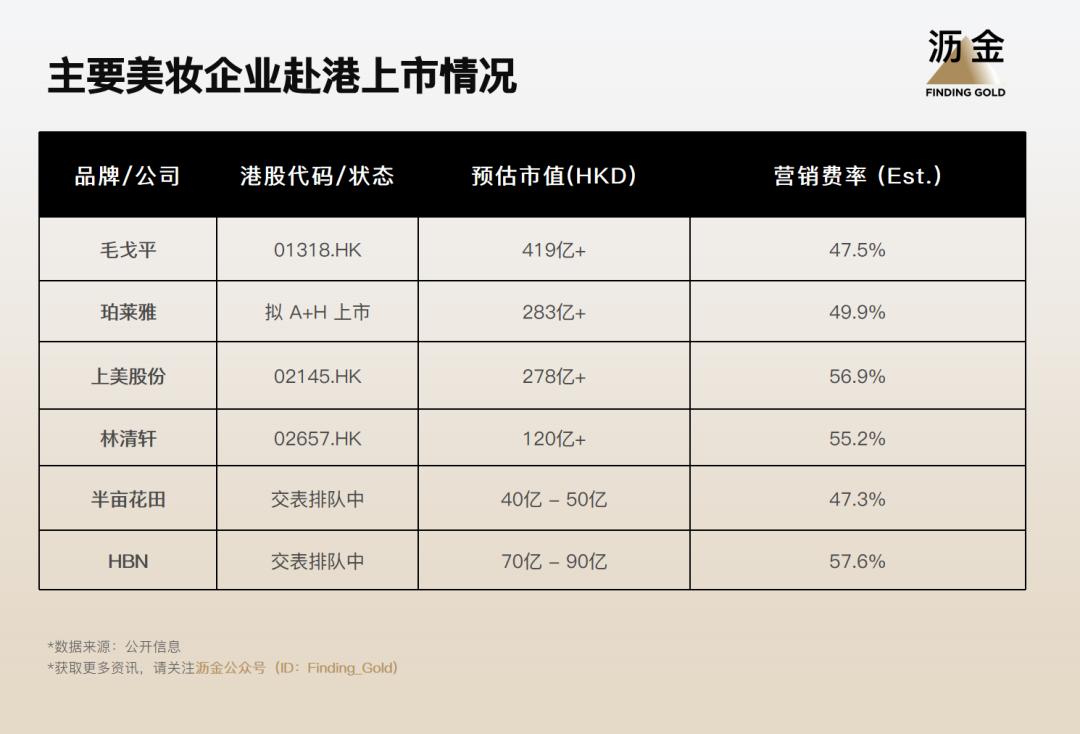
Core Viewpoint - The Chinese beauty industry is experiencing a significant shift as domestic brands rush to list on the Hong Kong Stock Exchange, driven by a near closure of IPO opportunities in the A-share market. This trend is not merely a celebration but signals a harsh beginning of industry differentiation and value reassessment [1][5]. Group 1: Market Dynamics - The successful listings of brands like Lin Qingxuan and the planned secondary listing of Proya highlight Hong Kong as a new haven for domestic beauty brands [1]. - The high price-to-earnings (PE) ratio of over 30 for Mao Geping is misleading, as it reflects a unique business model rather than a general trend in the domestic beauty sector [4]. - The market is expected to shift focus from the narrative of domestic brand growth to a stringent evaluation of business fundamentals [5]. Group 2: Brand Performance and Strategy - HBN and Banmu Huatian rely on traditional consumer goods models, heavily investing in marketing to drive growth, contrasting with Mao Geping's unique model that minimizes external marketing dependency [6][8]. - HBN's financials show a significant profit growth rate of 232.5% and 190.3% for 2024 and the first nine months of 2025, respectively, despite a marketing expense ratio of 57.6% [8]. - The key for HBN post-listing is to demonstrate that it can achieve higher brand premiums and customer lifetime value with the same marketing investment compared to competitors [10]. Group 3: Liquidity and Market Pressure - The liquidity risk in the Hong Kong market is severe, with top-tier companies absorbing most capital, leaving mid-tier brands vulnerable to becoming illiquid [12]. - The pressure of performance guarantees for many domestic brands in 2024-2025 may lead to unsustainable practices, risking significant stock price drops if growth slows post-2026 [13]. Group 4: Competitive Landscape - The competition in the beauty industry is evolving from ingredient concentration to structural competition, with brands needing to lower marketing costs while maintaining revenue [15]. - Unique raw materials are becoming essential for brand differentiation and valuation in the market, as seen with successful brands like Juzhibio and Lin Qingxuan [18]. - The necessity for international expansion is increasing, as domestic market growth is plateauing, making overseas markets critical for future success [20]. Group 5: Future Outlook - The Hong Kong market is becoming increasingly discerning, seeking brands that can demonstrate efficiency and long-term viability rather than just rapid growth [22][23]. - Brands that can effectively manage their desires, respect market realities, and commit to long-term strategies will be better positioned for success in the evolving landscape [23].


2026年金属如何投?基金经理给出三大关键词:稀缺资源、结构机遇、估值健康
Hua Xia Shi Bao· 2026-01-12 12:35
Core Viewpoint - The current surge in the non-ferrous metal sector is driven by a combination of reasonable valuations, structural differentiation, and supply scarcity, indicating long-term investment value despite short-term market emotions [2][6]. Group 1: Gold Market Insights - Gold's recent price increase is attributed to its role as a pricing tool for global monetary stability rather than traditional notions of "safe haven" or "interest rate expectations" [3]. - The ongoing expansion of the U.S. fiscal deficit is weakening dollar credibility, which supports gold's upward trend [3]. - Institutional investors, particularly through ETFs, have become the primary buyers of gold since 2025, indicating its integration into diversified asset allocation frameworks [3]. Group 2: Copper as a Strategic Resource - Copper is transitioning from a traditional cyclical commodity to a strategic resource with growth attributes, impacting the valuation and investment duration of related companies [4]. - The depletion of high-quality copper mines and rising extraction costs are extending the supply release timeline, suggesting that high copper prices may persist longer [4]. - The market is increasingly valuing companies based on sustained profitability rather than short-term performance, leading to a revaluation of copper firms [4]. Group 3: Sector Health and Valuation - The non-ferrous metal sector remains in a healthy valuation state, with current PE ratios around 10-12, which is lower than historical averages compared to other high-valuation sectors [5]. - A PE ratio of 20-30 would signal potential overheating in the sector, as it would imply a lengthy payback period for investments [5]. - The market is expected to shift towards a more selective approach in 2026, focusing on companies with favorable supply-demand dynamics [5][6]. Group 4: Future Outlook - The outlook for the non-ferrous metal sector in 2026 is summarized by three keywords: valuation, structure, and scarcity, emphasizing the importance of maintaining focus on quality amid market volatility [6].

委内瑞拉变天,下周迎超级行情!
Jin Tou Wang· 2026-01-04 09:47
Group 1: Precious Metals Performance - Gold has seen an annual increase of approximately 64%, marking the strongest performance in recent years and the largest annual increase since 1979, setting a 46-year record [1] - Silver has outperformed gold with an annual increase exceeding 147%, achieving the strongest annual performance on record [1] - Platinum has risen over 126%, also setting a record for the largest annual increase, despite a year-end drop of 6% to $2054 [1] - Palladium has increased by more than 75%, marking its best annual performance in 15 years [1] Group 2: U.S. Economic Data and Market Reactions - The U.S. stock market indices have experienced declines, with the Dow down 0.67%, S&P 500 down 1.03%, and Nasdaq down 1.52% [2] - The upcoming week is crucial for economic data releases, including manufacturing, services, job vacancies, and the non-farm payroll report [2][3] - The market anticipates an addition of approximately 55,000 jobs, with an unemployment rate holding steady at 4.6% [3] - A moderate decline in job growth could provide the Federal Reserve with reasons to continue lowering interest rates, positively impacting the stock market [3] - The current market and Federal Reserve appear to be at odds, with the market betting on two rate cuts in 2026, while the Fed's projections suggest only one [3][4] Group 3: Geopolitical Events and Oil Market Impact - The U.S. has launched a military operation in Venezuela, resulting in significant casualties and political unrest [5] - Despite the geopolitical tensions, the immediate impact on global oil markets is expected to be limited, as Venezuela's oil production is currently low [6] - Key oil infrastructure in Venezuela remains operational, reducing the risk of substantial supply disruptions in the short term [6] Group 4: Future Outlook for Gold - The ongoing geopolitical and economic uncertainties are likely to continue influencing the gold market [8] - If economic growth slows and interest rates decline further, gold prices may experience moderate increases [8] - Conversely, if U.S. policies lead to accelerated economic growth and reduced geopolitical risks, this could exert downward pressure on gold prices [8]
国资入主落地,联创电子市场估值逻辑重构
Jing Ji Guan Cha Wang· 2025-12-25 03:39
Group 1 - The core viewpoint is that the market valuation logic of Lianchuang Electronics has fundamentally changed due to state-owned capital involvement, a 1.63 billion yuan private placement, and a clear three-year strategic transformation plan [1][2] - The valuation framework has shifted from traditional consumer electronics manufacturing to a high-growth technology enterprise model centered on automotive optics, supported by state-owned capital [1] - Previously, Lianchuang Electronics' valuation was significantly affected by the fluctuations in the consumer electronics cycle, but the combination of "state-owned capital involvement + strategic focus" has altered the market's assessment of its value [1] Group 2 - The automotive optics sector is currently experiencing a golden period of increasing penetration rates and unit adoption, providing a broad and more certain market space that supports the valuation restructuring [1] - Lianchuang Electronics possesses technological advantages in fields such as molded glass and glass-plastic composites, along with a strategic positioning advantage by securing core clients like NIO and Huawei, which enhances its potential to deliver performance in the high-end optics sector [1] - The combination of "state-owned capital involvement + private placement + strategic focus" is seen as a timely and critical restructuring, with future key points focusing on the speed and scale of domestic major client orders [2]

今日港股4新股全部破发!明基医院跌近50%创年内港股新股首日最差表现
Jin Rong Jie· 2025-12-22 11:42
Group 1 - The Hong Kong IPO market experienced a collective downturn on December 22, 2025, with four newly listed stocks, including Impression Da Hong Pao (HK02695), Huaren Biotech-B (HK02396), Ming Kee Hospital (HK02581), and Nanhua Futures (HK02691), all facing significant declines, with Ming Kee Hospital dropping 49.46%, marking the worst debut performance of the year [1] - All four new stocks opened lower and continued to decline throughout the trading day, closing near their lowest prices. Ming Kee Hospital, which had an offering price of 9.34 HKD, closed at 4.73 HKD, resulting in a loss of 1,420 HKD per lot of 500 shares, surpassing the previous record decline of 47.67% set by Conch Cement Technology [1] - Impression Da Hong Pao, despite receiving a 3,400 times oversubscription and a pre-listing increase of 11% on the Futu platform, ultimately closed down 35.28% at 2.33 HKD, leading to a loss of 1,270 HKD per lot of 1,000 shares [1] Group 2 - Following the reform of the Hong Kong IPO pricing mechanism in August 2025, the new stock failure rate was only 7.14% from August to October, but it surged to 42.10% from November onwards, significantly exceeding the 30.23% rate observed in the first half of the year [2] - The core reason for this discrepancy is the misalignment between primary market pricing and secondary market risk appetite, with issuers often referencing A-share valuations while Hong Kong investors prioritize cash flow and dividend returns, compounded by increased pressure from southbound capital and smaller float sizes, leading to concentrated sell-offs post-listing [2] - The Hong Kong IPO market has reached a scale of 267.1 billion HKD this year, with potential to reclaim the top position globally for IPOs. However, ongoing fluctuations in Federal Reserve policy expectations and changes in cross-border capital flows indicate that the valuation restructuring in the Hong Kong new stock market is still ongoing, resulting in a more cautious sentiment among investors regarding new listings [2]
几颗“边角料”芯片,竟让英特尔大涨10%
Hu Xiu· 2025-12-01 04:10
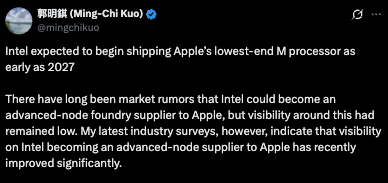
Core Viewpoint - The news highlights a significant market reaction to the rumor that Intel will manufacture Apple's M-series chips, indicating a potential shift in the semiconductor landscape and a re-evaluation of Intel's market position [1][3]. Group 1: Apple's Endorsement - Apple ships 20 million "standard" M-series chips annually, and transferring production to Intel would significantly impact Intel's business [4]. - Apple's role as a stringent quality inspector adds credibility to Intel's manufacturing capabilities, especially for the simpler M-series chips [4]. - Intel has entered a substantive collaboration phase with Apple, having signed a confidentiality agreement and received advanced process design kits (PDK) [6][4]. Group 2: Cook's Strategy - Apple's decision to support Intel, despite TSMC's strong performance, serves as a political statement and aligns with U.S. manufacturing policies [7]. - By outsourcing the production of lower-end M-series chips to Intel, Apple aims to diversify its supply chain and reduce dependency on TSMC [8][10]. - Establishing a dual-supplier system with Intel and TSMC is crucial for Apple to mitigate capacity risks and enhance bargaining power [9]. Group 3: Valuation Reconstruction - The market's reaction reflects a potential breaking of Intel's "IDM curse," as major tech companies show interest in Intel's manufacturing capabilities [11][16]. - Intel's previous struggles with its IDM model have led to significant capital expenditures with minimal returns, but the prospect of securing high-profile clients could change this narrative [14][15]. - The involvement of top-tier clients like Apple, Google, and Meta increases the likelihood of Intel's success in its foundry business, potentially leading to a substantial increase in its market valuation [17][18].


兴业证券:A股什么情况下年末行情会“高切低”?
智通财经网· 2025-11-04 22:49
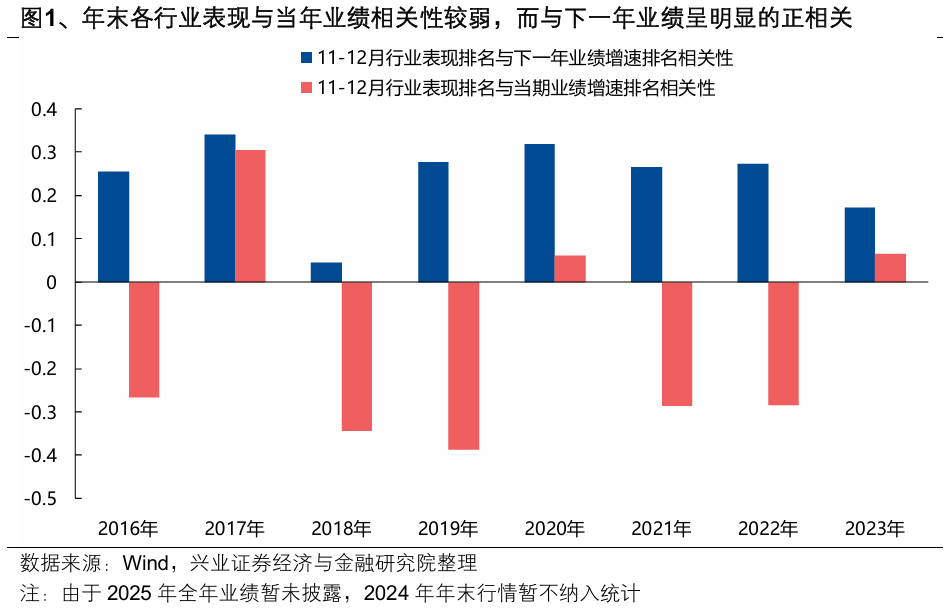
Core Viewpoint - The essence of the year-end market performance is the market's active search for future economic clues, leading to a revaluation of various industries based on next year's economic expectations [1][5]. Group 1: Year-End Market Dynamics - The year-end market's "high-low" nature is driven by investors' perspective shift towards economic conditions, resulting in a valuation reconstruction process [2][5]. - After the disclosure of Q3 reports in October, the market typically shifts focus to the next year, adjusting valuations based on economic expectations, which leads to year-end valuation reconstruction [2][5]. - Historical analysis since 2016 shows a strong positive correlation between industry performance rankings and next year's earnings growth, while the correlation with current earnings growth is weak or even negative [2]. Group 2: Historical Comparisons - If the market expects the main style's economic advantages to continue or accelerate next year, the main line will maintain stability and may deepen towards lower positions, as seen in 2006, 2014, 2016-2017, and 2019-2020 [6][5]. - In 2006, economic acceleration and a favorable real estate cycle led to a shift in market pricing from manufacturing to cyclical sectors [6]. - In 2016-2017, the recovery of listed companies' ROE and supply-side structural reforms maintained a focus on low-valuation value and blue-chip stocks throughout the year [6]. Group 3: Potential Market Reversals - If factors undermine the main line's economic expectations or improve lower economic expectations, the market may systematically shift towards lower positions, triggering a year-end "reversal" market [7][5]. - In Q4 2007, policy shifts to curb inflation and overheating led to a market structure change from "manufacturing + cyclical" to "TMT + consumption" [7]. - In November 2014, an unexpected interest rate cut by the central bank ignited bullish sentiment, causing a market structure shift from "manufacturing + TMT" to "financial real estate + cyclical" [7].

深度解读亚太药业7亿定增:邱中勋“入主即出手”创新药管线撕开估值重构缺口
Quan Jing Wang· 2025-10-15 09:55
Core Insights - The announcement of a 700 million yuan private placement by Asia-Pacific Pharmaceutical marks a significant shift in the capital market's cautious expectations, indicating a strong commitment to innovation and transformation following the change in control to Xinghao Holdings [1][11]. Group 1: Strategic Importance of the Private Placement - The private placement is characterized by full subscription from the controlling shareholder, which is rare in the A-share pharmaceutical sector, where less than 5% of similar projects have seen full subscription from related parties in recent years [2]. - The strategic decision to allocate 100% of the raised funds to new drug research and development (R&D) highlights a departure from traditional fundraising practices that prioritize production and cost reduction [3][10]. Group 2: Focus on Innovation and R&D - The net proceeds from the fundraising will be directed entirely towards innovative drug development projects, including oncolytic virus drug platforms and long-acting complex formulations, contrasting sharply with the average 28% R&D investment in similar fundraising efforts by generic drug companies [3][10]. - The company aims to transition from a generic drug manufacturer to an innovative drug enterprise, as evidenced by its commitment to R&D over operational costs [3][10]. Group 3: Synergy with Existing Resources - The new controlling shareholder's confidence is bolstered by the capabilities of Yaodou Technology, which has established a robust ecosystem in the pharmaceutical e-commerce sector, providing a significant advantage in commercializing innovative drugs [4][11]. - Yaodou Technology's extensive network, including partnerships with nearly 1,000 pharmaceutical companies and over 65,000 downstream clients, enhances the company's ability to ensure patient accessibility to new drugs [4][11]. Group 4: Pipeline and Market Potential - The focus on two core products, including an oncolytic virus drug platform and a novel multiple myeloma drug, positions the company to address unmet medical needs in high-demand markets, with the oncolytic virus market projected to reach approximately 160 billion yuan by 2025 [6][7][8]. - The innovative drug B0050 for multiple myeloma has received FDA clinical approval and is expected to leverage the growing market demand for improved therapeutic options [8][9]. Group 5: Valuation Reconfiguration - The 700 million yuan private placement is seen as a catalyst for a fundamental shift in the company's valuation, moving from a traditional generic drug valuation of 15-20 times earnings to a potential innovative drug premium of 40-60 times [10]. - The market's perception of the company's transformation certainty is influenced by the full subscription of the private placement, the channel empowerment from Yaodou Technology, and the clarity of the drug pipeline [10][11]. Group 6: Future Outlook - The private placement is viewed as the first step in a broader transformation strategy, with future success dependent on leveraging Yaodou Technology's channels for pipeline commercialization and establishing an efficient R&D management system [12]. - The case of Asia-Pacific Pharmaceutical may signal a new trend in the pharmaceutical industry, where traditional companies seek to overcome valuation challenges through a combination of capital infusion, resource empowerment, and precise pipeline planning [12].
