红烧鲈鱼

Search documents
新春走基层丨绿皮列车上的烟火升腾
Xin Hua She· 2026-02-24 11:06
Core Viewpoint - The article highlights the bustling atmosphere of the K1127 train from Shanghai to Xiangyang during the Spring Festival travel peak, emphasizing the importance of onboard meals in providing comfort to travelers [1][3]. Group 1: Train Services and Passenger Experience - The K1127 train connects major cities along the Yangtze River Economic Belt, primarily serving migrant workers, with a ticket price of 168.5 yuan for hard seats and approximately 290 yuan for hard sleepers [3]. - The train's dining car offers a variety of meal options at different price points, with set meals ranging from 15 yuan to 30 yuan and individual dishes priced between 18 yuan and 58 yuan, catering to diverse passenger preferences [3][5]. - The train is popular among travelers, especially during the Spring Festival, with about 80% of passengers being long-distance travelers [3]. Group 2: Culinary Operations and Staff Insights - The dining car staff, including chefs and service personnel, work diligently to prepare and serve meals, with a notable demand for family-friendly meal options, as indicated by the quick sale of 40 meal sets [5]. - Chefs express a sense of fulfillment in their roles, highlighting the satisfaction derived from serving passengers, even during late hours when additional meals are requested [5]. - The article notes that the cumulative railway passenger volume reached 2.58 billion trips 20 days before the Spring Festival in 2026, reflecting the significant demand for rail travel during this period [5].

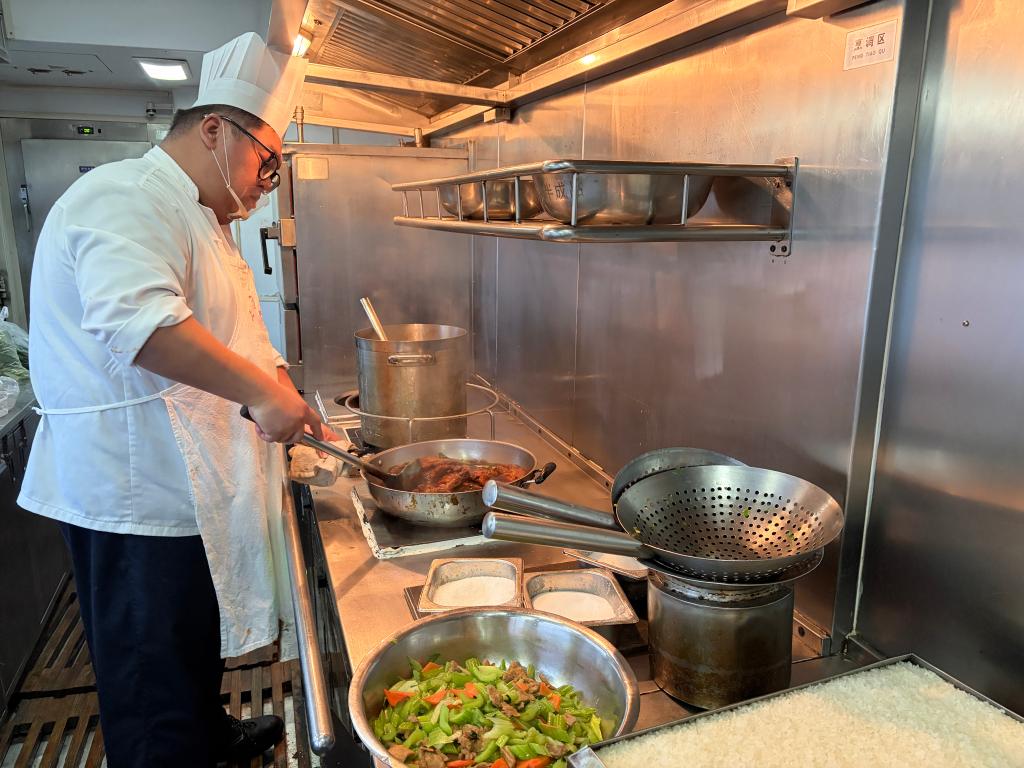
在绿皮餐车,胃更先抵达故乡
3 6 Ke· 2026-02-11 02:40
Core Viewpoint - The article highlights the nostalgic and unique dining experience offered by traditional green trains in China, contrasting it with the modern high-speed trains that lack the same culinary charm and personal touch [1][20]. Group 1: Dining Experience on Green Trains - Green trains provide a home-cooked meal experience with freshly prepared dishes, unlike high-speed trains that offer pre-packaged meals [1][19]. - The dining cars on green trains are often described as "mobile restaurants," where passengers can enjoy a variety of local dishes, enhancing the travel experience [1][19]. - The article mentions specific popular dishes available on various train routes, such as "stir-fried pork with green peppers" and "spicy tofu," with prices ranging from 20 to 30 yuan [3][4]. Group 2: Cultural Significance - The dining experience on green trains is seen as a way to connect with local culture and flavors, with different railway bureaus offering unique regional specialties [10][11]. - The article emphasizes the social aspect of dining on trains, where passengers can share meals and stories, creating a sense of community during travel [19][20]. - The nostalgia associated with green trains reflects a longing for a slower pace of life and genuine human connections, contrasting with the fast-paced modern travel experience [20]. Group 3: Historical Context - The evolution of train dining cars is traced back to the industrial revolution, with the first standard dining cars in China introduced in 1953, initially catering to a more affluent clientele [12][14]. - The modernization of dining cars in the 1990s introduced new cooking technologies, allowing for a wider variety of dishes and improved food quality [18]. - The article notes that the number of operational green train dining cars has significantly decreased, making them a rare and cherished experience for travelers [19].